Forty Acres of Memory
One of the trees in Capitol Park grew from a seed that orbited the moon. In 1971, Apollo 14 command module pilot Stuart Roosa carried hundreds of seeds on the mission, and a few years later, in 1976, a sapling grown from one of those seeds was planted in the park surrounding California's State Capitol in Sacramento. It stands among roughly 1,140 other trees representing over 200 species from around the world -- a botanical collection so diverse it could pass for an arboretum. But the trees are almost an afterthought here. Scattered across 40 acres of gardens, approximately 155 memorials mark the wars fought, the lives lost, the principles defended, and the communities that shaped California from Spanish colony to the most populous state in the nation. The Capitol building itself has housed the state legislature since 1869, and since 1982 its interior has doubled as a museum within the California State Parks system.
Where the Rotunda Tells Hard Truths
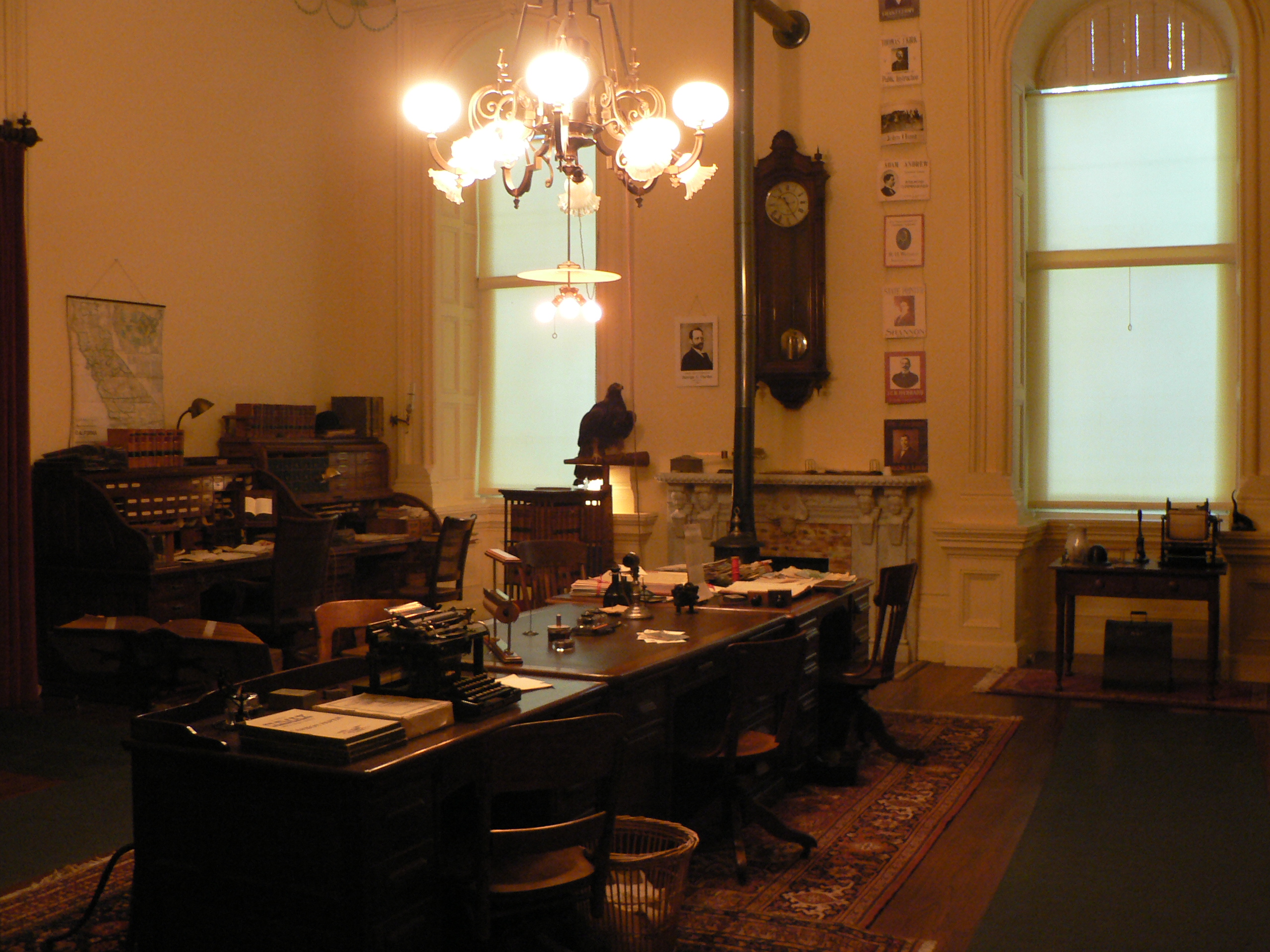
The heart of the Capitol Museum occupies the basement and first floor of the building's original section. Downstairs, visitors find Arthur Mathews' mural "History of California" and a small theater screening short films about the Capitol's construction and evolution. On the first floor, meticulously restored historic offices recreate the workspaces of the secretary of state, treasurer, and governor as they appeared in the early twentieth century. For 137 years, the rotunda's centerpiece was a marble statue titled Columbus' Last Appeal to Queen Isabella, sculpted by Larkin Mead and donated by banker Darius Ogden Mills in 1883. In July 2020, the statue was removed after legislative leaders acknowledged "the deadly impact his arrival in this hemisphere had on indigenous populations." The empty space now speaks as loudly as the marble once did.
Battlefields Transplanted to Sacramento Soil
Capitol Park's memorials begin at 9th Street and unfold eastward across six city blocks, each section layered with monuments spanning two centuries of conflict and service. The Civil War Memorial Grove, planted in 1897 with saplings taken from famous battlefields, shelters the Reverend Thomas Starr King Memorial -- a statue that once represented California in the U.S. Capitol's Statuary Hall before being replaced in 2009 by a statue of Ronald Reagan. Nearby stands the ship's bell from the USS California, the only dreadnought-type battleship built on the Pacific Coast. Sunk at Pearl Harbor in December 1941, she was raised, refitted, and returned to active duty in 1944. The California Vietnam Veterans Memorial features life-size bronze figures of service men and women, their names engraved alongside those of Californians killed or missing in action. Between them all, the Earl Warren Walk traces the exact path the former governor and Chief Justice of the Supreme Court wore into the ground on his daily walks from the Capitol to the Sutter Club.
The Quieter Monuments
Not every memorial here commemorates war or politics. The Sisters of Mercy Memorial honors the religious order that arrived in Sacramento in 1857 to care for miners' children and serve the sick and homeless; the land they purchased for a school eventually became the site of the Capitol itself. El Soldado Memorial, created at the request of the Sociedad de Madres Mexicanas -- Gold Star mothers of Mexican American soldiers who served in World War II -- stands between 9th and 10th Streets. A life-sized statue of Junipero Serra maps California's 21 missions at its base, from San Diego to Sonoma. And then there is the Senator Capitol Kitty Memorial, dedicated to the beloved cat who made the park her home and whose memory Sacramento residents insisted on preserving in stone. The Y-ET-IM TEH-LEI-LI California Indian Grinding Rock serves as a quieter reminder that this land had inhabitants, cultures, and histories long before any cornerstone was laid.
A Garden for the Living
Beyond the monuments, Capitol Park functions as Sacramento's most eclectic garden. The Pioneer Camellia Grove, planted in 1942 by the Native Sons and Daughters of the Golden West, honors the city's founders. The World Peace Rose Garden covers nearly half an acre with about 650 roses in over 140 varieties. The California Native Plant Section, established in 1911, showcases flora found nowhere else. An insectary built in 1908 as a research facility now serves the groundskeeping crew -- a small irony in a park where even the service buildings have more than a century of history behind them. A Liberty Bell replica, one of fifty-three cast in 1953 as part of a nationwide savings bond campaign, sits near World War I Memorial Trees planted in 1921 in memory of the unknown first California soldier to die in that conflict. Every path leads past another layer of the state's story, told not in exhibit cases but in living wood, weathered bronze, and carefully tended earth.
From the Air
Located at 38.58N, 121.49W in downtown Sacramento. The Capitol dome and its surrounding 40-acre park are clearly visible from the air, forming a distinctive green rectangle in the downtown grid. Capitol Mall runs west from the building to the Sacramento River, providing an unmistakable visual corridor. Sacramento Executive Airport (KSAC) is 3nm south; Sacramento International (KSMF) is 10nm northwest. Best viewed at 2,000-4,000 feet AGL on clear days.