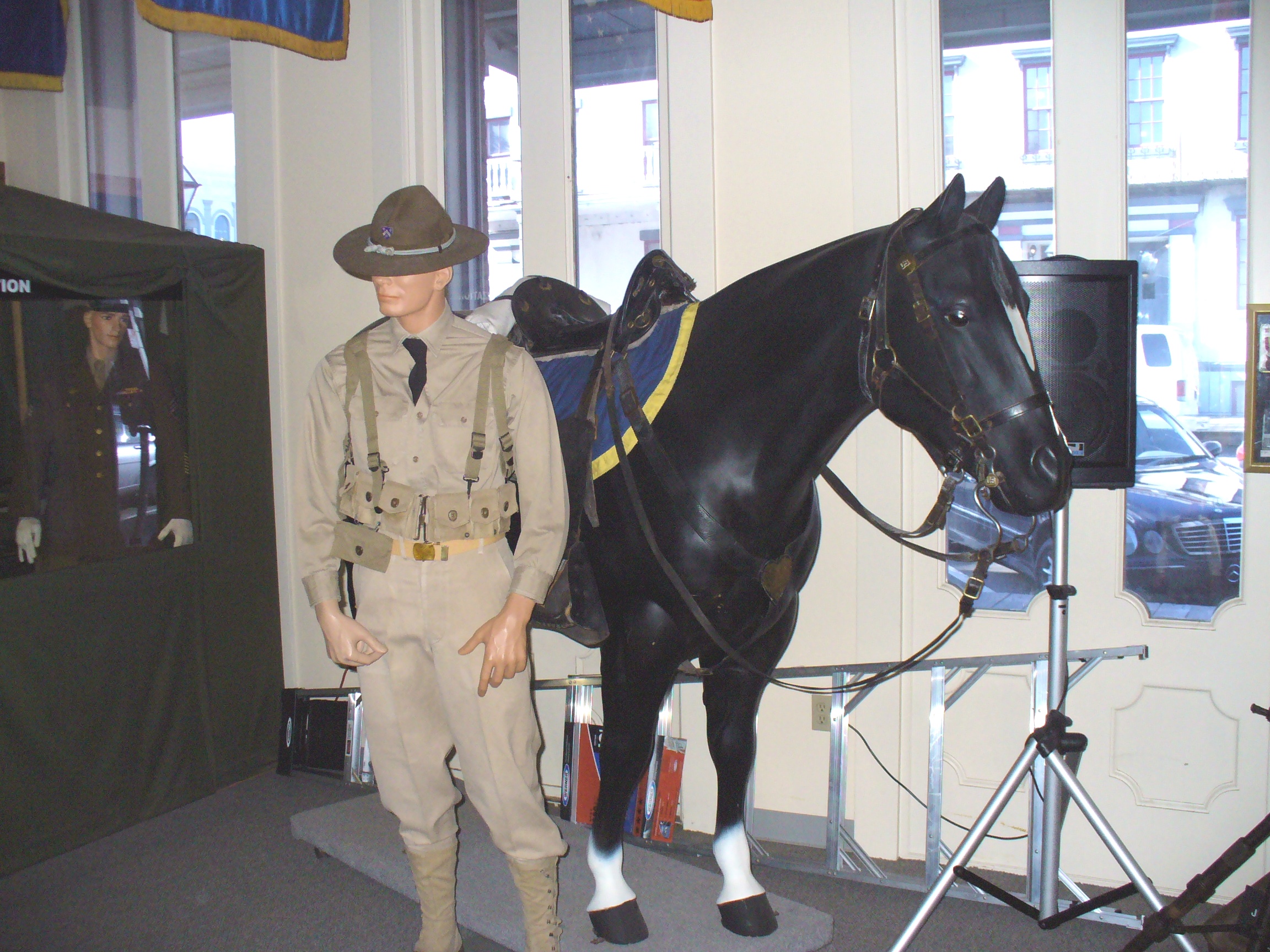
The Shuttered Armory
Three governors championed it. A wall of black granite held the names of California's fallen. A library of ten thousand volumes documented the state's military history from the earliest militia musters to the wars of the twenty-first century. And then, in March 2014, the California State Military Museum locked its doors and went dark. The museum sat in Old Sacramento, that waterfront district of raised wooden sidewalks and Gold Rush-era storefronts along the Sacramento River. At 1119 Second Street, between the tourist-friendly railroad museum and the candy shops, it told a quieter, more complicated story -- one about the Californians who served, the wars they fought, and the bureaucratic tangle that ultimately silenced the institution built to remember them.
Three Governors and a Museum
The California State Military Museum began in 1991, during Pete Wilson's administration, as an effort to catalog and display the military contributions of a state that has sent more service members into American wars than any other. For eleven years it operated without permanent status, dependent on temporary funding and political goodwill. In 2002, Governor Gray Davis formalized the institution under the California State Military Department, giving it a dedicated budget line. Two years later, on July 13, 2004, Arnold Schwarzenegger signed the order making it the state's official military museum. That progression -- from informal project to permanent institution to official state designation -- suggested a museum on solid footing. The trajectory masked deeper structural problems about who controlled the collection and who paid for its upkeep.
A Network Stretched Across California
Beyond its Sacramento headquarters, the museum maintained five satellite locations scattered across the state, each preserving a different facet of California's military identity. Camp Roberts in southern Monterey County, a sprawling training installation established during World War II, housed one branch. Camp San Luis Obispo, another wartime training camp on the Central Coast, hosted a second. The Fresno Air National Guard Base connected the museum to California's aviation heritage. The Los Alamitos Joint Forces Training Base in Orange County anchored the Southern California presence, while the National Guard Armory in San Diego extended the network to the Mexican border region. This geographic spread reflected ambition -- a single institution trying to represent the military heritage of a state that stretches nearly a thousand miles from Oregon to Mexico.
Granite and Names
At the museum's entrance stood its most solemn artifact: the Global War on Terrorism Wall of Honor. Built from black granite -- the same material as the Vietnam Veterans Memorial in Washington -- it listed chronologically the Californians who died in the attacks of September 11, 2001, and in the campaigns in Afghanistan and Iraq that followed. Each name was accompanied by rank, branch of service, and age. The specificity mattered. A name alone is abstraction; a name beside the age twenty-two is a life cut short, made suddenly particular. An annual wreath-laying ceremony honored these dead until the museum's closure ended the tradition. The wall itself remains, though without the daily foot traffic of visitors to read the names and pause before them.
The General's Library
The Major General Walter P. Story Memorial Library held more than ten thousand volumes of military history -- one of the finest such collections in the western United States. The shelves held everything from broad surveys of American warfare to documents so specific they existed nowhere else: original unit rosters of early California Militia formations, handwritten before the state had been in the Union for a decade. These were not books available in any university library or downloadable from any archive. They were primary sources, the kind of material that historians build dissertations around. The library also served as a research center for veterans and their families seeking service records and unit histories. Its closure cut off access to a collection that decades of curators had assembled volume by volume.
How an Institution Dies
The museum's end came not from disinterest or irrelevance but from a dispute between the nonprofit foundation that operated it and the California Military Department that oversaw it. The details are the familiar machinery of institutional collapse: disagreements about authority, budget shortfalls compounded by the state's broader fiscal constraints, and the absence of any political champion willing to broker a resolution. California's budget problems in the years following the Great Recession squeezed cultural institutions across the state, but the military museum's shutdown was not purely financial. It was organizational -- a failure of governance rather than funding alone. Plans for a new site have been discussed, and the museum's official website still maintains a digital presence. But the physical museum, with its granite wall, its ten thousand books, and its satellites from Monterey to San Diego, remains closed. The institution that three governors endorsed could not survive the bureaucracy that none of them reformed.
From the Air
Located at 38.58N, 121.50W in Old Sacramento, along the Sacramento River waterfront near the California State Railroad Museum. Sacramento Executive Airport (KSAC) is 3nm south; Sacramento International (KSMF) is 10nm northwest. The Old Sacramento district is visible from the air as a compact cluster of historic buildings along the river's east bank, south of the I-5 bridge crossings. Best viewed at 2,000-3,000 feet AGL.