California State Railroad Museum
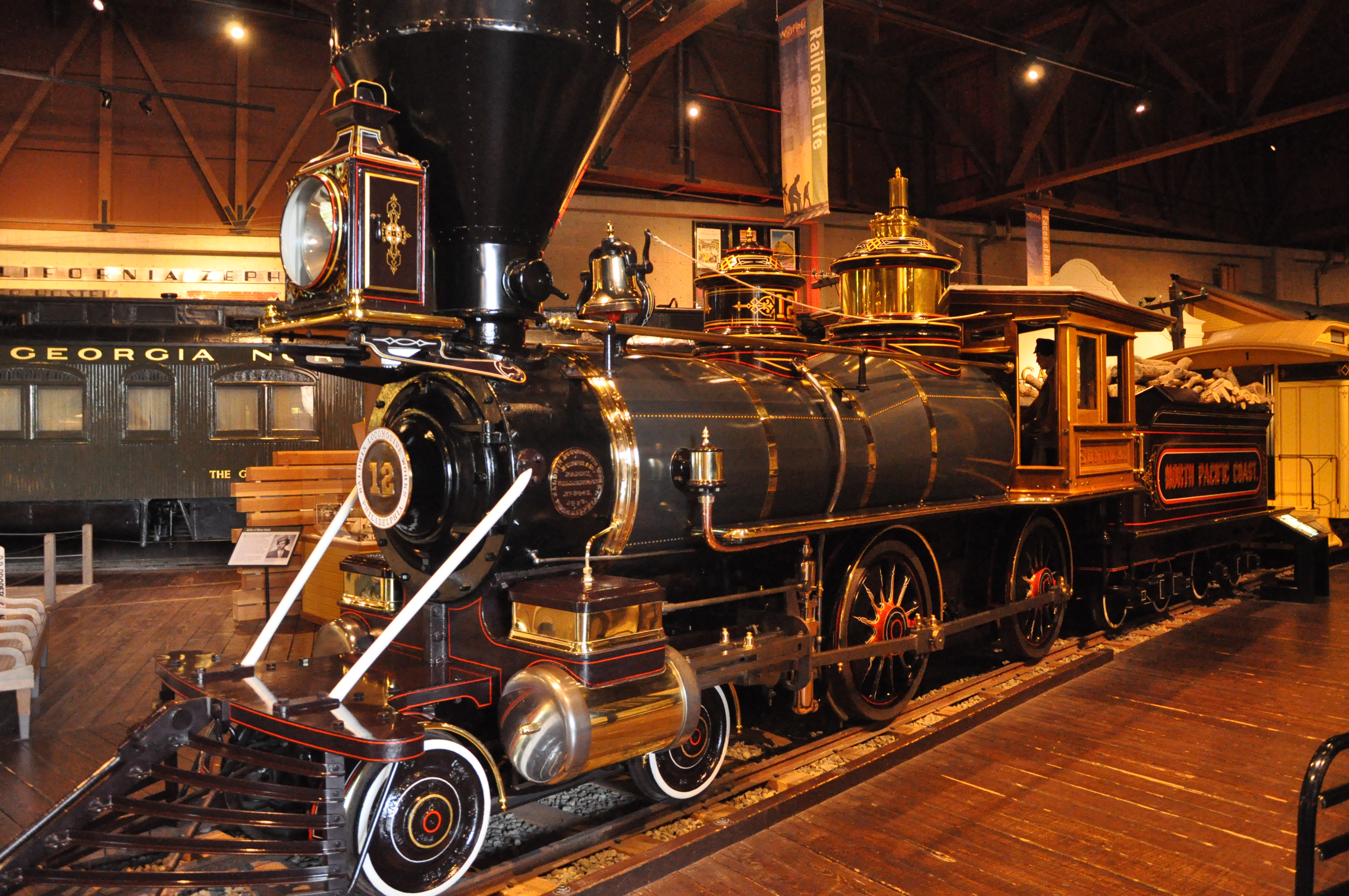
The locomotive named Gov. Stanford still gleams in the light of the museum's Sierra Scene, frozen in a moment from 1869, when it helped haul workers and supplies up impossible grades to complete the transcontinental railroad. Built in 1862, it is one of twenty-one restored locomotives and railroad cars housed in this Sacramento museum, some dating back to the years when California was more rumor than reality to most Americans. The California State Railroad Museum stands in Old Sacramento, on the same ground where the Central Pacific Railroad once maintained its shops, telling the story of how steel rails transformed an empty continent into a connected nation.
Where Railroads Began Their Western Conquest
Railroad enthusiasts first dreamed of this museum in 1937, when a group in the San Francisco Bay Area formed the Pacific Coast Chapter of the Railway and Locomotive Historical Society. They spent decades promoting the idea, eventually donating 30 historic locomotives and cars to California's parks system as the nucleus of a state-operated museum. The first facility, a reconstructed Central Pacific Railroad passenger station, opened in 1976. The main Railroad History Museum followed in 1981. Steam-powered excursion trains began running along the Sacramento River in 1984. The museum became a Smithsonian affiliate in 2017, cementing its place among the nation's premier railroad collections.
The Iron Survivors
The museum's rolling stock reads like a roster of Western railroad history. The Central Pacific No. 1, Gov. Stanford, built by Norris Locomotive Works in 1862, represents the very beginning of California railroading. The Virginia and Truckee 13 Empire, constructed by Baldwin in 1873 and cosmetically restored to its nineteenth-century glory, sits surrounded by mirrors that let visitors examine the locomotive from every angle. The Southern Pacific 4294, the sole surviving Cab-Forward locomotive, demonstrates the engineering innovation that allowed trains to haul freight through Sierra tunnels without asphyxiating their crews. Santa Fe 1010, a 2-6-2 built in 1901, awaits restoration; it once powered the record-breaking Scott Special, which raced from Los Angeles to Chicago in 44 hours and 54 minutes in 1905.
More Than Metal and Steam
Beyond the locomotives lies a comprehensive archive of Western railroad history. The library holds hundreds of volumes, including works by railroad chroniclers Lucius Beebe and Charles Clegg. Technical drawings from the Southern Pacific Railroad Company and Lima Locomotive Works document the engineering that made the Western expansion possible. The photograph collection spans hundreds of different railroads, from the Southern Pacific to the Western Pacific, Denver and Rio Grande Western, and Santa Fe. Promotional materials, informational pamphlets, signs, pins, and artifacts donated by railroad employees and enthusiast groups round out a collection that captures not just the machinery of railroading, but its culture.
Living History on the Rails
Between April and October, the museum operates the Sacramento Southern Railroad, taking passengers on a 40-minute roundtrip along the Sacramento River on a portion of the old Walnut Grove branch. The Granite Rock Co. 10, a switcher built by Porter in 1942, pulls the excursion trains and occasionally visits other heritage railroads like the Niles Canyon Railway. At nearby Railtown 1897 State Historic Park in Jamestown, added to the museum complex in 1992, visitors can experience an authentic railroad roundhouse that Hollywood has used as a filming location for decades. Educational programs bring schoolchildren from across the region to learn about railroad history through reenactments, costumed docents, and handcar rides.
The Diesel Era and Beyond
The collection extends beyond the steam age into the diesel revolution. Southern Pacific 6051, the sole surviving SP E9, wears the famous Daylight color scheme. Amtrak 281, one of only three preserved F40PH locomotives, represents the modern passenger rail era. Sacramento Northern 402, an EMD SW1 built in 1939, demonstrates the early diesel switchers that began replacing steam in rail yards across America. The museum continues expanding its digital resources, hosting virtual exhibits and a podcast called Roundhouse Crosstalk that brings railroad stories to listeners who may never set foot in Sacramento. A large O-scale model railroad layout gives visitors a miniature vision of the networks these full-size machines once powered.
From the Air
Located at 38.58N, 121.50W in Old Sacramento, along the Sacramento River waterfront. The museum complex is visible from the air, with historic buildings and rail equipment distinctive against the downtown Sacramento skyline. Sacramento Executive Airport (KSAC) lies 3nm south; Sacramento International (KSMF) is 10nm northwest. The Capitol Mall corridor provides good visual reference leading from the state capitol to the river. Best viewed at 2,000-3,000 feet AGL on clear days.