California Surf Museum
The surfboard that Bethany Hamilton was riding on October 31, 2003, when a tiger shark bit off her left arm near Kauai's north shore is on display in Oceanside, California. It is a yellow board with a piece missing — the arc where teeth went through fiberglass and foam in the space of a second. Hamilton, who was thirteen years old at the time, returned to competitive surfing within weeks of the attack. The board stayed. It is one of the most viewed objects at the California Surf Museum, a fact that says something about how surfing absorbs catastrophe and keeps moving, and about how a museum focused on a sport defined by ephemeral experience ends up accumulating objects that carry enormous weight.
Where It Started
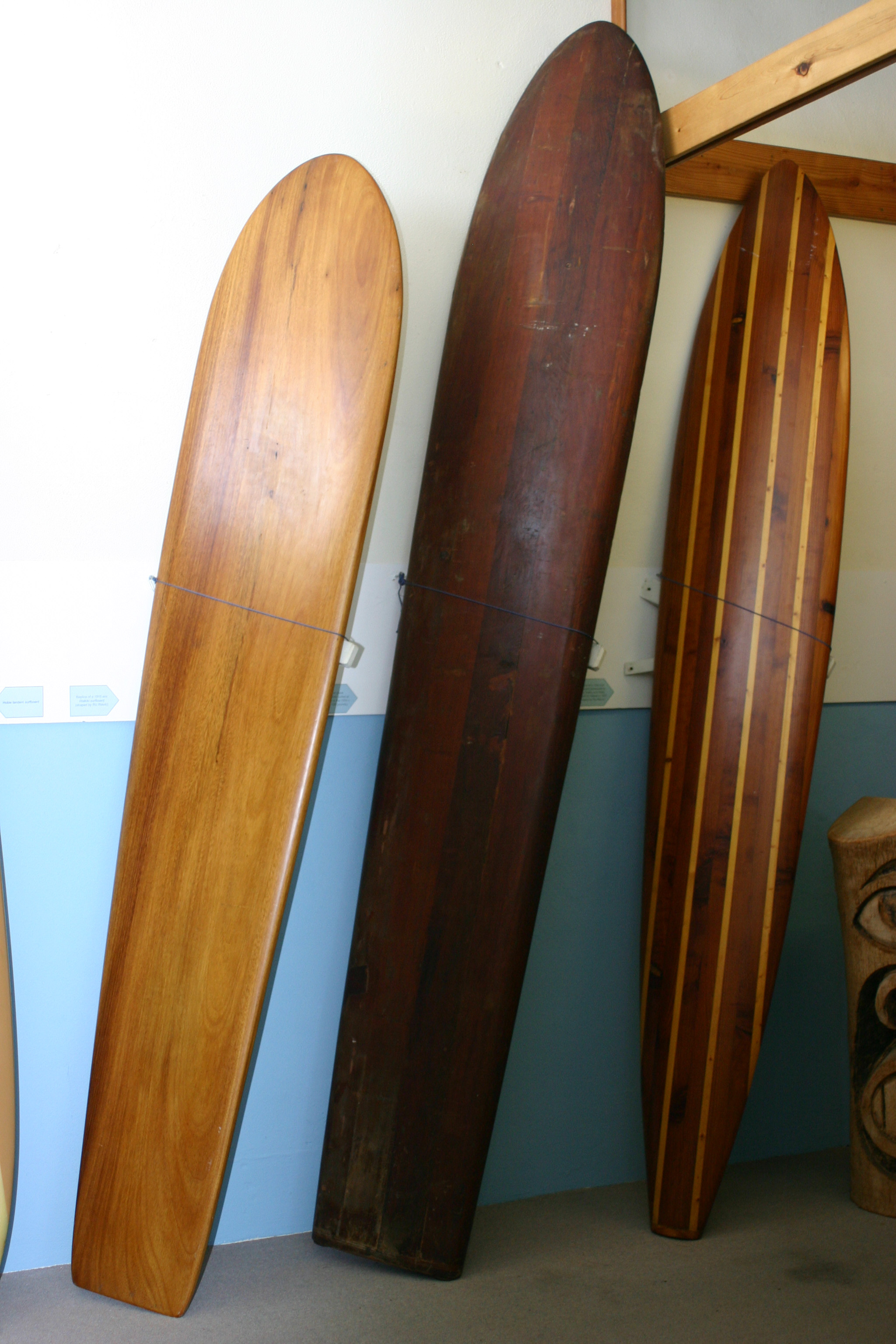
The California Surf Museum was founded in 1986 in Encinitas by a group that recognized a straightforward problem: surfboard design was changing rapidly, the culture around surfing was shifting, and nobody was systematically preserving what was disappearing. Early wooden boards, from the era when Hawaiian royalty rode solid planks in waters that American visitors treated as spectacle, were not being collected. The intermediate technologies — balsa, then foam cores, then the polyurethane blanks that defined mid-century surfboard manufacturing — were being thrown away or left to degrade in garages. The founders wanted a record. The museum moved to Pacific Beach and then to Oceanside in 1991, settling eventually into a 5,100-square-foot building near the Oceanside Pier.
The Timeline and What It Shows
The museum's permanent collection includes a timeline running from the early 1900s to the present, tracing the technical evolution of surfboard design in parallel with the cultural history of surfing in California. Early boards were heavy, unwieldy, and required a specific kind of powerful wave. As materials changed — hollow construction, then balsa, then foam — the boards became lighter, shorter, and capable of riding smaller waves in new ways. The shortboard revolution of the late 1960s compressed the board to lengths that would have seemed unrideable a decade earlier, opening up aerial maneuvers that changed what competitive surfing looked like. Each iteration is represented in the collection, arranged so that visitors can see how each design answered the limitations of the one before it.
Twenty Thousand Visitors
The California Surf Museum draws approximately 20,000 visitors per year to Oceanside — a modest number by major museum standards, but substantial for an institution dedicated to a single sport in a mid-sized coastal city. The visitors include competitive surfers researching equipment history, tourists curious about California beach culture, school groups on field trips organized around local heritage, and people who simply want to understand what the boards on the walls actually did in the water. The museum's proximity to the Oceanside Pier, where surfing happens on most days with swell, gives the collection a spatial context that most sports museums lack. The history is on the walls inside; the present is in the water a few hundred feet away.
From the Air
The California Surf Museum is located at approximately 33.1965°N, 117.38°W in downtown Oceanside, near the Oceanside Pier. The pier itself is visible from altitude as a long wooden structure extending into the Pacific — the museum sits just south of it. Recommended viewing altitude 2,000–4,000 ft AGL. Nearby airports: KOKB (Oceanside Municipal, ~2 nm east), KSEE (Gillespie Field, ~22 nm southeast).