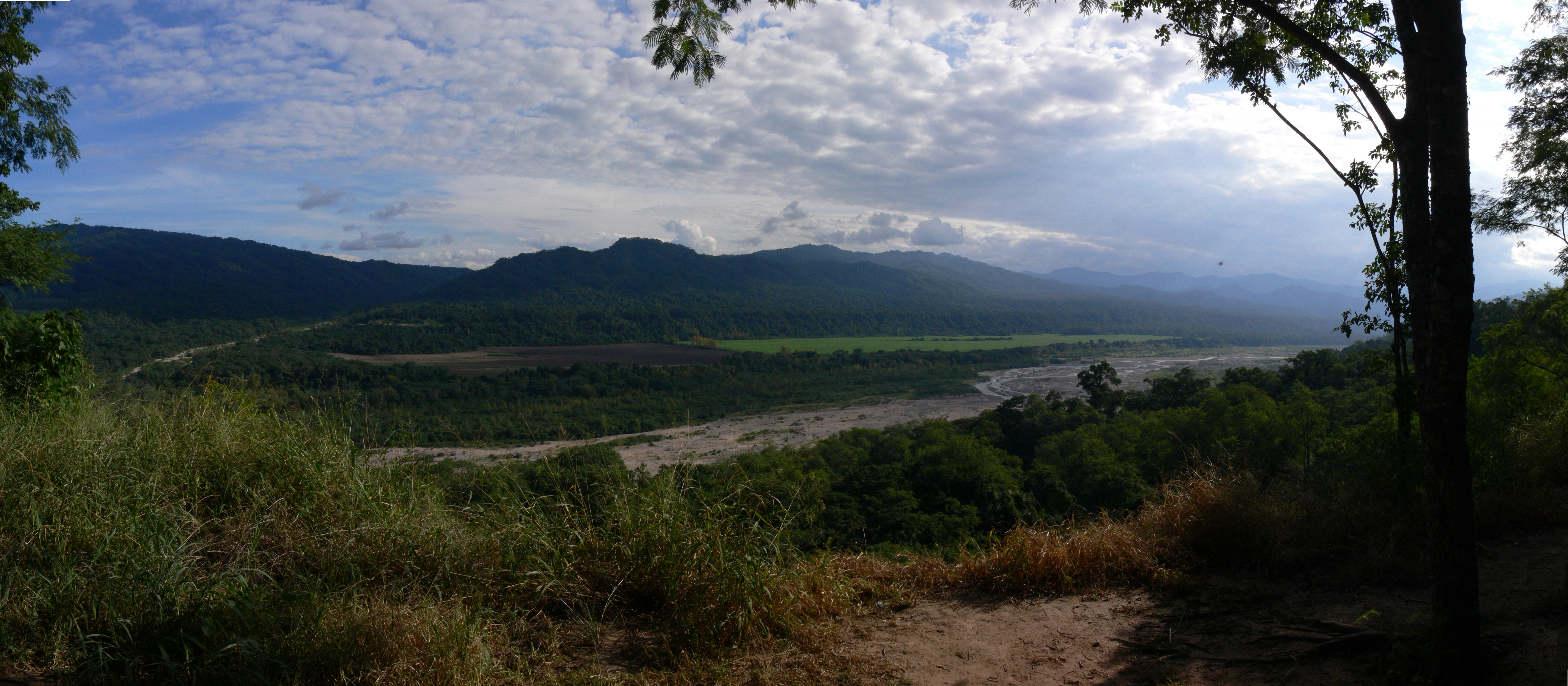
Calilegua National Park
Half of all bird species in Argentina can be found in a single national park. Calilegua, tucked into the eastern slopes of the Andes in Jujuy Province, harbors an estimated 500 species -- 270 confirmed and perhaps 230 more awaiting identification. But the birds are only the most visible residents. Jaguars still hunt in these forests. Tapirs leave footprints in the mud along riverbanks. Ocelots, pumas, and jaguarundis slip through the understory. Created in 1979 to preserve the Yungas -- the subtropical cloud forest that ranks as one of Argentina's two most biologically diverse ecosystems, alongside the Misiones rainforest -- Calilegua is where the country's tropical wildness reaches its densest concentration.
The Yungas: A Forest in the Clouds
The Yungas ecozone is unlike anything else in Argentina. Where the country's popular image leans toward pampas grasslands and Patagonian steppe, the Yungas offer dense subtropical jungle climbing the Andean foothills in layered tiers. Moisture-laden air sweeps in from the east, hits the mountains, and drops its rain in a concentrated belt of green. The result is a forest that feels more Central American than Argentine -- tangled, dripping, and loud with birdcall. Calilegua is the largest national park in northern Argentina, and it represents this ecozone at its most intact. The dry season runs from April through November, when the forest opens up slightly and trails become more passable. Summer rains from December to March swell the rivers and turn every low trail into a mud track.
A Chief's Name, an Ancient Forest
The park takes its name from the surrounding mountains, which in turn were named for a well-known Aboriginal chief who once lived in the area. That indigenous presence endures. Guarani communities still live in the region, and some offer guided tours through the forest, explaining the plants, animals, and cultural relationships that outsiders would miss entirely on their own. The Guarani guides know which trees produce edible fruit, which vines indicate water, and which sounds in the canopy signal a cat on the move. Their knowledge is not museum-piece ethnography; it is practical expertise refined over generations in a landscape that does not forgive ignorance.
Predators and Prints
The jaguar is the largest predator in the Americas, and Calilegua is one of its last strongholds in Argentina. Seeing one is rare -- they are solitary, cautious, and mostly nocturnal. But their presence shapes the entire ecosystem. Ocelots, pumas, and jaguarundis share the forest, each occupying a different niche in the canopy and undergrowth. The tapir, the largest mammal in the Yungas, is more commonly detected by its tracks than by direct sighting: deep, three-toed prints pressed into the soft mud of riverbanks and lakeshores. Birdwatchers, though, are the visitors most reliably rewarded. Toucans, parrots, and raptors populate the canopy, and the sheer density of species means that a patient morning with binoculars near a fruiting tree can yield dozens of sightings.
Getting Into the Green
Access to Calilegua runs through the small town of San Martin Libertador, reachable by bus from the provincial capital of San Salvador de Jujuy. From San Martin, a daily bus or taxi covers the final stretch to the park entrance. The infrastructure is minimal by design -- this is not a park built for mass tourism. Trails wind through multiple elevation zones, from lowland river valleys thick with vegetation to higher ridgelines where the forest thins and views open across the canopy. The subtropical heat can be intense in summer, and the humidity makes even moderate hikes feel strenuous. But for those willing to sweat, Calilegua delivers something increasingly difficult to find: a forest that still feels genuinely wild, where the largest animals have not been reduced to legends.
From the Air
Located at 23.64S, 64.84W on the eastern Andean slopes in Jujuy Province, Argentina. From altitude, the park appears as a dense green mass contrasting sharply with the drier terrain to its west and the agricultural lowlands to its east. The Yungas cloud forest often generates its own weather, with fog and low clouds common along the ridgelines. The nearest major airport is Gobernador Horacio Guzman International Airport (SASJ) in San Salvador de Jujuy, approximately 120 km to the southwest. The town of San Martin Libertador, the park's gateway, is visible as a small settlement along the eastern park boundary. Terrain is mountainous with rapidly rising elevations.