Calke Abbey
Most country houses tell a story of restoration. Calke Abbey tells a story of surrender. When the National Trust took possession in 1985, they found rooms that had not been touched since the 1880s. Cabinets stuffed with unstuffed birds. Boxes of geological specimens unopened for decades. A state bed from the 1720s, still in its original packing case, never assembled. The Trust made a radical decision: rather than restore Calke to its former glory, they would preserve it exactly as they found it, decay and all. The result is one of England's most haunting country houses, a Baroque mansion near Ticknall in Derbyshire that the Trust presents as a case study in aristocratic decline, a place where entropy is the exhibit.
Neither Abbey Nor Ruin
Despite its name, Calke Abbey was never an abbey. The site housed an Augustinian priory from roughly 1120, founded by Richard d'Avranches, second Earl of Chester. In 1172, the canons were relocated to a new priory at Repton, and Calke became a subordinate cell. During Henry VIII's Dissolution of the Monasteries, the priory was dissolved, and the property passed through a chain of owners whose legal disputes over leases, freeholds, and inheritance rights read like a Tudor soap opera. A London grocer named John Preste secured a 99-year lease by lending money to the prior. His daughter Frances inherited it, but her mother's second husband claimed everything 'by rights of marriage.' Court battles raged for decades. Eventually, Robert Bainbridge, a Protestant MP imprisoned in the Tower of London for refusing Elizabeth I's Church Settlement, became the lawful owner. His son sold the estate to Sir Henry Harpur in 1622 for five thousand, three hundred and fifty pounds.
The Harpurs and Their Hoard
The Harpur family, and later the Harpur-Crewes, held Calke for nearly three hundred years. Sir John Harpur, the fourth baronet, rebuilt the house between 1701 and 1704 as the Baroque mansion that stands today. But it was the later generations who gave Calke its peculiar character. Sir Vauncey Harpur-Crewe, the tenth and last baronet, was a devoted naturalist who assembled vast collections of birds, butterflies, and fish specimens between 1793 and his death in 1924. He was also deeply reclusive, reportedly refusing to meet visitors and communicating with servants by letter even when they were in the same building. When he died, his daughter Hilda sold parts of the collection to pay death duties, but much of it remained in the house, undisturbed, accumulating dust alongside the furniture, papers, and personal effects of generations.
Death Duties and the Trust
The twentieth century dealt Calke the same blows it dealt most English country houses, only Calke absorbed them without fighting back. Charles Harpur-Crewe, who inherited after his aunt Hilda, died suddenly in 1981. The resulting death duties amounted to eight million pounds against an estate valued at fourteen million. His younger brother Henry transferred the estate to the National Trust in 1985 in lieu of tax. What the Trust found was extraordinary. Rooms were piled with objects in a state of arrested chaos. Natural history specimens sat alongside broken furniture, discarded clothing, and unopened letters. The state bed, a gift from George II's wife Caroline, had been delivered in 1734 and apparently never unpacked. The Trust recognised that this very disorder was Calke's significance. They stabilised the structures, halted further decay, but restored nothing. Interiors remain almost exactly as they were found.
A Thousand-Year-Old Oak and an Honest House
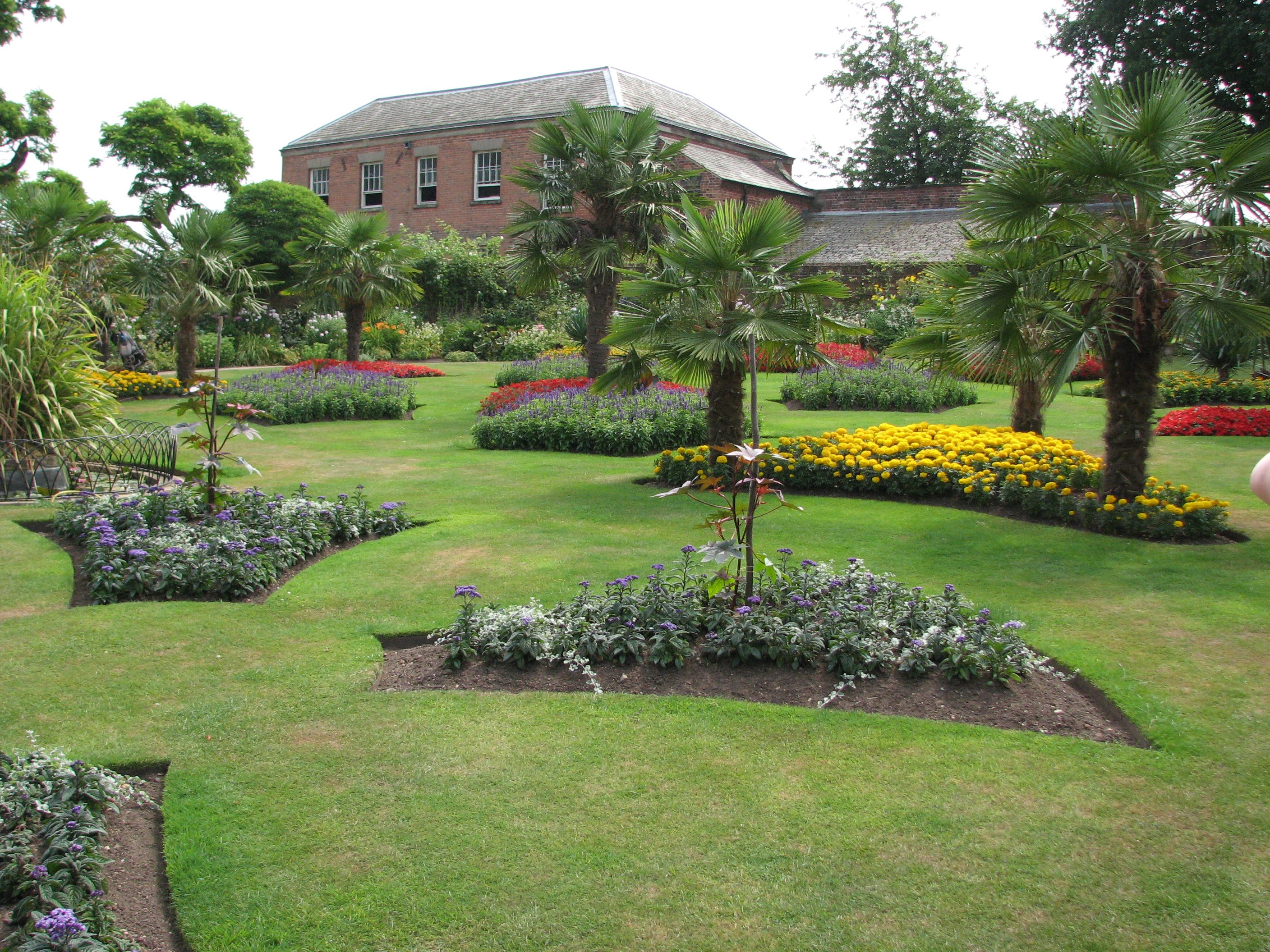
Beyond the house, Calke's ancient deer park is a designated Site of Special Scientific Interest and national nature reserve, particularly valued for its rare wood pasture habitat and deadwood invertebrate fauna. Hundreds of veteran trees populate the grounds, including the Old Man of Calke, an oak tree estimated at over a thousand years old. The walled garden has been partially restored, its former physic garden now managed as a kitchen garden. The stable yard retains old carriages and farm implements, while a brewhouse connects to the main house through an underground tunnel. Calke Abbey is sometimes called 'the un-stately home,' and the label fits. It is a place where the usual narrative of English heritage, decline followed by careful restoration, has been deliberately interrupted. The peeling wallpaper, the stuffed animals, the atmosphere of rooms where time has pooled and thickened rather than passed, all of it is left intact as a kind of honest admission: not every great house was saved. Some simply stopped being maintained, and that too is a story worth preserving.
From the Air
Located at 52.800N, 1.456W near Ticknall, south Derbyshire. The estate sits in rolling parkland with ancient woodland. Nearest airports: East Midlands (EGNX, 8nm northeast), Birmingham (EGBB, 25nm southwest). The Baroque mansion and surrounding deer park are visible from 2,000-3,000ft AGL.