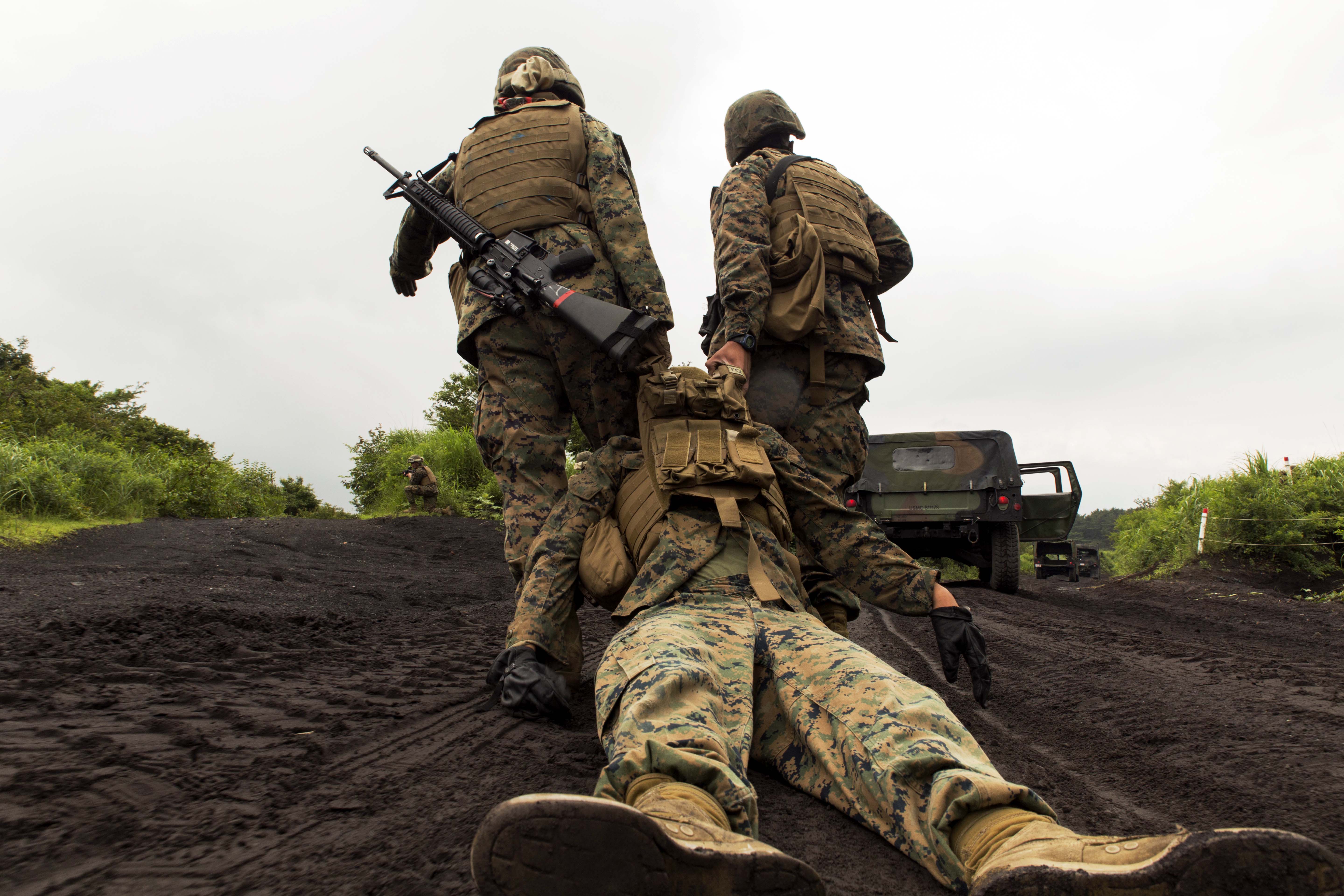
Camp Fuji
The samurai who trained on the volcanic plains below Mount Fuji in the 15th century could never have imagined what would follow them. Today, U.S. Marines fire grenade launchers across the same terrain where warriors of the Kamakura Shogunate once practiced mounted archery. Camp Fuji, a 309-acre Combined Arms Training Center near the small city of Gotemba in Shizuoka Prefecture, sits at the base of Japan's most iconic peak. It is a place where six centuries of military history have layered onto a single landscape, from medieval warlords to imperial armies to Cold War alliances -- all of it watched over by the snow-capped cone of Fuji-san.
From Shogunate Grounds to Imperial Armies
The military significance of the land around Camp Fuji predates the modern nation of Japan. Samurai of the Kamakura Shogunate conducted training exercises in the area as early as the 15th century, drawn by the broad, open terrain at Mount Fuji's eastern base. In the modern era, the Imperial Japanese Army recognized the same advantages and established the East Fuji Maneuver Area, a large training facility with several satellite camps. The volcanic landscape -- fields of hardened lava flows, ash deposits, and sparse vegetation -- provided an austere environment ideally suited for toughening soldiers. By the time World War II ended, the area held a network of military installations that had been central to Japan's war effort.
The American Takeover
When Japan surrendered in 1945, United States forces absorbed the Imperial Army's installations in the Fuji area. The main facility and its camps were renamed Camp Fuji McNair, North Camp, Middle Camp, and South Camp. In 1953, half of North Camp was turned over to the United States Marine Corps, which has maintained exclusive control ever since. The other half of North Camp, directly across the street from today's USMC base, was eventually returned to Japan and became JGSDF Camp Takigahara. The JGSDF's own Camp Fuji, the Japanese installation that gives the American base its name, sits 2.5 miles to the north. This arrangement -- American and Japanese military installations interlocked on the same volcanic plain -- reflects the postwar alliance that transformed former enemies into security partners.
Training at the Edge of the Mountain
Camp Fuji exists for one purpose: to prepare Marines for combat. The facility includes 34 acres of ranges and maneuver area configured for combined arms training, where infantry, artillery, and air support exercises are coordinated. Units from across the Pacific rotate through, including those participating in the Unit Deployment Program. The helicopter landing pad serves as a joint-use facility shared between American and Japanese forces. For decades, the facilities were considered spartan by military standards -- no family housing, limited exchange shops, minimal medical support. Extensive modernization programs beginning in 1983 added new barracks, an enlisted and officers club, a barber shop, library, and improved food facilities, though the base retains its reputation as a no-frills training post.
In the Shadow of Fuji-san
What makes Camp Fuji unlike any other Marine Corps installation is its backdrop. Mount Fuji, rising 3,776 meters above sea level, dominates the western horizon. On clear mornings, the mountain's symmetrical cone fills the sky beyond the firing ranges and barracks. The base sits within a broader military district -- part of the Marine Corps Base Camp Butler complex that spans multiple installations across Japan. Gotemba, the nearest city, has long coexisted with the military presence, its economy and culture shaped by decades of hosting both Japanese and American service members. For Marines who train here, the juxtaposition is striking: modern combined arms warfare practiced on ground where Japan's medieval warrior class once honed its own arts of war, all beneath the mountain that has served as Japan's spiritual symbol for centuries.
From the Air
Located at 35.321N, 138.869E at the eastern base of Mount Fuji near Gotemba, Shizuoka Prefecture. The camp and the broader East Fuji Maneuver Area are visible from altitude as a cluster of military facilities and cleared training grounds against the forested volcanic slopes. Mount Fuji (3,776m) provides an unmistakable landmark to the west. Camp Fuji Heliport (RJAT) is on site. Nearest major airports: Mt. Fuji Shizuoka Airport (RJNS), approximately 90 km southwest; Tokyo Haneda (RJTT), approximately 95 km northeast. Caution: active military training area with restricted airspace. The Gotemba Premium Outlets and Gotemba city center are visible to the south.