Camp Ruston
Stalin brought them up by name. At the Yalta Conference in 1945, among all the grand questions of postwar Europe, the Soviet leader specifically mentioned a group of Russian prisoners held at a camp in north Louisiana and demanded their return. These men had fought for Germany against Russia, and they knew exactly what awaited them. When the Americans transferred them to Camp Dix in New Jersey for the trip home, the Russians rioted and set fire to their barracks. Two hanged themselves from the rafters rather than face their fate. After they left Camp Dix, the story of the Russian POWs from Camp Ruston simply ends. It is one of many extraordinary tales embedded in the red clay west of Ruston, Louisiana, where one of the largest prisoner-of-war camps in the United States once held 4,315 captives at its peak.
Rommel's Men in the Louisiana Pine Woods
Built in 1942 by the T.L. James Company under U.S. Army Corps of Engineers supervision, Camp Ruston was originally meant to intern Japanese Americans. That plan was abandoned, and the camp briefly served as a training center for the Women's Army Corps, with approximately 2,000 WACs passing through before the barracks were cleared for an entirely different purpose. In August 1943, the first 300 prisoners arrived, veterans of Field Marshal Erwin Rommel's elite Afrika Korps. By October, the population had swelled to 4,315, making it one of the largest POW camps in the country. The prisoners were remarkably diverse: Germans, French, Austrians, Italians, Czechs, Poles, Yugoslavs, Romanians, and over 100 Russians. Camp records describe several soldiers with what they called "Mongol features" who required halal diets. They turned out to be Chechens.
The Secret Prisoners in the Northeast Corner
One group of captives was hidden from everyone, including the International Red Cross. In late July 1944, the 56 surviving officers and crew of the German submarine U-505 were brought to Camp Ruston and locked in an isolated compound in the northeast corner. Their capture had delivered secret German naval codes into Allied hands, and no one could know they were alive. Captain Harold Lange's log of the U-505's final voyage, now held at Louisiana Tech University, reveals a telling detail: his last entry, describing a calm evening, was pre-written before the actual capture earlier that day on June 4. The museum at Chicago's Museum of Science and Industry, where the U-505 now sits, long believed the crew had been held in Bermuda. It was not until researcher Vincent Spione shared declassified National Archives records in 1998 that the museum corrected its exhibit to reflect the crew's true imprisonment at Camp Ruston.
Cotton Fields, Orchestras, and One Perfect Escape
Daily life at Camp Ruston was paradoxically decent. A Luftwaffe prisoner later said that compared to conditions in Germany, the camp was "like a vacation." Prisoners ate the same food as their guards, organized an orchestra, formed a theater troupe, built a library, and even broadcast a concert on local radio station KWKH. Enlisted men picked cotton, felled timber, and built roads across north Louisiana, paid in scrip redeemable at the camp canteen. In 1944, the War Department began educating POWs in democratic values, using books from the library of Louisiana Polytechnic Institute. Many prisoners later credited this instruction as the seed of democracy in postwar Germany. Of the 34 prisoners who escaped and stayed free for more than 24 hours, only one was never caught. Charly King, born on Christmas Day 1921, spoke fluent German, English, and Spanish. He slipped out of a branch camp at Bastrop, made his way to neutral Mexico, survived a serious truck accident, and eventually caught a ship back to Germany. The FBI searched for him for years.
Uranium, Reunions, and Fading Barracks
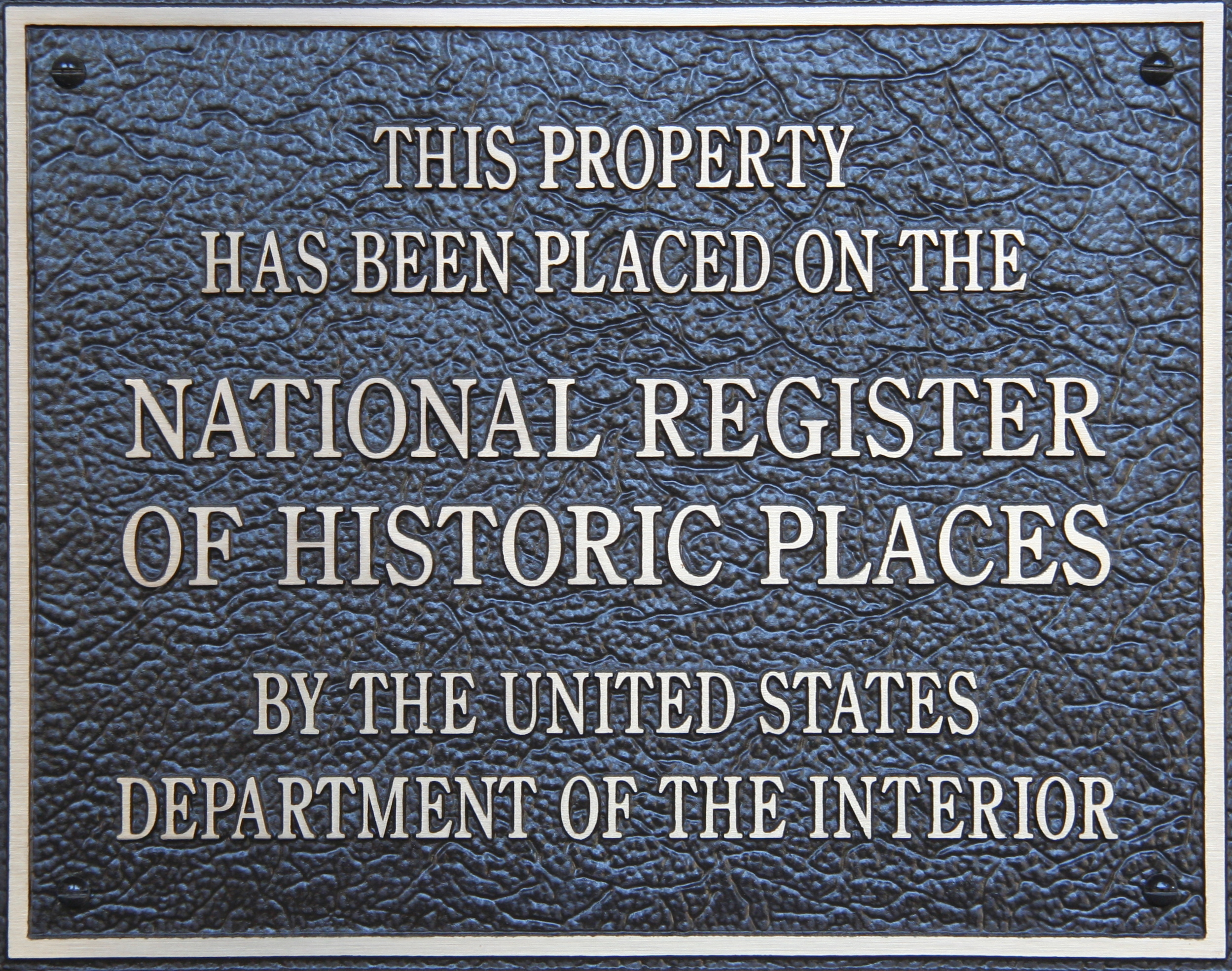
Perhaps the most remarkable individual story belongs to Ensign Karl Ernst Pfaff of U-boat 234, a submarine bound for Japan carrying rocket plans, a crated jet plane, and over 500 kilograms of uranium oxide. When U-234 surrendered seven days after Germany's capitulation, Pfaff helped the Americans locate the uranium hidden in a false wall around the conning tower. He was separated from his crew and sent to Camp Ruston, eventually gaining American citizenship. The last prisoners left the camp on February 3, 1946. The site became a tuberculosis sanatorium, then a facility for the mentally disabled. Today, much of the former camp is a livestock facility for Louisiana Tech University. Only a few dilapidated hospital buildings remain, placed on the National Register of Historic Places in 1991. But the human connections outlasted the structures. Former POWs returned to Ruston for a 40th-anniversary reunion in 1984 and again for a symposium in 1995, confirming friendships forged during wartime in the Louisiana pines.
From the Air
Located at 32.53N, 92.74W, approximately 3 miles west of Ruston, Louisiana along Interstate 20. The former camp site is now partially occupied by Louisiana Tech University livestock facilities and remnants of the Ruston Developmental Center. Nearest airport is Ruston Regional Airport (KRSN), about 4 nm east. Monroe Regional Airport (KMLU) is approximately 30 nm east. The I-20 corridor and Louisiana Tech campus are useful visual references. Best viewed at 1,500-2,500 ft AGL.