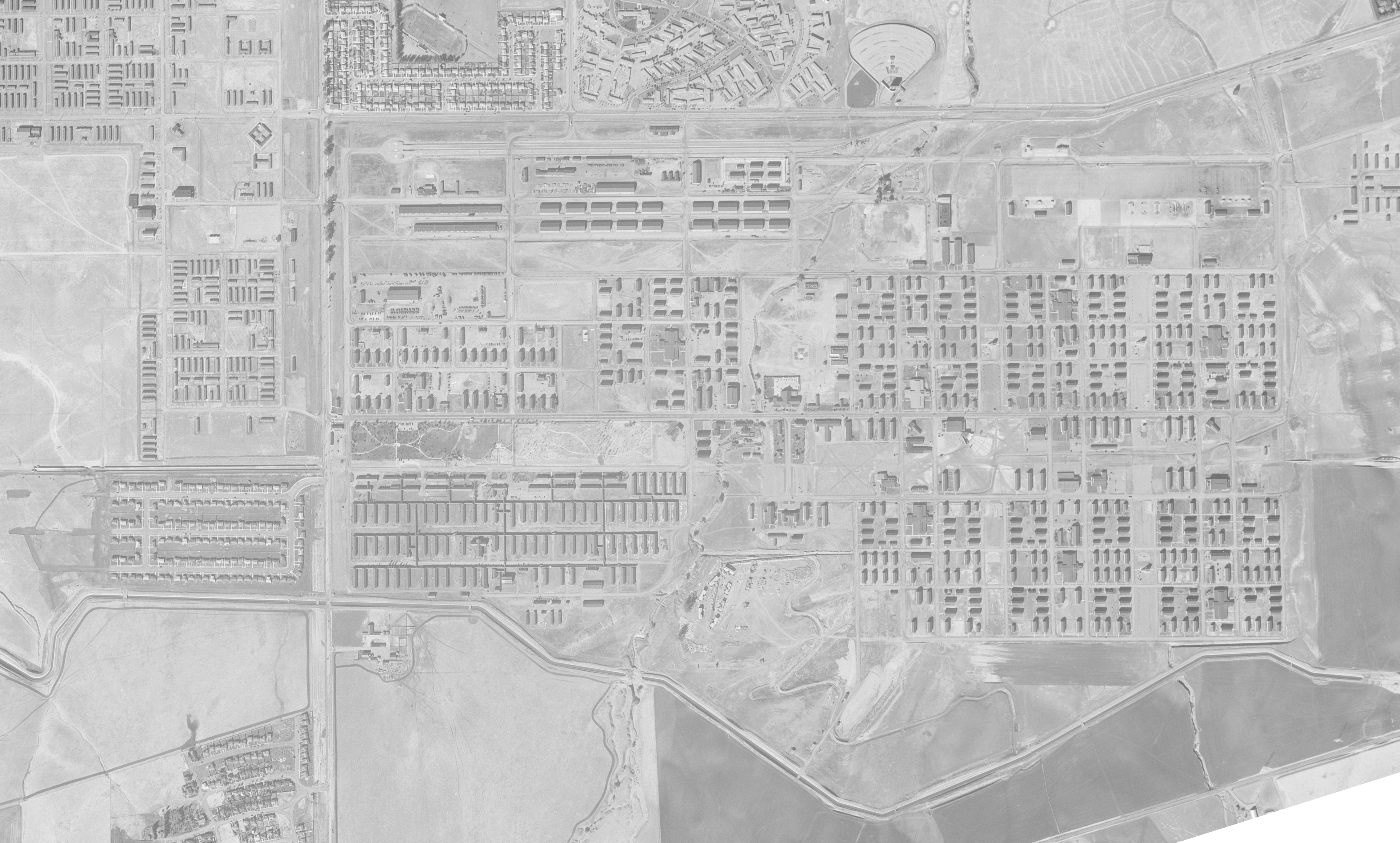
The Last Stop Before the Pacific
The men who passed through Camp Stoneman rarely stayed long enough to learn the layout. A few days, sometimes a week -- just enough time to process paperwork, receive final inoculations, and write letters home that couldn't say where they were going. Located in Pittsburg, California, at the edge of the Sacramento-San Joaquin River Delta, the camp was the last funnel in a continental pipeline that moved American soldiers from training bases across the country to troopships bound for the Pacific. From its opening on May 28, 1942, through the Korean War and its decommissioning in 1954, Camp Stoneman was the place where the war stopped being abstract. The next stop was a ship, and after that, an ocean, and after that, whatever waited on the other side.
A Cavalry Commander's Namesake
The camp took its name from George Stoneman, a figure who straddled two chapters of American military and political history. Stoneman had commanded cavalry during the Civil War, leading raids through Virginia and later through Georgia and the Carolinas. After the war, he entered politics and served as the fifteenth Governor of California from 1883 to 1887. The choice of name was fitting for a staging area that served as a bridge between peacetime America and the battlefields of the Pacific -- Stoneman himself had been a man caught between worlds, a warrior turned statesman who understood both the machinery of war and the obligations of governance.
The camp rose quickly on flat delta land near the San Joaquin River. Its location was strategic: close enough to San Francisco's port facilities to move troops efficiently, connected by rail to the national network, and large enough to hold the thousands of soldiers who cycled through during peak operations.
The Staging Machine
Camp Stoneman operated under the San Francisco Port of Embarkation, the military logistics command responsible for moving troops and materiel across the Pacific. The camp's function was deceptively simple: receive units arriving by rail, process them for overseas deployment, and transport them to the ships waiting at San Francisco Bay. In practice, this meant managing a constant flow of humanity -- divisions arriving from training camps in Oklahoma, Texas, and the South, each needing medical clearance, equipment checks, and final briefings before boarding.
A railroad track ran along the north side of the camp for receiving and shipping soldiers. Late in the war, the Port of Embarkation attempted something more ambitious: embarking troops directly aboard a Liberty ship docked at the camp itself, bypassing the trip to San Francisco entirely. The experiment failed. The San Joaquin River channels proved too difficult for large ship navigation, and the idea was abandoned. The troops went back to riding trains to the port.
Roll Call of the Pacific War
The units that staged through Camp Stoneman read like a catalog of the Pacific campaign. The 2nd Infantry Division passed through, as did the 5th and 7th Cavalry Regiments -- the latter carrying the legacy of Custer's old command into a very different kind of war. The 86th Infantry Division arrived from Camp Gruber, Oklahoma, in August 1945, spending a week at Stoneman before departing for the Philippines. The 2nd Filipino Infantry Regiment staged here too, Filipino Americans heading to fight for the liberation of their ancestral homeland.
Engineering and aviation units cycled through with equal frequency. The 841st Engineer Aviation Battalion spent two weeks at Stoneman in September 1943 before departing for San Francisco and then Sydney, Australia. The 345th Bombardment Group -- the Air Apaches -- and the 380th Bomb Group of the 5th Air Force both processed through on their way to airfields across the Pacific. For each unit, the camp was the same thing: a pause, a breath, the last familiar ground.
Homecoming and Silence
Camp Stoneman served a second, less discussed function: it was also where survivors came back. A photograph from December 1945 shows the combat veterans of Company B, 124th Infantry Regiment, 31st Infantry Division, standing at Camp Stoneman after their return. They had left as one of many units in an enormous military machine. They came back as individuals carrying what the Pacific had done to them.
The Korean War extended the camp's life through the early 1950s, but the scale was smaller, the urgency different. By 1954, the Army decommissioned Camp Stoneman. The buildings came down or were repurposed. The railroad siding that had received so many trains fell quiet. Today, the city of Pittsburg has absorbed the land where the camp once stood. There are no grand monuments, no museum dedicated to the hundreds of thousands who passed through. The camp did its job -- it moved people toward a war and then, for the lucky ones, moved them home again -- and then it disappeared, as staging areas do when the staging is done.
From the Air
Located at 38.009N, 121.887W near present-day Pittsburg, California, along the San Joaquin River delta. The former camp site has been absorbed into the city of Pittsburg. Look for the flat delta terrain and the river channels that made large ship navigation difficult. Buchanan Field Airport (KCCR) lies approximately 8 nm to the southwest. The Stockton Deepwater Shipping Channel runs nearby. The Sacramento-San Joaquin Delta waterways are prominent visual references. Best viewed at 2,000-3,000 ft AGL to appreciate the delta geography that shaped the camp's logistics.