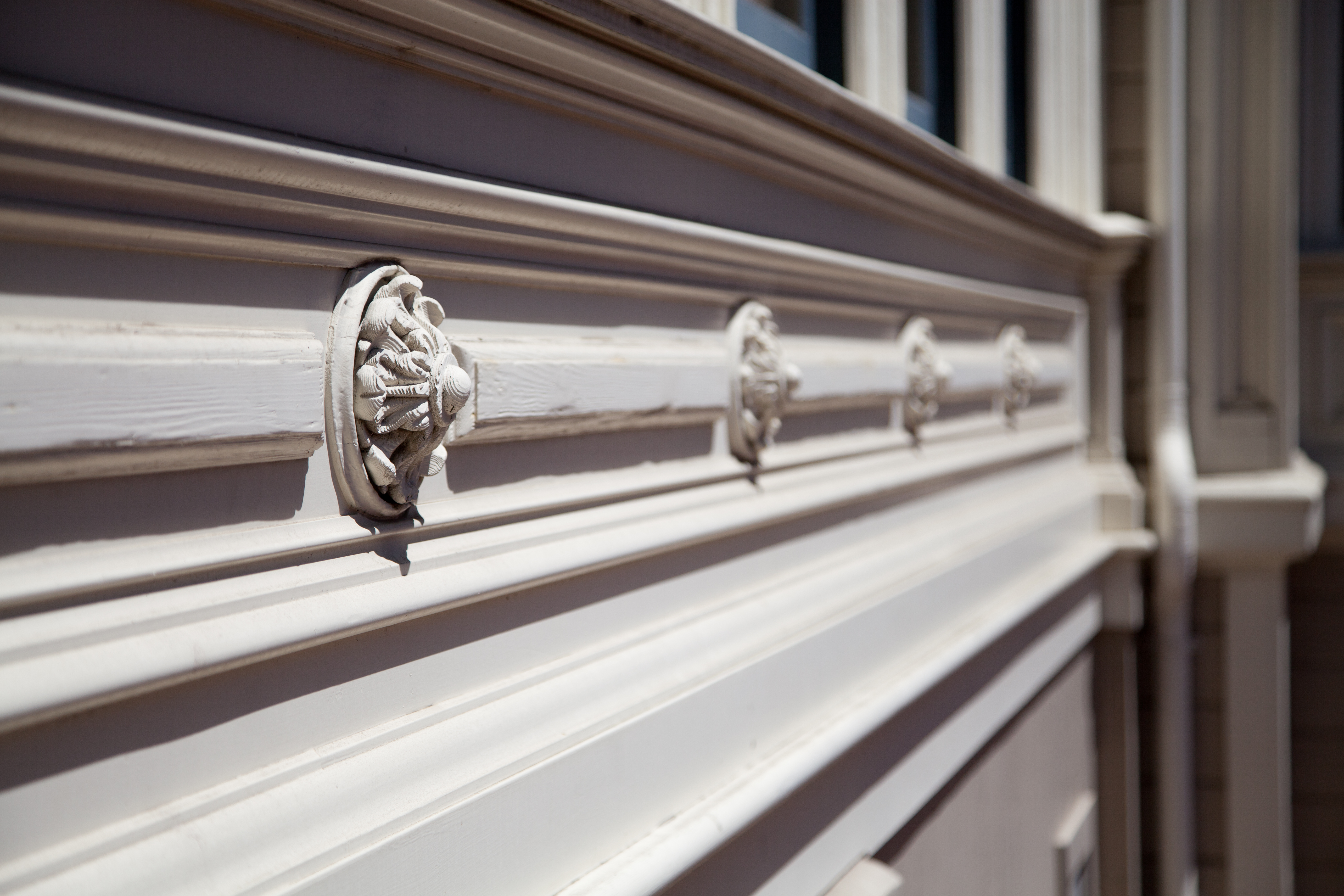
Camron-Stanford House
Every other mansion is gone. Where a ring of Victorian estates once circled Lake Merritt, there are now lawns, joggers, and the hum of traffic along Grand Avenue. Only the Camron-Stanford House remains, a lone Italianate holdout from 1876, standing at the water's edge like a guest who refused to leave the party. Its survival was not inevitable. When Oakland razed the neighboring mansions in 1907 to create Lakeside Park, this house was spared only because the city needed a building for its first public museum. That pragmatic reprieve became a permanent one, and today the house serves as both a museum and a reminder of the vanished lakefront Oakland once had.
A Pioneer's Daughter and a Murdered Father
The first family to live in the house brought with them one of California's more dramatic backstories. Alice Marsh Camron was the daughter of Dr. John Marsh, a pioneer who helped lure wagon trains of settlers westward and advocated for California's independence from Mexico. Marsh owned the 13,000-acre Rancho los Meganos in what is now eastern Contra Costa County, and the stone house he built there still stands in Marsh Creek State Park. His story ended violently: he was murdered by a disgruntled employee. Alice, left with a substantial inheritance, used part of it to purchase this lakeside home from its builder, Samuel Merritt, the same man for whom the lake is named. She and her husband William Walker Camron became the house's first residents, connecting it from the start to the turbulent early history of the state.
Golden Spikes and Railroad Fortunes
The families that followed the Camrons read like a roster of Gilded Age California ambition. David Hewes, a man who made and lost several fortunes, occupied the house next. His most famous act was donating one of the golden spikes driven at Promontory Summit, Utah, in 1869 to celebrate the completion of the first transcontinental railroad. Then came the Stanfords. Josiah Stanford's family owned the house from 1882 to 1903, and though Josiah himself was less famous than his brother Leland, the Stanford name carried enormous weight. Leland was one of the founders of the Central Pacific Railroad, which built the transcontinental line eastward from Sacramento. Between the Hewes golden spike and the Stanford railroad empire, this modest lakeside house touched the story of the railroad that stitched the continent together.
Museum by Necessity, Landmark by Luck
In 1907, Oakland purchased the Camron-Stanford House along with the other private residences that lined Lake Merritt. The city's plan was simple and sweeping: tear everything down and give the public a park. But someone realized they needed a place to put the city's growing collection of artifacts, and the house was the obvious candidate. So while its neighbors fell to the wrecking ball, the Camron-Stanford House became the Oakland Museum. It served that purpose for more than five decades, its Victorian parlors repurposed for display cases and educational exhibits. When the museum merged with the Oakland Art Gallery and the Snow Museum in 1965 and moved to a purpose-built facility, the house faced an uncertain future. Demolition seemed likely. Instead, public interest and private donations intervened. The building was listed on the National Register of Historic Places on June 13, 1972, and it reopened as an independent house museum.
The Lake It Watches Over
Lake Merritt itself is essential to understanding why this house matters. Designated as the first official wildlife refuge in North America in 1870, the lake has been the center of Oakland's public life for more than a century. The mansions that once surrounded it represented the wealth of a young city trying to establish itself alongside San Francisco across the bay. When those mansions came down, the lake became democratic, a place for everyone rather than a backdrop for the privileged few. The Camron-Stanford House sits at the intersection of those two identities. It is the last physical evidence of the private, exclusive lakefront, preserved within the public park that replaced it. Stand on its porch and you see both Oaklands at once: the 19th-century city of railroad money and pioneer ambition, and the modern one that chose open space over private grandeur.
From the Air
The Camron-Stanford House sits at 37.801N, 122.262W, on the southwestern shore of Lake Merritt in Oakland. From the air, Lake Merritt's distinctive tidal lagoon shape is an unmistakable landmark. The house is a small Victorian structure on the lake's western edge near Grand Avenue. Oakland International Airport (KOAK) is approximately 6 nautical miles to the south. Best viewed at 1,500-2,500 feet AGL. The lake itself is the primary visual reference; the house is visible as the lone period structure on the otherwise park-lined shore.