Cana Island Light
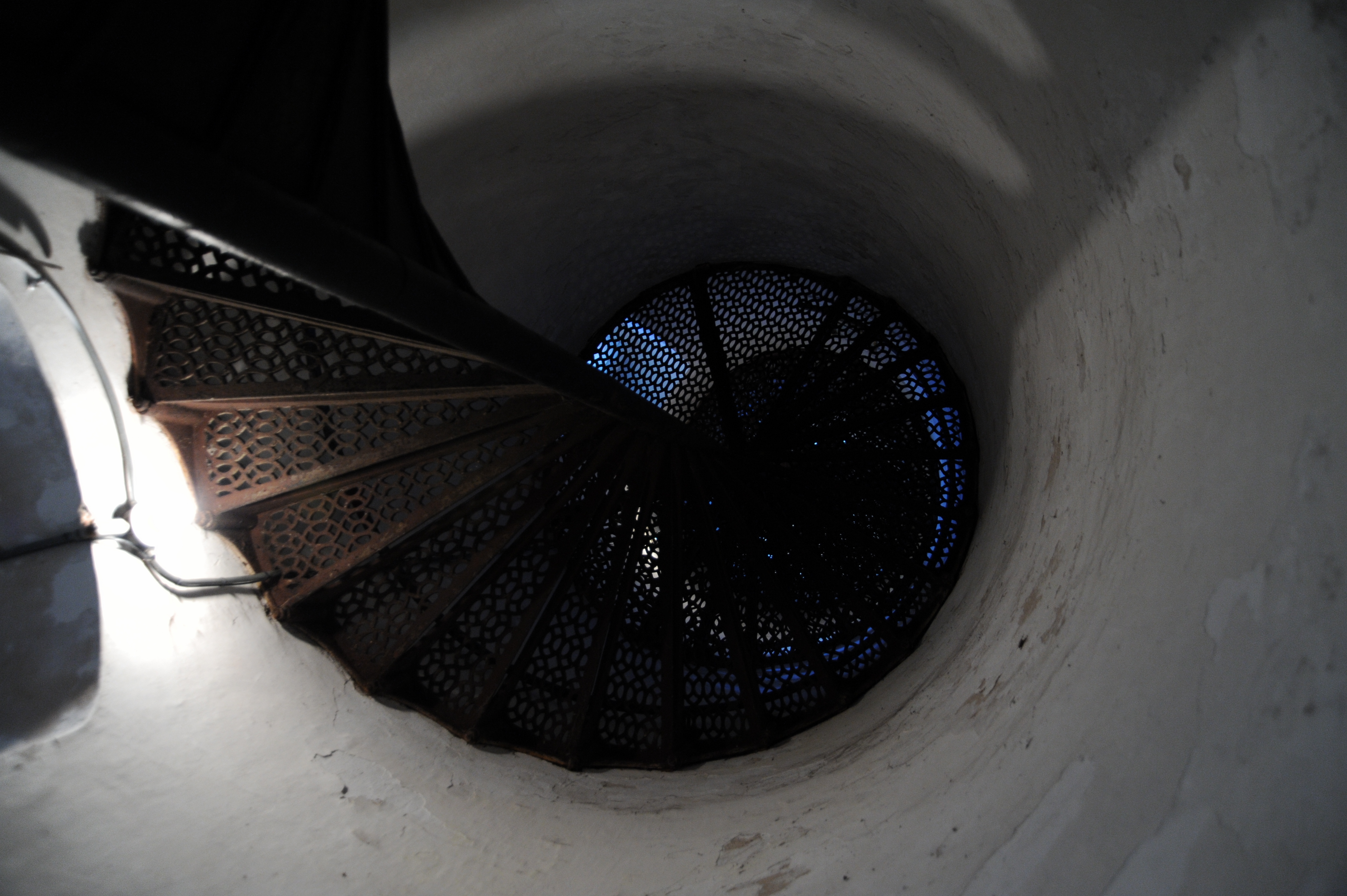
To reach the Cana Island lighthouse, you wade. The rocky causeway connecting this small island to the Door County mainland sits just low enough that Lake Michigan covers it with one to three feet of cold water, depending on the season and the lake's mood. Visitors have been making this crossing since the 1970s, shoes in hand, to climb the 102 cast iron steps of a tower that first threw its light across the water in 1870. The lighthouse was built to replace the older Baileys Harbor Lighthouse, and it has outlasted storms that sank ships, winters that cracked its walls, and a century of technological change that took its flame from lard oil to electricity.
Cream Brick and Steel Skin
The original tower and keeper's quarters were built in 1869 from cream city brick, the distinctive pale yellow building material quarried from clay deposits around Milwaukee. It was a beautiful choice and a poor one. Lake Michigan's storms and Door County's brutal winters attacked the brick relentlessly, and within three decades the tower was deteriorating. In 1902, engineers wrapped the entire structure in a riveted steel cladding, giving the lighthouse its distinctive industrial appearance. The total cost for the keeper's quarters, tower, and protective cladding came to $12,793. That steel shell has held firm ever since, shielding the original brickwork underneath like armor on an aging knight.
The Changing Flame
The light at the top of Cana Island's tower tells a story of American technology in miniature. A third-order Fresnel lens, that elegant French invention of concentric glass prisms, has focused the beam since the beginning. But the fuel behind the light has changed with every era. The first keepers burned lard oil, hauling fuel up the tower each evening by hand. Kerosene replaced lard, then acetylene replaced kerosene. The round ball at the tower's peak, an ornamental detail to modern eyes, was originally the vent that drew smoke and soot away from the oil lamp. Electricity finally arrived in 1945, not from a power line but from a two-kilowatt generator and batteries that powered a modest 100-watt, 32-volt bulb. A proper power line did not reach the island until the 1960s. Today, four bulbs sit mounted in a rack designed so that when one burns out, the next rotates into position automatically.
Keepers and Their Solitude
For the first two decades of the light's operation, the assistant keeper was always a spouse or family member. Living on a small island accessible only by wading through frigid water limited the applicant pool. Patrick Chambers became the first non-family assistant in 1889, breaking a tradition born of isolation. The roster of keepers reads like a census of Door County's immigrant heritage: William Jackson, the first keeper from 1869 to 1872, followed by Julius Warren, William Sanderson, and Jesse T. Brown, who tended the light for twenty-two years from 1891 to 1913. When electricity finally made the nightly oil-carrying ritual unnecessary, it also eliminated the need for an assistant. Rosie and Louie Janda served as the last resident caretakers from 1977 to 1995, closing a chapter of human habitation that had lasted over a century.
Shipwrecks at the Light
Cana Island's light was positioned to warn mariners away from the rocky shoals of upper Door County, but it could not control the weather. On October 15, 1880, a storm remembered as the Big Blow swept across Lake Michigan and destroyed seven ships near the lighthouse. The keeper could only watch as vessels broke apart in seas that no lantern could tame. Nearly fifty years later, on October 4, 1928, the freighter M.J. Bartelme ran aground in thick fog at the island's edge. Attempts to free the ship failed, and its hull settled into the rocks. These events were not unusual for the Great Lakes, where autumn storms could turn shipping lanes into graveyards, but they gave Cana Island's light a particular urgency. It was not decorative. It was survival.
An Island Built by Hand
The land around the lighthouse was once bare rock and dirt with wood walkways laid over the stones. In 1900, a crew of men with eight teams of horses and wagons began the laborious work of hauling topsoil to the island. Six weeks of effort transformed the barren ground into something that could sustain grass and gardens. A stone sea wall was constructed on the island's exposed eastern edge to hold back Lake Michigan's relentless erosion. Today the Door County Maritime Museum operates tours of both the lighthouse and keeper's quarters, maintaining a site that remains an active navigational aid under the United States Coast Guard. The island was added to the National Register of Historic Places in 1976, though nature continues to test its resilience. In August 2025, a severe storm destroyed roughly thirty percent of the island's trees, a reminder that Cana Island has always been a place where human persistence meets the lake's indifference.
From the Air
Located at 45.09N, 87.05W on a small island just north of Baileys Harbor along Door County's Lake Michigan shoreline. The white steel-clad tower is visible from altitude against the dark tree canopy. Look for the narrow rocky causeway connecting the island to the mainland. Nearest airport is Door County Cherryland Airport (KSUE). The lighthouse sits along the eastern shore of the Door Peninsula; approach from over Lake Michigan heading west for the most dramatic perspective. Recommended altitude: 2,000-3,000 feet AGL.