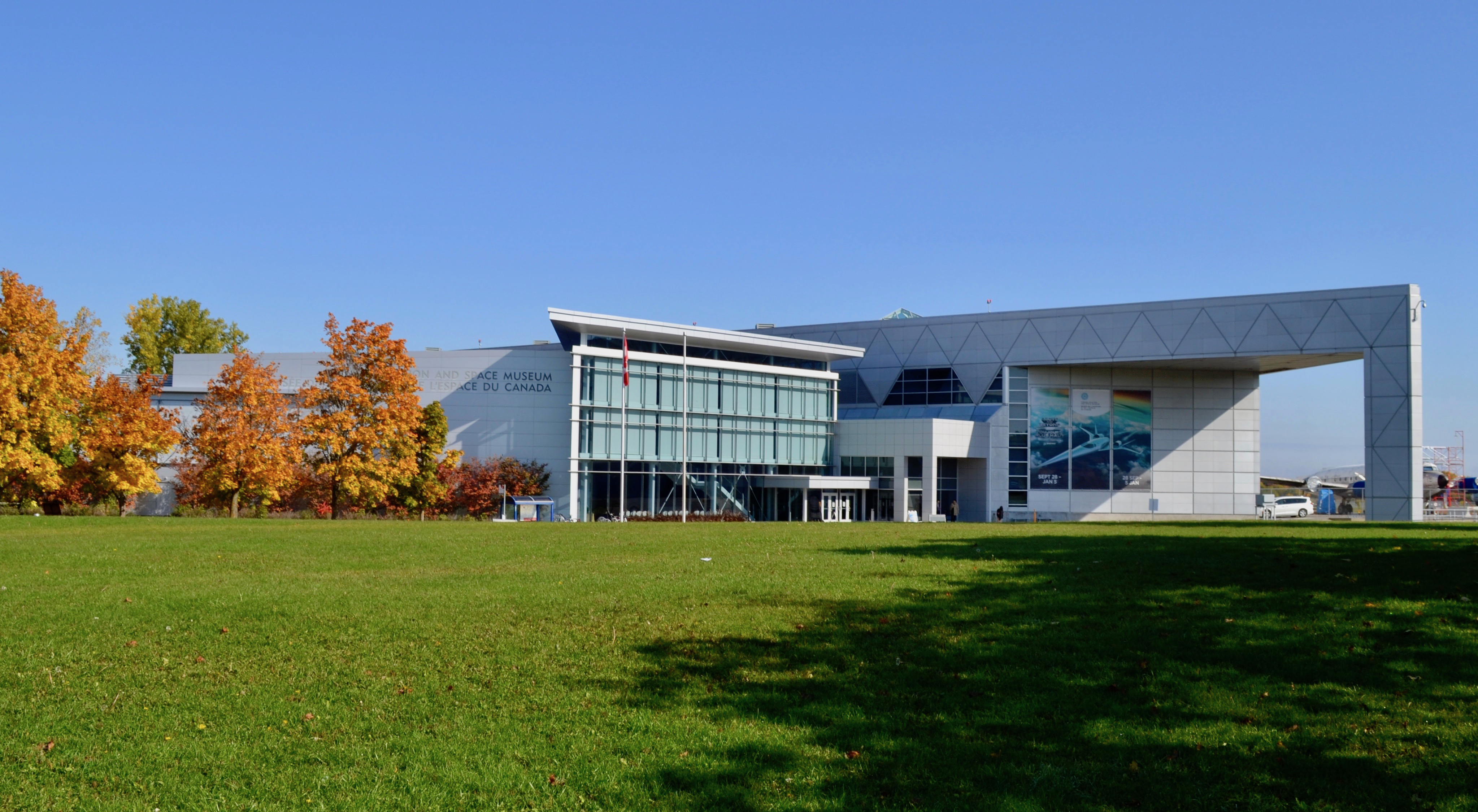
Canada Aviation and Space Museum
On May 2, 2013, astronaut Chris Hadfield floated aboard the International Space Station, 400 kilometres above the Earth, and appeared on a video screen inside a museum in Ottawa. He was there to help unveil the robotic arm from Space Shuttle Endeavour -- Canadarm 201, the Canadian-built device that had grappled satellites, assembled the space station, and become a symbol of Canada's contribution to human spaceflight. The arm now rests in the same building as a fragile Bleriot monoplane from 1909 and the battered nose cone of the Avro Arrow, the Cold War interceptor whose cancellation still stings. That range -- from wire and fabric biplanes to orbital robotics -- is what the Canada Aviation and Space Museum contains, and it tells the story of a country that punched far above its weight in the air.
Three Collections Become One
The museum traces its origins to 1964, when three separate collections were merged at RCAF Station Rockcliffe on the eastern outskirts of Ottawa. The National Aviation Museum at Uplands had focused on early aviation and bush flying. The Canadian War Museum's aviation collection held military aircraft, including war trophies dating back to World War One. And the RCAF Museum preserved aircraft operated by the Royal Canadian Air Force. Combining them created the National Aeronautical Collection, a single repository spanning the entire arc of Canadian flight. The collection lived for decades in Second World War-era wooden hangars, gradually outgrowing them, until 1988 when it moved into a striking new building -- an experimental triangular hangar whose distinctive shape is visible from the air and has become an Ottawa landmark.
Bush Planes and Frozen Lakes
Canada's geography demanded a particular kind of flying. In the 1920s, 30s, and 40s, bush pilots threaded float planes and ski planes through unmapped wilderness to reach mining camps, trading posts, and isolated communities across the Canadian Shield and the Arctic. The museum's collection of vintage bush planes from this era is particularly noteworthy -- sturdy aircraft with oversized tires or pontoons, designed to land on lakes, rivers, gravel bars, and frozen tundra. These machines opened Canada's north to exploration, resource extraction, and basic services like mail delivery and medical evacuation. Walking among them, you can see the dents, the patched fabric, the improvised repairs that kept them flying in conditions no aircraft designer in southern Ontario ever anticipated.
The Arrow's Ghost
The museum's most emotionally charged exhibit occupies a modest amount of floor space: the surviving nose section and other components of the Avro CF-105 Arrow, designated RL 206. In the late 1950s, the Arrow was among the most advanced interceptor aircraft in the world, designed to defend Canadian airspace against Soviet bombers crossing the Arctic. The Diefenbaker government cancelled the program in 1959 and ordered all prototypes, tooling, and documentation destroyed. The decision scattered Canada's aerospace talent -- many engineers went to NASA and contributed to the Apollo program -- and became one of the most debated episodes in Canadian industrial history. What fragments survived are treated almost as relics. CNN has listed the Arrow among the world's most awesome prototype aircraft, and the museum's display draws visitors who regard it with a mix of pride and regret.
From Rockcliffe to the Stars
The museum sits at Ottawa/Rockcliffe Airport, itself a piece of aviation history. Once an active RCAF station, the field retains its runways and serves general aviation, giving the museum a living connection to the aircraft on display. In 2006, an additional hangar opened that finally allowed every aircraft in the collection to be stored indoors. A major renovation in 2008-2009 created the exhibition "Canadian Wings: A Remarkable Century of Flight," unveiled on February 23, 2009 -- the centennial of the first heavier-than-air flight in Canada, when the AEA Silver Dart lifted off at Baddeck, Nova Scotia. A C$7 million expansion completed by 2010 added a foyer, auditorium, cafeteria, classrooms, and a landscaped entrance, bringing 18 percent more space. That same year, the institution was renamed the Canada Aviation and Space Museum to reflect its growing collection of space artifacts.
A Country's Wings
The museum is managed by Ingenium, an autonomous Crown corporation that also oversees the Canada Agriculture Museum and the Canada Science and Technology Museum. Its collection spans civilian and military aircraft representing every major conflict and era of Canadian aviation -- World War One biplanes, World War Two bombers and fighters, Cold War jets, and modern aircraft. Beyond the hardware, the museum hosts interactive exhibits on the science of flight, films, demonstrations, guided tours, and behind-the-scenes visits where visitors can watch conservation and restoration work in progress. Air Cadets from 51 Canada Aviation Museum Squadron train on the premises, linking the museum's past to the country's aviation future. From the Bleriot monoplane to the Canadarm, from a bush pilot's battered Bellanca to the Arrow's broken promise, the collection tells a story about ambition, geography, and the particular Canadian talent for building machines that work in impossible conditions.
From the Air
The Canada Aviation and Space Museum is located at 45.46N, 75.64W on the grounds of Ottawa/Rockcliffe Airport (CYRO). The museum's distinctive triangular hangar is clearly visible from the air, positioned on the north side of the field. The rectangular white storage building sits adjacent to it. Rockcliffe Airport's runway is oriented roughly east-west. The museum is approximately 5nm northeast of Parliament Hill and the Ottawa River. Recommended viewing altitude: 1,500-3,000 feet AGL -- the museum is directly beneath the circuit for CYRO, so check NOTAMs and contact Ottawa Terminal if transiting. Nearest airports: Ottawa/Rockcliffe (CYRO) on site, Ottawa/Macdonald-Cartier International (CYOW) 12nm south, Gatineau Executive (CYND) 8nm northwest.