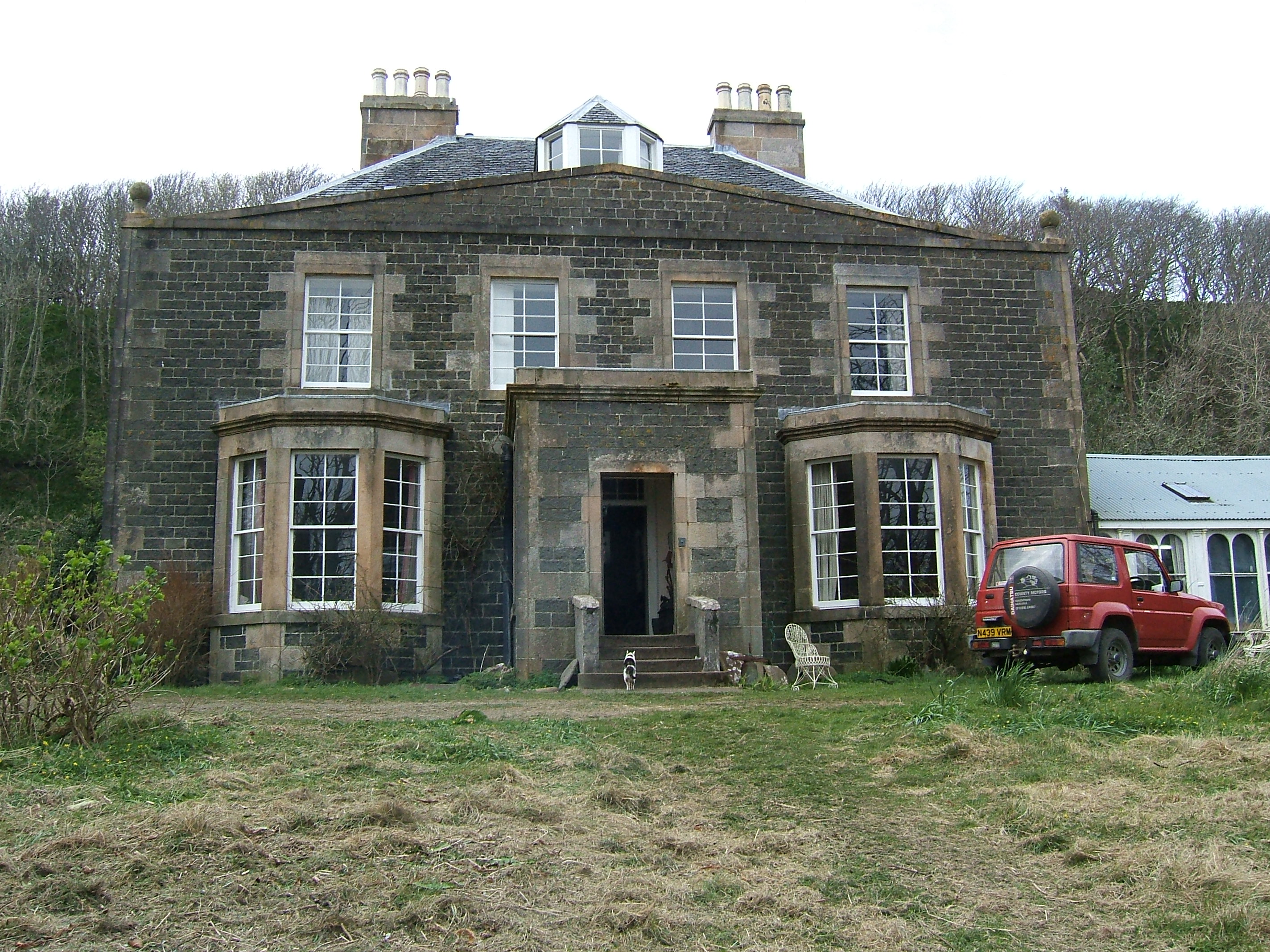
Canna, Scotland
Ships approaching Canna from the east have a problem their navigators did not anticipate. Compass Hill, a 456-foot volcanic peak on the island's eastern edge, contains so much iron in its tuff rock that it distorts the magnetic compasses of passing vessels, pulling their needles toward the hill rather than toward north. It is the kind of geological quirk that sounds like folklore until you check your instruments. Canna, the westernmost of the Small Isles in the Inner Hebrides, is four miles long, one mile wide, and home to fewer than two dozen people. Its smallness is deceptive. The island's history encompasses Viking ship burials, papal excommunications, Spanish Armada reprisals, Jacobite cattle raids, and a rat population that once outnumbered the human residents by roughly five hundred to one.
Kings and Crosses
At Keill, on the island's south coast, two large Celtic crosses dating from the 8th or 9th centuries stand richly decorated in a style normally associated with Ireland -- evidence of a monastic community that existed here long before the Vikings arrived. Following Norse raids in the 9th century, the Hebrides became the Kingdom of the Isles, a Norwegian crown dependency known as Sudreyjar. On Canna, oblong arrangements of kerb-stones throughout the island are thought to mark Viking ship burials. The largest, at Rubha Langan-innis on the north coast, is known in Gaelic as Uaigh Righ Lochlainn -- the grave of the King of Norway -- an eleven-yard-long rectangular structure on a grassy promontory beneath the cliffs. By 1203, Canna was listed among the possessions of the newly established Benedictine abbey at Iona. But the abbey's authority offered little protection. In the 1420s, feuding spilled onto the island so violently that the Abbot Dominicus obtained papal authority to ban all nobility from setting foot on Canna. When that failed, he wrote to the Pope in 1428 requesting a general excommunication against anyone who harmed an inhabitant, reporting that pirates and sea rovers had slain several of his people.
Burned with Fire
In 1561, the Bishop of the Isles rented Canna to Clan Ranald, a branch of the MacDonalds. The arrangement held until 1588, when the wreck of a Spanish Armada vessel off Tobermory gave Lachlan MacLean of Duart an opportunity. MacLean demanded 100 Spanish soldiers as the price of sheltering the shipwrecked crew, then used them to attack the Small Isles in pursuit of his feud with the MacDonalds. Canna was, in the words of the historical record, "burned with fire." MacLean was imprisoned in Edinburgh by King James VI but escaped and faced no further punishment. The island passed through the hands of the Earls of Argyll, the MacLeods of Raasay, and back to Clan Ranald, each transfer accompanied by the political convulsions of the Reformation and the civil wars. A small prison called Coroghon Castle was built on the side of an isolated sea stack in the late 17th century -- described by the naturalist Thomas Pennant in 1772 as a tower accessible only by "a narrow and horrible path," reportedly built by "some jealous regulus, to confine a handsome wife in."
Rats, Puffins, and an Honesty Shop
Clan Ranald tenants on Canna joined the Jacobite risings of 1715 and 1745. After Culloden, the Royal Navy ship Baltimore arrived and demanded the island's best cattle under threat of force. Days later, the ship Commodore appeared, and the women of Canna fled into caves and countryside after a sailor warned them of the crew's intentions. The Clearances followed. By 1828, the island's population of over 400 had been scattered to make way for sheep. The scholar John Lorne Campbell bought Canna in the 20th century and devoted decades to preserving Gaelic language and culture, eventually gifting the island to the National Trust for Scotland. But by 2005, Canna faced a different crisis: the brown rat population had exploded to 10,000, threatening rare Manx shearwaters, puffins, and human health. A complete cull was ordered -- preceded by the careful removal of a rare subspecies of woodmouse to protect it from the rodenticide. By the end of 2006, Canna was rat-free, and puffins and razorbills began breeding in numbers not seen in a decade. Today the island operates with a post office converted from a garden shed, an unstaffed shop run on the honesty system, no mobile phone coverage, and a police officer who visits twice a year -- mainly to inspect gun licences.
From the Air
Canna lies at approximately 57.058N, 6.546W, the westernmost of the Small Isles archipelago in the Inner Hebrides. The island is roughly 4 miles long and 1 mile wide, oriented roughly east-west. Compass Hill (456 ft) on the eastern edge is the notable feature -- caution: its high iron content can affect magnetic compasses of aircraft at low altitude. Carn a' Ghaill (689 ft) is the highest point. The natural harbour between Canna and the linked island of Sanday is the only deep harbour in the Small Isles. Nearest airfield is Oban Airport (EGEO), approximately 55 nm south-southeast. The neighbouring islands of Rum, Eigg, and Muck are visible to the east and southeast.