Canterbury Museum, Christchurch
The skull of a Haast's eagle stares from behind glass at Canterbury Museum -- the beak that once tore into moa flesh, belonging to a predator that went extinct six hundred years ago and existed nowhere but New Zealand. It is the kind of object that Julius von Haast, the Prussian-born geologist who founded this museum in 1867, would have recognized as exactly right: something local, something irreplaceable, something that rewrites your sense of what a place can produce. Haast spent decades assembling the collection that became the museum's core, and the Gothic Revival building that Benjamin Mountfort designed to house it has stood at the edge of the Botanic Gardens and Hagley Park for more than 150 years.
A Geologist's Cabinet of Wonders
Julius von Haast arrived in Canterbury in 1858 on a commission to survey the province's geological resources. He never left. Over the next three decades, he collected with an intensity that bordered on obsession -- fossils, minerals, Maori artifacts, botanical specimens, anything that documented the natural and human history of the Canterbury region. By 1867, his collection was large enough to justify a public museum, and Haast became its first director. Benjamin Mountfort, Canterbury's most prominent architect, designed the building in the Gothic Revival style, and it opened in 1870. Mountfort continued to expand the structure through the 1870s and into the 1880s, with the building reaching its current footprint by 1882. The result is a Heritage New Zealand Category I building -- one of the finest examples of Victorian museum architecture in the Southern Hemisphere, all stone arches and pointed windows set against the green of the Botanic Gardens.
From Moa Bones to the Antarctic
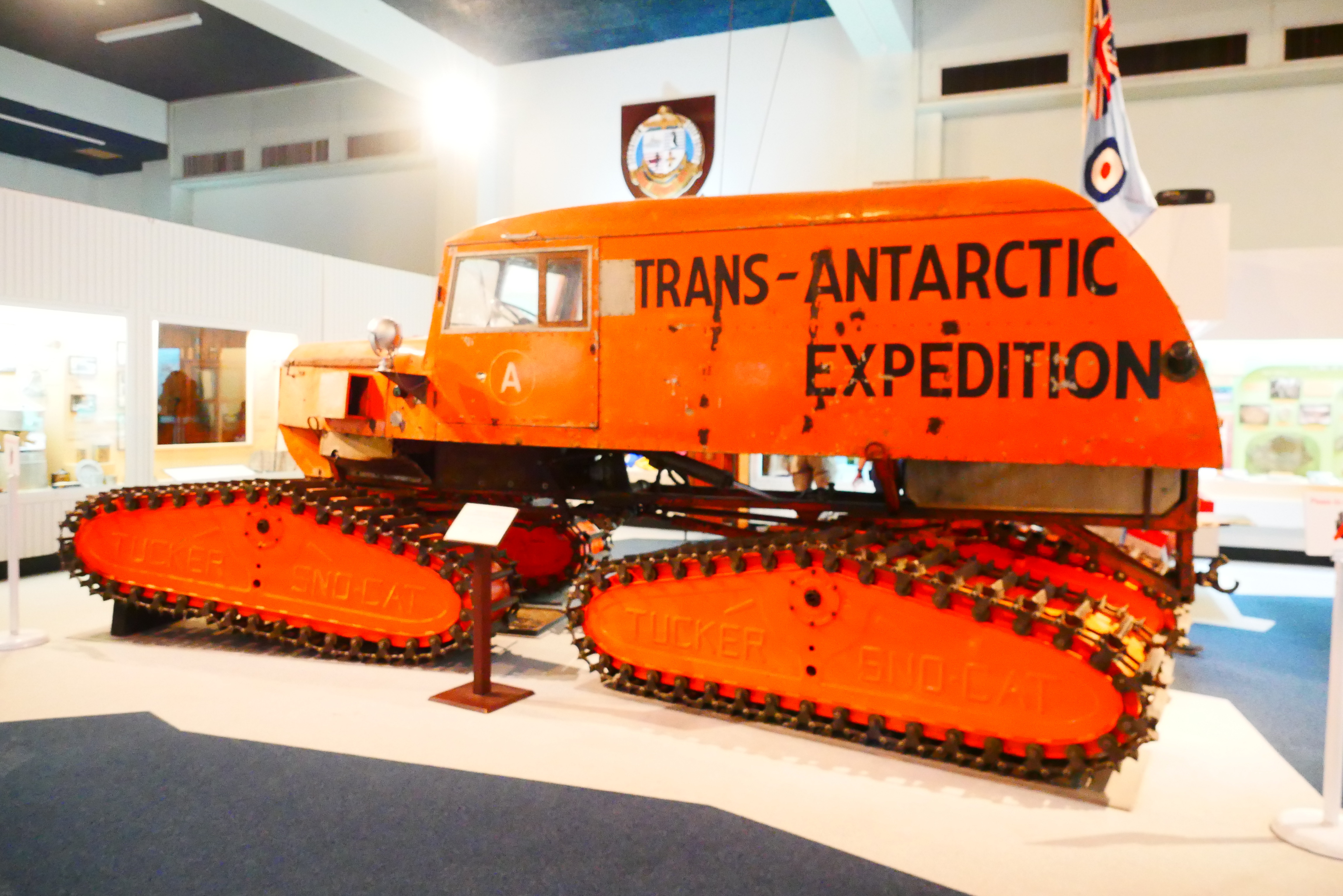
The museum's collection has grown to 2.3 million items, though less than one percent is on display at any given time. The range is staggering. Haast's eagles and moa skeletons anchor the natural history galleries. A blue whale skeleton -- thought to be one of the largest in the world -- has been a centerpiece for decades. The Antarctic collection, including the Tucker Sno-cat tractor from the Commonwealth Trans-Antarctic Expedition of 1955-1958, reflects Christchurch's long role as a staging point for polar expeditions. The Christchurch Street exhibit recreates a Victorian-era commercial block in full scale, complete with storefronts and period details. And then there is Fred and Myrtle's Paua Shell House, a lovingly eccentric room entirely encrusted in the iridescent shells of paua -- New Zealand's abalone -- transplanted whole from the home of a couple in Bluff who spent decades gluing shells to every surface.
Shaken but Standing
When the February 2011 earthquake struck Christchurch, Canterbury Museum suffered damage but survived far better than many of the city's heritage buildings. An estimated 95 percent of the collections came through unharmed. The statue of William Rolleston at the museum's entrance toppled from its plinth -- a dramatic but repairable loss. The museum reopened on September 2, 2011, less than seven months after the quake, becoming one of the first major cultural institutions to welcome the public back. In a city where heritage buildings were falling to demolition crews by the hundreds, the museum's survival was a point of civic pride. Its continued operation provided something the shattered city needed: continuity, a reminder that not everything had been lost.
Pulling Apart a Museum to Put It Back Together
In late 2020, the museum announced a $195 million redevelopment -- later revised to $205 million, with a $25 million government grant. The project is the most ambitious transformation in the museum's history, requiring the entire collection of 2.3 million items to be moved to a dedicated storage facility. The public was invited to say goodbye to the galleries before they were packed away for an estimated five years. In early 2023, before the move was complete, sixty artists from across New Zealand were given the run of the empty building for The Shift: Urban Art Takeover, creating installations across five floors and thirty-five rooms, including spaces the public had never seen. The redevelopment will introduce a large atrium exposing the original building walls, return the blue whale skeleton to a central hanging display, seismically strengthen the structure, integrate the neighboring Robert McDougall Art Gallery, and restore the museum's original fleche to the roofline. When it reopens, it will be both older and newer than the building Mountfort designed -- his bones, clad in glass and light.
From the Air
Located at 43.53S, 172.63E in central Christchurch, adjacent to the Botanic Gardens and Hagley Park -- the large rectangular green space visible from altitude. The museum's Gothic Revival building is on Rolleston Avenue at the park's eastern edge. Christchurch International Airport (NZCH) is approximately 10 km northwest. The Canterbury Plains and Southern Alps provide the dramatic backdrop to the west.