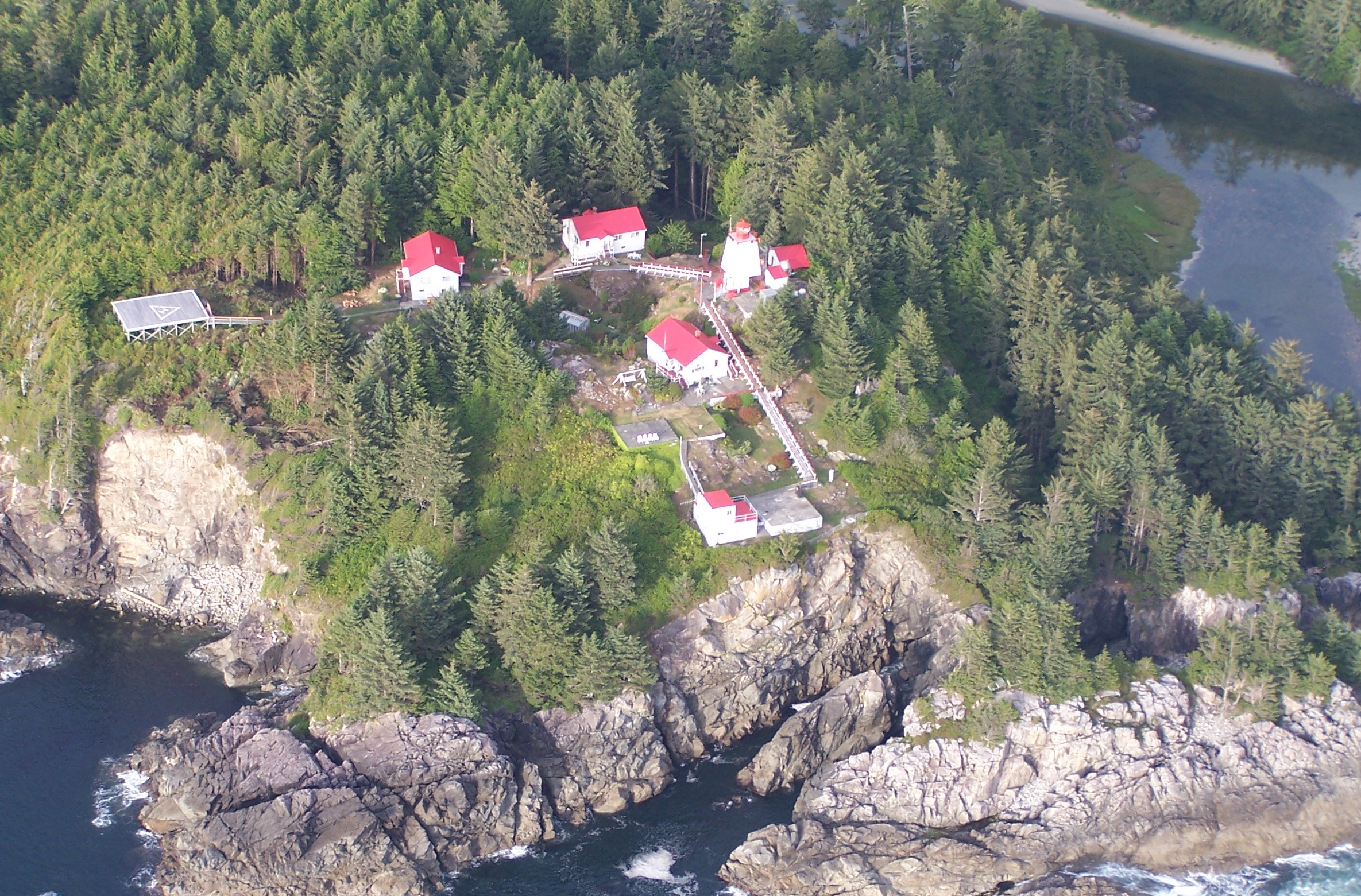
Cape Beale Light
Minnie Paterson would have traded every award to undo what she had seen. In 1906, during a severe storm off Vancouver Island's west coast, the keeper's wife at Cape Beale Light helped rescue everyone aboard the crippled barque Coloma. The Government of Canada gave her a gold watch and a silver plate. The Seattle Maritime Union sent a silver tea service. Minnie told a reporter she would have gladly returned them all to have not had the wrecks. It is the kind of sentiment that defines a lighthouse -- a place built because the sea takes lives, staffed by people who would rather it did not.
The Captain's Purser
Cape Beale received its name from Captain Charles William Barkley, who sailed the Imperial Eagle along this coast in the late 18th century. Barkley named the headland for his ship's purser, John Beale, giving a clerk's name to one of the most exposed points on Vancouver Island. The lighthouse was first built in 1874, perched on the cape 51 meters above sea level at the entrance to Barkley Sound. For over 150 years, the light has warned ships away from the rocks and reefs that guard the sound's mouth. The present tower, built in 1958 and standing 10 meters tall, replaced the original structure, but the station's purpose has never changed. Cape Beale Light remains one of the few actively manned lightstations in British Columbia, a human presence on a headland where automation alone has never seemed sufficient.
Minnie's Storm
Tom Paterson was the keeper of Cape Beale Light in the early 1900s, but it was his wife Minnie who became famous. The details of her 1906 rescue of the Coloma's crew during a severe storm entered the lore of the west coast lighthouse community. The barque had been crippled in heavy seas near the entrance to Barkley Sound, and Minnie's actions -- details of which became the subject of regional newspaper coverage -- helped bring everyone aboard to safety. Her reluctance to be celebrated for the rescue reflected a deeper truth about life at a remote lightstation. Wrecks were not adventures; they were emergencies that arrived without warning and demanded everything a keeper and their family could give. The gold watch, the silver plate, and the tea service sat in Minnie's home as reminders of a night she wished had never happened.
The Trail of the Shipwrecked
Cape Beale Light is best known today for its proximity to the West Coast Trail, the legendary 75-kilometer hiking route that runs along Vancouver Island's southwest coast between Bamfield and Port Renfrew. The trail's origin story is grimmer than most hikers realize. It was conceived as a lifesaving trail -- a route that survivors of shipwrecks could follow through the coastal forest to reach the community of Bamfield and safety. This stretch of coast, part of the region known as the Graveyard of the Pacific, swallowed ships with such regularity in the late 19th and early 20th centuries that the government built a series of lightstations, telegraph lines, and rough paths to give the survivors a chance. Cape Beale stands at the southern gateway of this rescue infrastructure, its beam sweeping the dark waters where so many vessels met their end.
Rain, Wind, and Light
Cape Beale's climate is classified as oceanic: mild winters, cool summers, and rain -- enormous quantities of rain. The station sits exposed to the full force of Pacific weather systems that barrel ashore with little to slow them. Fog can settle over the headland for days. Storm swells crash against the rocks below the tower with enough force to send spray past the lantern room. It is a rainy and relentless environment, and it demands a particular kind of resilience from the keepers who tend the light. From the air, Cape Beale appears as a rocky headland jutting into the open Pacific at the southern entrance to Barkley Sound, the white tower visible against the dark green of the surrounding forest. The lighthouse marks a boundary: to the east, the sheltered waters of the sound; to the west, the open ocean and everything it carries.
From the Air
Located at 48.79N, 125.22W on a prominent headland at the southern entrance to Barkley Sound, Vancouver Island. The white lighthouse tower is visible from altitude against the dark forested cape. The West Coast Trail runs along the coast to the southeast. Bamfield is the nearest community, accessible by road or floatplane. Nearest major airport is Tofino/Long Beach Airport (CYAZ) to the northwest. The entrance to Barkley Sound, with Cape Beale on the south side, is a prominent coastal feature.