Cape Canaveral Space Force Museum
The blockhouse at Launch Complex 26 has walls thick enough to survive a rocket explosion at close range. That was the point. In January 1958, the people inside it launched Explorer 1 on a Jupiter-C rocket, putting America's first satellite into orbit and answering the Soviet Union's Sputnik challenge. Today the blockhouse is a museum gallery, its blast-proof concrete now protecting glass display cases instead of engineers. The Cape Canaveral Space Force Museum occupies this ground at Cape Canaveral Space Force Station in Florida, a working military installation where the artifacts of the space race sit among the launch pads that created them. Visitors do not drive past the history to reach the museum. They drive through it.
Rockets in the Salt Air
For years, the museum's signature exhibit was an outdoor collection known as the Rocket Garden, a lineup of missiles and launch vehicles arranged in the open air beside the Atlantic Ocean. It was a striking sight but a losing battle. Central Florida's heat, humidity, and salt-laden ocean winds ate through paint, corroded metal skins, and degraded internal structures. The museum staff eventually pulled the rockets from outdoor display and undertook careful restoration before placing them in storage. The artifacts waited for a permanent indoor home, and they found one in Hangar C, the oldest hangar on the Cape. Hangars A and B had been built on Patrick Space Force Base to the south; Hangar C was the first on Cape Canaveral itself, and it had served as a central missile assembly facility during the early launch campaigns. After extensive renovation to make the hangar safe for public access, Hangar C reopened as a display hall, and in early 2020 the Kennedy Space Center Visitor Complex added it to a new tour called Rise to Space.
Gemini, Titans, and the Cold War Arsenal
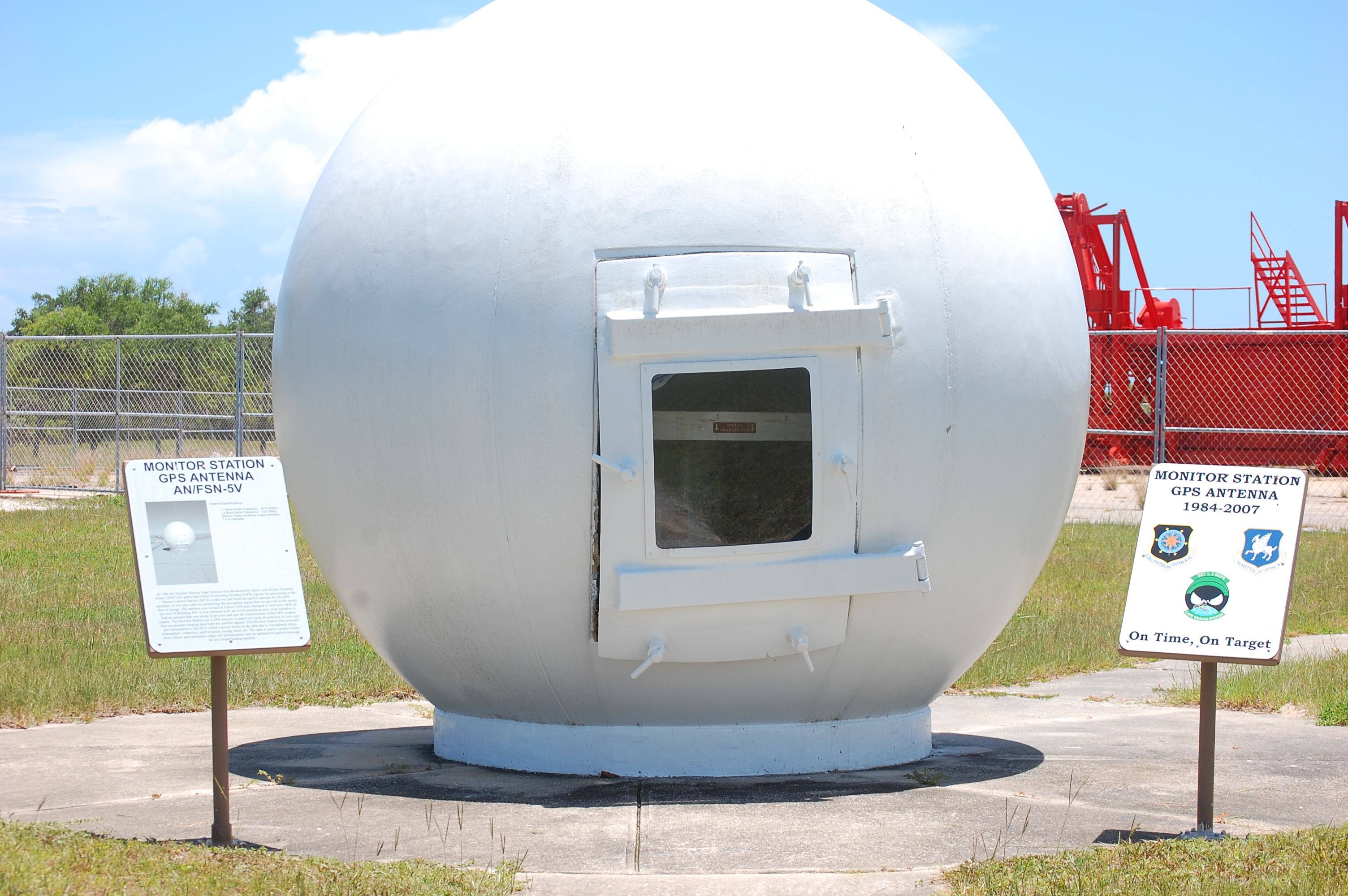
The museum's collection reaches across the full arc of American military spaceflight. The Gemini 2 spacecraft, an uncrewed capsule that flew a suborbital test mission in 1965 to validate the heat shield design, sits in the gallery. A boilerplate version of the Gemini capsule is displayed in Hangar C alongside a Thor-Able rocket, the vehicle that launched some of America's earliest satellite attempts. An EMD SW8 switching locomotive from the Air Force Titan program represents the industrial-scale railroad infrastructure that once moved rocket stages around the Cape. A GPS ground monitor station illustrates the military's transition from launching things into space to relying on what was already up there. A Navaho missile, one of the Cold War's ambitious but ultimately canceled intercontinental cruise missile projects, was restored and placed back on display at the station's south gate in 2021.
The Sands Space History Center
Not everyone can get onto Cape Canaveral Space Force Station. The museum itself requires U.S. citizenship and a guided tour through Canaveral Tours or Space Launch Delta 45. But in 2010, the Air Force opened an extension outside the station's south gate: the Sands Space History Center, accessible to the general public six days a week. The center occupies a dedicated facility and chronicles the story of every launch pad on the station, from its establishment in 1949 as the Joint Long Range Proving Ground through the Mercury, Gemini, and Apollo eras to the commercial launches of today. Exhibits include artifacts dating to the 1950s, parts of launch vehicles, and control system components. After a significant financial donation from Jared Isaacman, the private astronaut who commanded the Inspiration4 mission, the center underwent a renovation and reopened on June 17, 2025, with refreshed galleries and new displays.
A Museum That Never Left the Launchpad
What makes the Cape Canaveral Space Force Museum unusual is not its collection but its location. Most aerospace museums sit in cities, surrounded by parking lots and gift shops. This one sits inside an active military space installation, on the concrete where rockets actually stood. The LC-26 blockhouse that houses part of the museum is the same structure where technicians monitored telemetry during Explorer 1's countdown. The view from the outdoor exhibits includes neighboring launch complexes where commercial rockets still fly. Free historical tours led by Space Launch Delta 45, formed from the 45th Space Wing in May 2021 after the establishment of the U.S. Space Force, walk visitors through a landscape where every building, bunker, and stretch of road has a direct connection to the seven decades of launches that defined America's reach into space.
From the Air
The Cape Canaveral Space Force Museum is located at 28.44°N, 80.57°W at Launch Complex 26, Cape Canaveral Space Force Station, Florida. From the air, LC-26 is identifiable along the southern portion of the station, near the south gate. Hangar C is a large, distinctive structure visible among the smaller blockhouses and pad remnants. The Sands Space History Center sits just outside the south gate. Nearest airports: Space Coast Regional Airport (KTIX) approximately 15nm northwest; Merritt Island Airport (KCOI) approximately 7nm west; Patrick Space Force Base (KCOF) approximately 10nm south. Recommended viewing altitude: 2,000-4,000 ft AGL for context of the museum's position among the surrounding launch complexes. Port Canaveral's cruise terminals are visible to the south, and Kennedy Space Center's Vehicle Assembly Building is a landmark to the northwest.