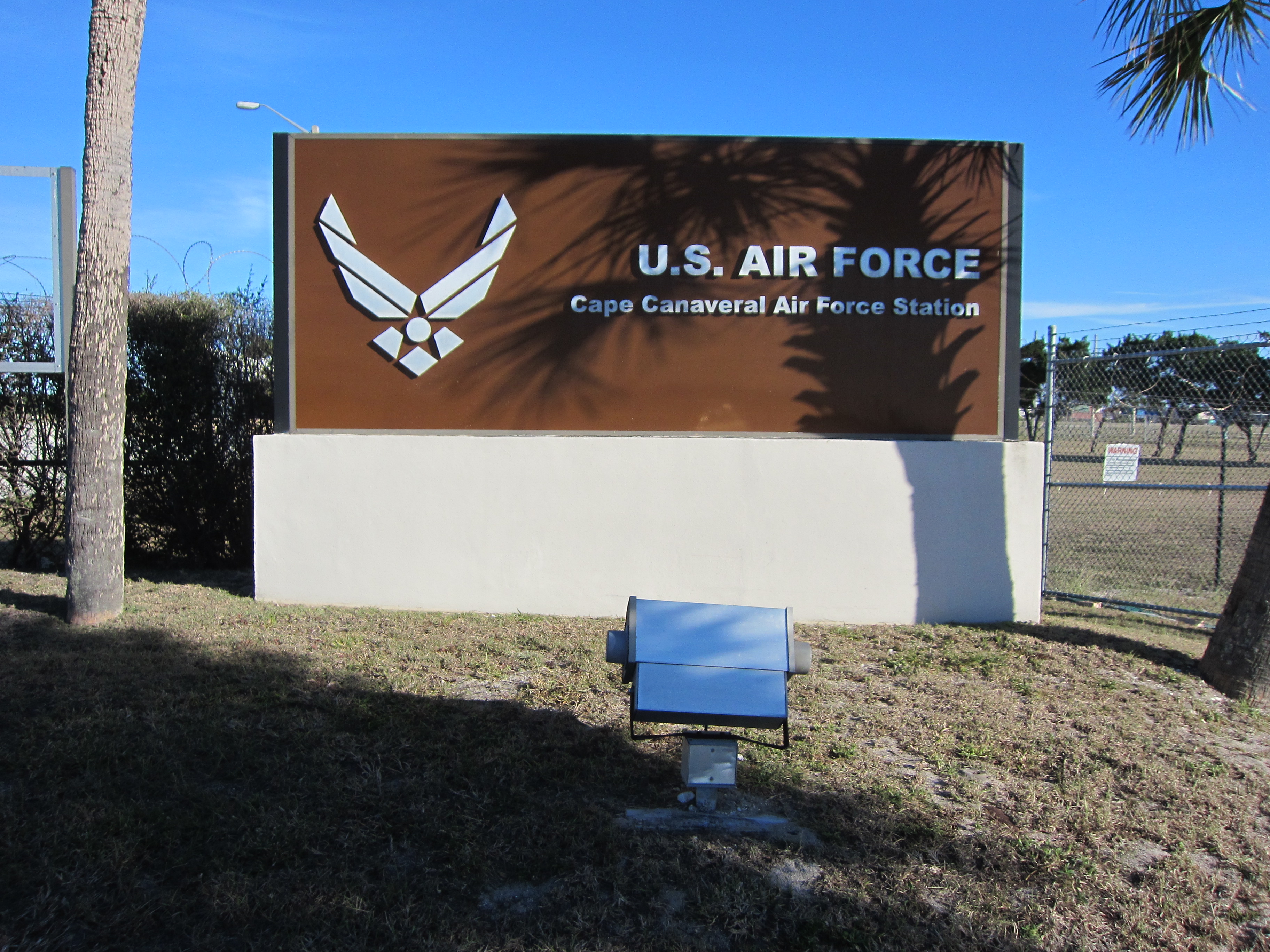
Cape Canaveral Space Force Station: America's Oldest Launch Site
The first missile launched at Cape Canaveral was a Bumper rocket on July 24, 1950 -- a modified German V-2 with a WAC Corporal upper stage, fired from a patch of scrubland on a Florida barrier island that the Navy had recently handed to the Air Force. No one standing on that improvised launch pad could have predicted what the next seven decades would produce: the first American satellite, the first American in space, the first American in orbit, the first spacecraft to visit every planet in the solar system, and the first spacecraft to leave the solar system entirely. Cape Canaveral Space Force Station has launched more vehicles into space than any other site in the Western Hemisphere, and it shows no sign of slowing down. Four launch complexes remain active, private companies are rebuilding decommissioned pads, and Falcon 9 boosters now land themselves on concrete pads built atop the ruins of 1960s Atlas gantries.
The Logic of Geography
President Harry S. Truman established the Joint Long Range Proving Ground at Cape Canaveral in 1949, and the choice of location was deliberate. The Cape juts into the Atlantic Ocean, meaning rockets could fly east over open water with no populated areas in the trajectory. Florida's latitude -- 28 degrees north -- provides a meaningful boost from the Earth's rotation for eastbound launches, adding velocity that translates directly into payload capacity. The proximity to the equator is not quite as advantageous as the European launch site in French Guiana, but it was the best option on American soil. By 1951, the Air Force had established the Air Force Missile Test Center, and the Cape began its transformation from mosquito-infested scrub into the most consequential launch facility in the country. Redstone, Jupiter, Pershing, Polaris, Thor, Atlas, Titan, and Minuteman missiles were all tested here. The row of Titan and Atlas pads along the coast earned the name Missile Row.
The Decade That Changed Everything
Between 1958 and 1968, Cape Canaveral became the starting line for the space race. Explorer 1, the first American satellite, launched from LC-26A on February 1, 1958, using a Juno I rocket. Alan Shepard became the first American in space when his Mercury-Redstone lifted off from LC-5 on May 5, 1961. John Glenn reached orbit from LC-14 on February 20, 1962. The Gemini program launched its two-person crews from LC-19. Meanwhile, uncrewed programs were reaching farther: Ranger and Lunar Orbiter probes flew from LC-12 and LC-13, Mariner spacecraft headed for Venus and Mars from the same complexes, and the Surveyor lunar landers launched from LC-36. When the Apollo program needed larger Saturn V rockets, NASA built the Kennedy Space Center on adjacent Merritt Island. But the Cape's own pads launched Saturn I and Saturn IB missions, including the tragic Apollo 1 test at LC-34 and the triumphant Apollo 7 that followed.
The Voyagers and the Titans
The 1970s brought the powerful Titan IIIE to Launch Complex 41, and with it some of the most consequential missions in planetary science. The two Viking probes, launched in 1975, became the first spacecraft to successfully land on Mars and return images from the surface. The two Voyager spacecraft, launched in the summer of 1977, executed a grand tour of the outer solar system -- flying past Jupiter, Saturn, Uranus, and Neptune before becoming the first human-made objects to enter interstellar space. Voyager 1 remains the most distant object ever built by human hands. These were followed by the Titan IV era in the 1990s, which launched military reconnaissance and communications satellites. The Cassini-Huygens mission to Saturn launched from the Cape in 1997. Through six decades, the Cape's complexes evolved from expendable missile pads to reusable infrastructure, rebuilt and re-purposed as each generation of rocket gave way to the next.
Commercial Launchpad
The transformation of Cape Canaveral from a government-only facility into a commercial launch hub accelerated in the 2010s. SpaceX's first Falcon 9 launch flew from SLC-40 in June 2010. By 2014, the Air Force was planning 21 launches in a single year -- a fifty percent increase over 2013 -- with SpaceX accounting for nearly half of them. SpaceX also built Landing Zones 1 and 2 on the site of the former LC-13, where Falcon 9 first stages and Falcon Heavy side boosters return from space and land vertically. United Launch Alliance operates SLC-41 for Atlas V and Vulcan Centaur launches. Blue Origin leased LC-36 for its New Glenn rocket. The Cape's Skid Strip -- a runway originally named for the SM-62 Snark cruise missiles that skidded to a halt on it without wheels -- still receives C-17 and C-5 cargo aircraft hauling satellite payloads. In June 2024, astronauts launched from the station for the first time since Apollo 7 in 1968.
Concrete, Coral, and Continuity
Cape Canaveral carries its history in layers. The name itself dates to the early 1500s, making it one of the oldest place-names in the United States -- old enough that when President Johnson tried to rename it Cape Kennedy in 1963, the Florida legislature reversed the decision within a decade. The Cape Canaveral Space Force Museum occupies LC-26, the pad that launched Explorer 1. Portions of the base are designated a National Historic Landmark. Decommissioned blockhouses sit within sight of active launch towers. The concrete pad at LC-34, where the Apollo 1 crew died, stands stripped to its platform as a permanent memorial. And amid all this history, new rockets continue to rise. The location that Truman chose in 1949 for its open ocean and favorable latitude has become something more: a place where the past is preserved in concrete and the future lifts off on columns of flame, sometimes within the same week.
From the Air
Cape Canaveral Space Force Station is located at 28.489°N, 80.578°W on a prominent barrier island along Florida's Atlantic coast, immediately south-southeast of Kennedy Space Center on Merritt Island. From the air, the station is unmistakable: a long strip of launch pads, gantries, and support buildings running along the coast, with the distinctive vertical structures of active complexes SLC-40, SLC-41, and SLC-37 visible from considerable distance. The Skid Strip runway (identifier XMR) runs parallel to the coastline. Landing Zones 1 and 2 for SpaceX booster recovery are identifiable by their large concrete pads. The Cape Canaveral lighthouse is another visual reference. Nearby airports: KTIX (Space Coast Regional, Titusville), KMLB (Melbourne Orlando International), KCOF (Patrick Space Force Base). Best viewed at 3,000-5,000 feet AGL for the full scope of the facility. The contrast between rusting decommissioned pads and gleaming active complexes is visible from altitude.
Sources
- Cape Canaveral Space Force Station - Wikipedia
- 70 Years Ago: First Launch from Cape Canaveral - NASA
- Explorer 1 - Wikipedia
- Cape Canaveral name change history - Florida Historical Society
- DVIDS - Astronauts launch from Cape Canaveral SFS
- Viking program launches and Blue Origin New Glenn - NASA / Wikipedia