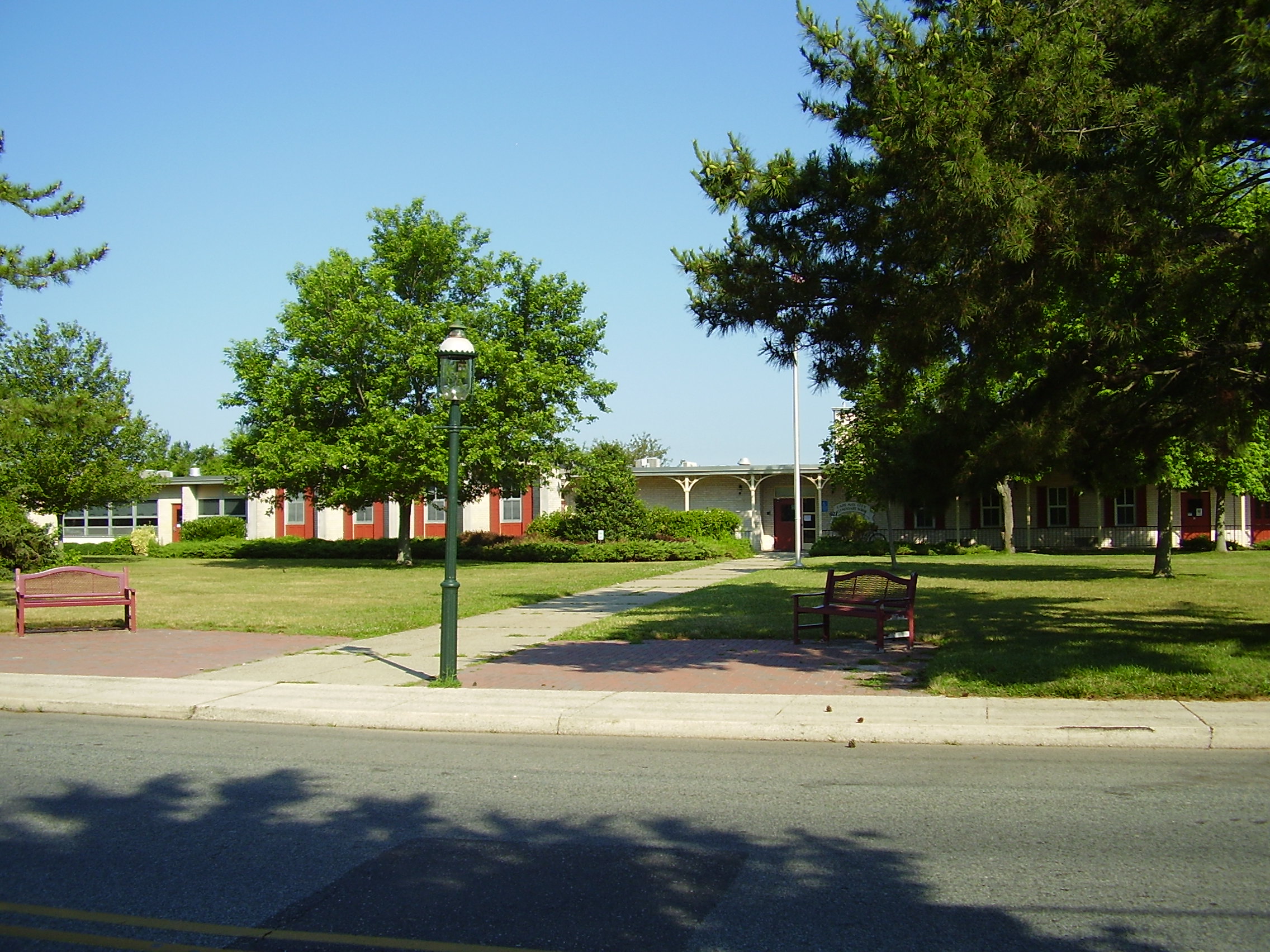
Cape May, New Jersey
The name comes from a Dutch sea captain who never settled here. Cornelius Jacobsen Mey charted this coastline between 1611 and 1614, claimed it for New Netherland, and sailed on. The Kechemeche people, a subgroup of the Lenape, had already been here for centuries. But it was vacationers from Philadelphia who defined what Cape May would become, arriving by boat in the mid-18th century to swim in the Atlantic and breathe salt air. That makes Cape May the oldest seaside resort in the country, a distinction it has held through devastating fires, world wars, and the slow reinvention of the American beach town.
Born Twice in Fire
Cape May burned in 1869, when a blaze on Washington Street destroyed the post office and at least thirty-five other buildings. It burned again in 1878, worse this time: a five-day fire consumed thirty blocks of the town center. What rose from the ashes was something remarkable. Replacement homes went up almost uniformly in the Victorian style popular at the time, with ornate gingerbread trim, wraparound porches, and steeply pitched roofs. Those homes survived. Today Cape May holds the second-largest collection of Victorian houses in the nation, trailing only San Francisco. In 1976, the entire city was designated a National Historic Landmark as the Cape May Historic District, making it the only city in America wholly recognized as a national historic district.
Exit Zero
Locals call it Exit Zero, after its position at the far southern end of the Garden State Parkway. The nickname captures something essential about Cape May: this is where everything ends and begins. The city occupies the southernmost point in New Jersey, sitting at roughly the same latitude as Washington, D.C. Its resident population hovers around 2,768, but summer swells the town to 40,000 or 50,000 visitors. The Cape May-Lewes Ferry connects the peninsula to Delaware across the bay, and NJ Transit buses run to Philadelphia and Atlantic City. The Coast Guard Training Center, the nation's only recruit training facility for the Coast Guard, occupies the old naval air station where carrier pilots once practiced over-water landings during World War II.
Wings, Whales, and Diamonds
Over 400 bird species have been recorded in the Cape May area, making it arguably the finest birding destination in the northeastern United States. The Cape May Warbler, a small songbird, takes its name from this spot. Each fall, migrating raptors, songbirds, and shorebirds funnel down the peninsula in vast numbers, drawing birders from around the world. The waters offshore are equally rich. Where the fresh Delaware River meets the salt Atlantic, nutrients concentrate and marine life thrives. Whale and dolphin watching cruises operate year-round. And then there are the Cape May diamonds: not gemstones, but clear quartz pebbles that wash 200 miles down the Delaware River and tumble onto Sunset Beach, polished smooth by the journey. Collectors hunt them at the waterline, and tourist shops sell them cut and faceted.
Layers of Memory
Cape May carries its history visibly. The 1879 Emlen Physick Estate, designed by architect Frank Furness, survives as a museum. The Fisherman's Memorial on Baltimore and Missouri Avenues lists 75 local fishermen who died at sea, the names beginning with Andrew Jeffers in 1893. Visitors leave stones and seashells on the granite statue's base. The Harriet Tubman Museum honors the abolitionist who has deep connections to the city. The Franklin Street School, built in 1928 to house African-American students during segregation, was recently renovated into a community cultural center and library. During World War II, the Navy built a dozen facilities here to combat the submarine threat in Delaware Bay. And in 2024, filmmakers chose Cape May to stand in for 1960s Newport, Rhode Island, in the Bob Dylan biopic starring Timothee Chalamet, because the town needed almost no set dressing at all.
From the Air
Cape May sits at 38.933N, 74.921W, at the southern tip of the Cape May Peninsula where the Atlantic Ocean meets Delaware Bay. The city is clearly visible from altitude as a compact grid of streets at the peninsula's end. Cape May County Airport (KWWD) lies approximately 5nm to the north-northwest. The Cape May-Lewes Ferry terminal is visible on the bay side. Key landmarks from the air include the Cape May Lighthouse to the southwest at Cape May Point, the Coast Guard Training Center to the west, and the harbor created by dredging in 1911. At 2,000-3,000 feet AGL, the Victorian streetscape, beach promenade, and the distinctive shape of the peninsula tip are all visible.