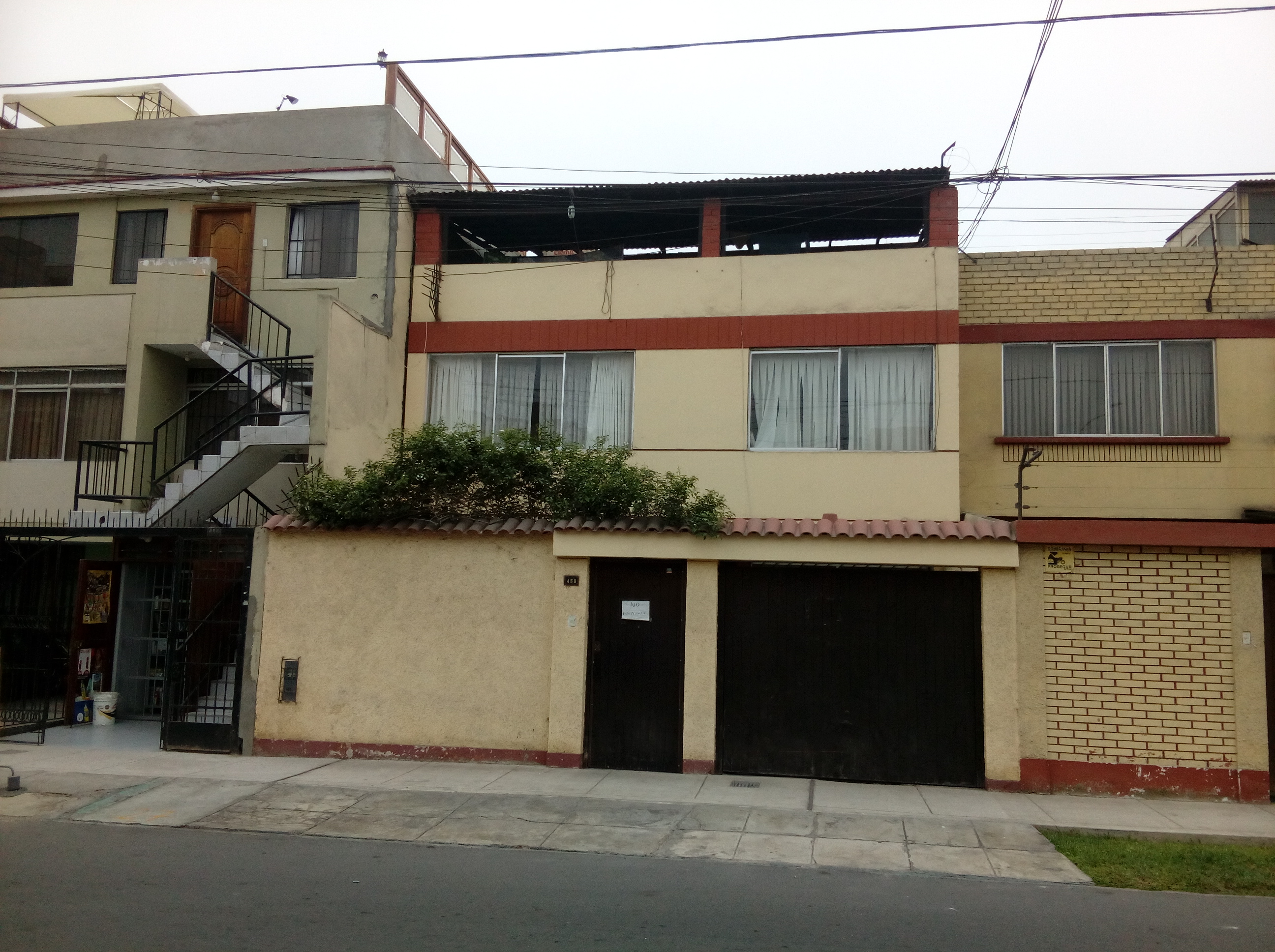
Capture of Abimael Guzmán
Twenty loaves of bread. That was the first clue. A GEIN surveillance agent noticed that a man called "Lolo" — Carlos Incháustegui Degola — bought twenty loaves each morning but kept only five in a paper bag, stuffing the other fifteen into his backpack. No young couple eats fifteen loaves of bread a day. Somebody else was in that house. From that observation, the most wanted man in Peru's history began the final weeks of his freedom.
The House They Called the Castle
By July 1992, Peru's Special Intelligence Group — known as GEIN — had been hunting Abimael Guzmán for years. Guzmán was the founder and leader of the Shining Path, a Maoist guerrilla movement whose campaign of bombings, assassinations, and massacres had killed tens of thousands of Peruvians since 1980. He had not been seen in public for over a decade, operating from hiding as the near-mythical "Presidente Gonzalo." The GEIN agents set up a surveillance post across from a house in Lima's Surquillo district that they suspected was his refuge. They designated the target "El Castillo" — the Castle. On the surface, the house looked ordinary: a woman called "Lola" ran dance classes from the first floor. But the agents' cover story for their surveillance — they told a neighboring police colonel they were tracking a drug trafficking ring — set in motion a chain of information leaks that reached all the way to President Alberto Fujimori through his intelligence chief, Vladimiro Montesinos.
Reading the Garbage
What followed was weeks of painstaking tradecraft. Because the house had no telephone to tap, the agents turned to the garbage. They discovered it was being filtered — the Shining Path members had learned from a previous operation, codenamed Caballero, whose garbage-analysis details had leaked to the press. GEIN team leader Benedicto Jiménez decided to wait for a mistake. It came. A discarded list of medications, unusual for a young couple, suggested other occupants. Twenty-six days later, a manuscript turned up in a garbage bag: notes referencing a meeting of the Buró Político and a Plenary Session of the Central Committee — the language of Shining Path leadership. On September 3, agents photographed "Lola" clearly enough for Marco Miyashiro to identify her as Maritza Garrido Lecca. By September 6, she was hanging men's clothing too large for "Lolo." On September 8, during a blackout caused by a terrorist attack, agents spotted a man's silhouette by candlelight in the upstairs window.
Beer, Revolvers, and a Plywood Wall
On September 12, the GEIN moved. That afternoon, agents raided a safe house in the Balconcillo neighborhood, finding Shining Path documents, a submachine gun, and two revolvers. A CIA agent, nicknamed "Superman," arrived uninvited after monitoring GEIN radio traffic. By 5:30 p.m., agents watching El Castillo saw visitors arrive and decided to strike once they left. Miyashiro ordered two agents — Julio Becerra ("Ardilla") and Cecilia Garzón ("Gaviota") — to buy beer from a nearby warehouse and pretend to be friends drinking together. At 8:00 p.m., when the door opened, Ardilla and Gaviota moved in with revolvers drawn. Garrido Lecca and Incháustegui screamed and fought back, and Gaviota fired a warning shot into the air. Ardilla subdued them, rushed upstairs, pushed through a plywood partition, and found himself face to face with Abimael Guzmán.
"I Already Lost"
The moment was brief and strangely quiet. Ardilla pointed his weapon at the man Peru had been hunting for twelve years and shouted: "¡Soy de la policía! ¡Si tú te mueves, te mato, carajo!" — "I'm police! If you move, I'll kill you!" Guzmán's response was calm: "Tranquilo muchacho, ya perdí" — "Easy, kid, I already lost." Along with Guzmán, agents captured Elena Iparraguirre, his partner and a senior Shining Path leader, along with three other members. The operation — codenamed Victoria — was immediately dubbed "The Capture of the Century" in the Peruvian press. It was carried out not by the military or a heavily armed tactical unit, but by a small team of intelligence agents who had spent weeks counting loaves of bread, sorting garbage, and watching laundry lines.
The End of Presidente Gonzalo
Guzmán's capture broke the Shining Path. Without its quasi-religious leader, the movement fractured. The internal conflict that had torn Peru apart since 1980, killing an estimated 70,000 people, began its long decline. The GEIN agents who carried out Operation Victoria worked under extraordinary constraints — underfunded, cut off from the National Intelligence Service that had stopped financing them, and forced to change their own codenames to prevent other agencies from interfering. Jiménez, Miyashiro, and their team proved that meticulous intelligence work could accomplish what years of military operations had not. The house on Calle Uno in Surquillo, where dance classes once served as cover for the most wanted man in South America, became one of Lima's most significant addresses — the place where a twelve-year nightmare began to end.
From the Air
The capture took place in Lima's Surquillo district, approximately at 12.119°S, 77.001°W, a dense residential neighborhood in south-central Lima. From the air, Surquillo is indistinguishable from surrounding districts — a grid of low-rise buildings in Lima's urban sprawl. Jorge Chávez International Airport (SPJC/LIM) lies approximately 13 km to the northwest. The broader Lima metropolitan area, home to roughly 10 million people, stretches along the coast below. Coastal fog is common June through November.