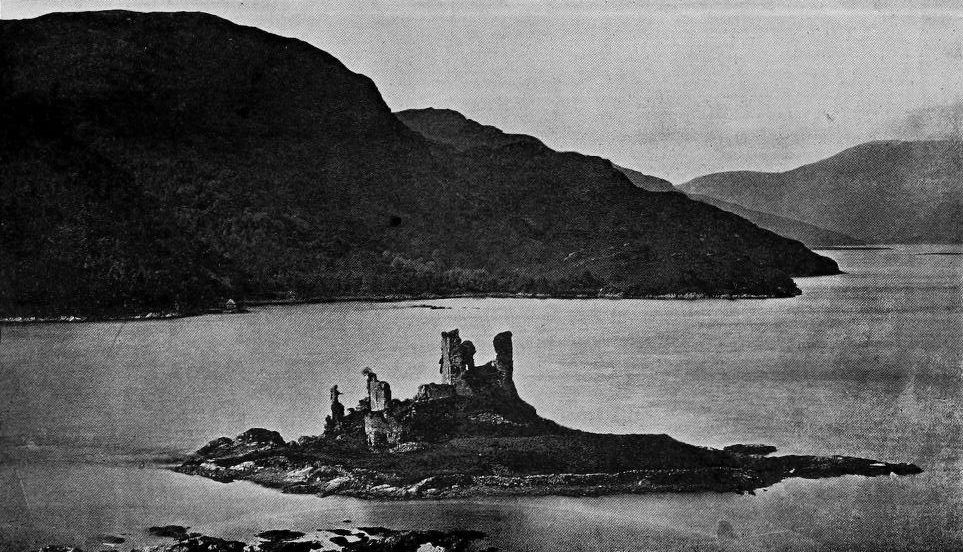
Capture of Eilean Donan Castle
The Spanish garrison at Eilean Donan Castle made a fateful decision on the evening of 10 May 1719. When a boat approached under a flag of truce from the three English warships anchored in Loch Alsh, the forty or so marines inside the fortress opened fire. Whether this was a misunderstanding, a deliberate provocation, or simple panic is unclear from the surviving accounts. What is clear is the consequence: the warships HMS Worcester, HMS Flamborough, and HMS Enterprise spent the next day reducing the medieval castle to rubble. The destruction was so thorough that Eilean Donan would stand as a ruin for more than two hundred years.
Spain's Foothold in the Highlands
The Spanish presence at Eilean Donan was part of Cardinal Alberoni's broader scheme to destabilize Britain during the War of the Quadruple Alliance. In April 1719, two Spanish frigates landed the Marquis of Tullibardine, the Earl Marischal, and roughly three hundred marines on Scotland's west coast. They chose Eilean Donan as their base -- a logical decision, given the castle's position at the confluence of three sea lochs, where it had controlled access to Kintail for centuries. The Spaniards stored their munitions there: 343 barrels of gunpowder and 52 barrels of musket shot, a substantial arsenal intended to arm the Highland clans gathering for the rising. A garrison of forty to fifty marines was left to hold the castle while the main Jacobite force moved inland toward Glen Shiel.
The Flag, the Shot, and the Bombardment
Captain Boyle of HMS Worcester had intelligence about the Spanish garrison and arrived at Loch Alsh on 10 May with his small squadron. The events of that evening set the tone for what followed. When the Spanish fired on the truce boat, Boyle abandoned diplomacy. The next morning the three warships opened a sustained bombardment. Medieval walls built to resist swords and siege ladders offered poor defense against naval cannon. The Spanish garrison, overwhelmed, surrendered after the bombardment breached the defenses. The English landing parties found the castle's magazine intact -- all 343 barrels of powder and the 52 barrels of shot that were meant to supply a Highland rising. Rather than carry this arsenal away, they used a portion of the captured gunpowder to demolish what the cannonballs had not already destroyed.
Two Centuries of Silence
The demolition was devastatingly effective. Eilean Donan, which had stood in some form since the thirteenth century, was reduced to a shell. The walls that had sheltered Clan Mackenzie and their MacRae constables, that had withstood clan feuds and political intrigue for four hundred years, now stood open to the weather of Loch Duich. The loss of the Spanish arms cache also doomed the rising itself. Without powder and shot, the Jacobite force that assembled at Glen Shiel a month later fought at a severe disadvantage, and the battle on 10 June ended the 1719 rebellion in a single afternoon. The ruins of Eilean Donan became a landmark of romantic desolation. It was not until 1919, exactly two hundred years after the destruction, that Lieutenant Colonel John MacRae-Gilstrap purchased the island and began a painstaking reconstruction that took thirteen years. The castle visitors see today -- one of the most photographed in Scotland -- is largely his creation, built on the bones of what three Royal Navy warships left behind.
From the Air
Eilean Donan Castle sits at 57.27°N, 5.52°W on a small tidal island at the confluence of Loch Duich, Loch Long, and Loch Alsh. The castle and its stone bridge are clearly visible from the air. The A87 road passes nearby. Kyle of Lochalsh lies approximately 5 nm to the west. Nearest airports: Broadford (Isle of Skye) approximately 15 nm to the west; Inverness (EGPE) approximately 50 nm to the east.