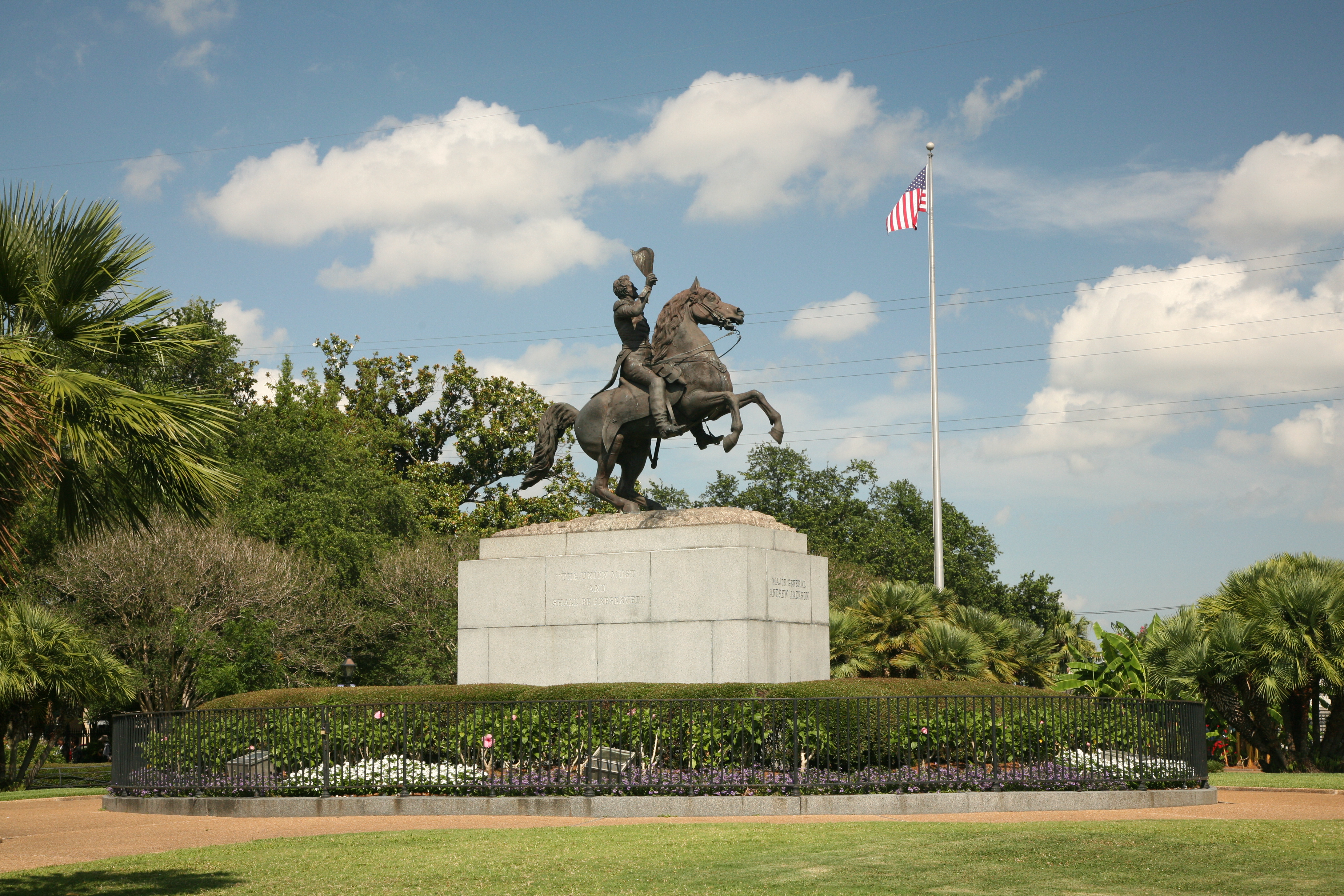
Capture of New Orleans
At two o'clock on the afternoon of April 25, 1862, Captain Theodorus Bailey stepped ashore in New Orleans carrying a demand for the city's surrender. Armed mobs surged through the streets. Mayor John T. Monroe refused to capitulate. A man named William Mumford climbed to the roof of the U.S. Mint, tore down the Union flag that marines had raised, and dragged it through the mud for the crowd to destroy. Yet within a week, the largest city in the Confederacy -- home to 168,675 people, 33 steamship lines, and trade worth $500 million -- belonged to the Union. Not a single building had been shelled. The capture of New Orleans was less a battle than a collapse, the moment when the South's most vital port discovered that its defenses had been pointed in the wrong direction.
The Jewel of the Mississippi
By 1860, New Orleans was unlike any other city in the South. Founded by the French, governed for decades by Spain, and shaped by waves of Creole, Haitian, Irish, and German settlers, it was the Confederacy's most cosmopolitan population center -- larger than the next four Southern cities combined. Its wealth flowed from geography: positioned near the mouth of the Mississippi River, the city commanded a vast network of tributaries that funneled cotton, freight, and human traffic from the interior of the continent to the Gulf Coast. The invention of the cotton gin in 1793 and the steamboat in the early 19th century had transformed New Orleans into one of the world's great ports. The domestic slave trade further swelled its economy. Confederate leaders assumed any Union attack would come downriver from the north, and they fortified accordingly.
Farragut Runs the Gauntlet
The Union's Anaconda Plan, devised by General Winfield Scott, aimed to strangle the Confederacy by seizing the Mississippi River. In mid-January 1862, Flag Officer David G. Farragut led his West Gulf Blockading Squadron toward the river's mouth. Between his fleet and New Orleans stood two masonry fortifications -- Fort Jackson and Fort St. Philip -- bristling with Confederate artillery. From April 18 to 28, Farragut bombarded the forts, and on the night of April 24 he made his decisive move, driving thirteen ships past the guns under heavy fire. Confederate defenses, as historian Allan Nevins wrote, had been 'hampered by poverty, disorganization, lack of skilled engineers and craftsmen, friction between State authorities and Richmond, and want of foresight.' The inner fortifications at Chalmette could only resist ground troops; their guns did not even face the river. With Union ships riding high water above the levees, they could fire down into the city streets below.
A City That Would Not Bow
Major General Mansfield Lovell, commanding Confederate forces in the area, had no real options once Farragut broke through. Only 3,000 militiamen armed with shotguns remained. Lovell loaded his troops onto the New Orleans, Jackson, and Great Northern Railroad and sent them north; artillery went to Vicksburg. His final message to Richmond was blunt: 'The enemy has passed the forts. It is too late to send any guns here; they had better go to Vicksburg.' Military stores and warehouses were burned. Thousands of bales of cotton were hurled into the river. Yet the civilian population remained defiant. When Farragut's officers came to accept surrender, Mayor Monroe and General Lovell refused. It took four more days of standoff before Farragut and 250 marines removed the Louisiana state flag from City Hall. By May 2, Secretary of State William Seward declared New Orleans 'recovered.'
Beast Butler's Reign
On May 1, Major General Benjamin Butler marched 5,000 Union troops into a city of 150,000 hostile residents. A political general from Massachusetts with more ambition than military polish, Butler ruled New Orleans for eight volatile months. He fed the poor with captured Confederate food supplies, expanded the sewer system and set up pumps that helped prevent a yellow fever epidemic, and raised three infantry regiments from free Black militia units -- the Corps d'Afrique, notable for having Black officers. He also seized $800,000 from the Dutch consul, imprisoned French champagne magnate Charles Heidsieck, and became so despised that merchants sold chamber pots with his face at the bottom. His most infamous act was General Order No. 28, which declared that any woman who insulted a Union soldier would be treated 'as a woman of the town plying her avocation.' The order provoked outrage across the South, the North, and Europe. Butler was recalled in December 1862, but Admiral Farragut offered a fitting epitaph: 'They may say what they please about General Butler, but he was the right man in the right place in New Orleans.'
The River Divided
The fall of New Orleans reverberated far beyond the city's levees. It was the Confederacy's largest population center, its busiest port, and its gateway to international trade. Losing it meant losing the lower Mississippi, severing supply lines and shattering the illusion that the South could protect its most important assets. Confederate generals had gambled that the threat would come from upriver; Farragut proved them fatally wrong by attacking from the Gulf of Mexico. Butler's 'contraband of war' policy -- refusing to return enslaved people who fled to Union lines -- accelerated the disintegration of the plantation economy across Louisiana. Enslaved workers on Jefferson Davis's own plantations at Davis Bend revolted after the capture, seizing property and resisting all Confederate attempts to reclaim the land. The capture of New Orleans did not end the war, but it broke something that could not be repaired: the South's confidence that its heartland was beyond reach.
From the Air
Located at 29.958°N, 90.063°W along the Mississippi River. The capture unfolded along the river approach from the Gulf, past Forts Jackson and St. Philip roughly 70 miles downriver, up through the river bend at New Orleans. From the air, the crescent bend of the Mississippi around the French Quarter is unmistakable. Look for Jackson Square and the waterfront where Farragut's fleet anchored. Nearest airports: KMSY (Louis Armstrong New Orleans International, 15 nm west), KNEW (Lakefront Airport, 6 nm northeast), KNBG (New Orleans NAS/Alvin Callender Field, 10 nm south). Best appreciated at 2,000-5,000 ft AGL where both the river approach and city layout are visible.