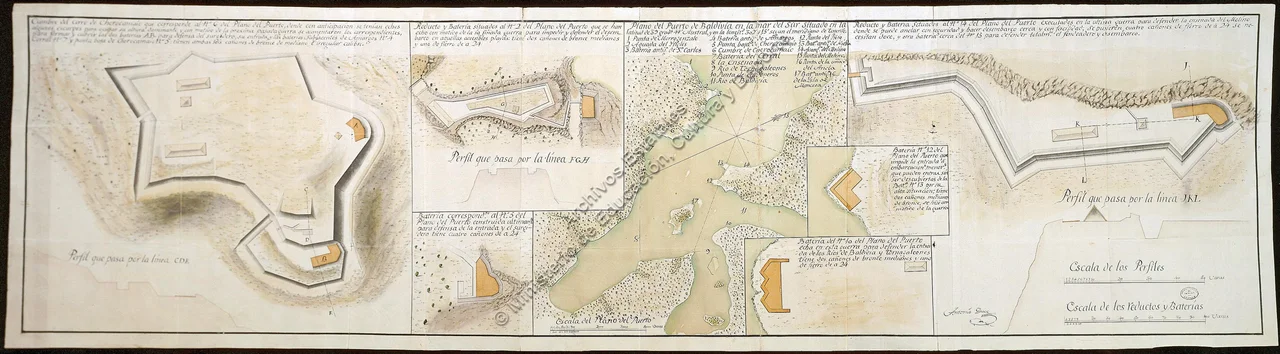

Capture of Valdivia
Lord Cochrane had no orders to do this. The Chilean government had not asked him to attack Valdivia, the strongest fortress complex on the entire Pacific coast of the Americas, defended by seven forts, roughly 120 cannons, and 1,600 soldiers. He had three ships and about three hundred men. By any sober calculation it was suicide. On the night of February 3, 1820, the British admiral who had been court-martialed and stripped of his Royal Navy rank for a stock-market scandal sailed his small squadron toward the dark cliffs of Corral Bay and prepared to do the impossible anyway.
The Seawolf in Exile
Thomas Cochrane was one of the boldest naval commanders of his age and one of the most ruined. The Royal Navy had cast him out, so the young Republic of Chile hired him to build and lead its navy in the war against Spain. He fought, as he always had, with audacity bordering on recklessness. Reconnoitering Valdivia from his flagship O'Higgins, he saw not an impregnable fortress but an opportunity: the forts had been built to fire seaward at ships, and their gates faced inland, undefended. A force that landed south of the batteries and came at them from behind, by night, might roll them up one by one before the garrison understood what was happening.
Three Forts in the Dark
Late on February 3, Cochrane's landing party slipped ashore below the fortifications, led in the assault by Major Jorge Beauchef, a French-born officer in Chilean service. They fell on the Aguada del Inglés, the "English Fort," and took its garrison utterly by surprise. In the panic and confusion that spread through the dark, the attackers pushed straight on, storming two more forts before the night was over. The Spanish defenders, unsure how large the assaulting force was, began to break. What had stood as one of the great strongholds of colonial America was unraveling in a few hours of close, chaotic fighting along the cliffs above the bay.
The Bluff at Dawn
Daylight should have doomed the attackers. By the morning of February 4, the surviving Spanish defenders could see how few men actually opposed them. So Cochrane gambled again. He called his ships in toward the bay in broad daylight, their boats crewed by only skeleton hands. To the Spanish, watching from the remaining forts, it looked like a fresh wave of attackers arriving to reinforce the assault. The bluff held. The demoralized garrison evacuated the rest of the fortifications, withdrawing toward Osorno and the royalist stronghold of Chiloé. With almost no force at all, Cochrane had captured the Key to the South Sea.
The End of an Empire's Footing
The fall of Valdivia broke the last real foothold of Spanish power on the Chilean mainland. The looting that followed was thorough: weaponry, gunpowder, silver objects taken originally from the churches of Concepción, and the captured frigate Dolores, the richest prize of all, later sold in Valparaíso. The Franciscan missionaries around Valdivia, still loyal to the crown, were in time replaced by clergy aligned with the Republic. Royalist resistance lingered offshore in Chiloé until 1826, but the strategic question was settled. The harbor that Spain had spent nearly two centuries fortifying had fallen to one man's nerve in a single night.
From the Air
The Capture of Valdivia unfolded around Corral Bay at roughly 39.89°S, 73.43°W, where the Valdivia River meets the Pacific in southern Chile. The seven forts of the Valdivian system ringed this narrow-mouthed inlet; the surviving fortifications at Corral, Niebla, and Mancera Island remain visible today as stone bastions guarding the bay. From the air the battlefield reads as a tight, cliff-walled estuary, easy to defend and treacherous to enter, exactly the trap Cochrane reversed. Recommended viewing altitude 2,500-4,000 ft to trace the bay's geometry and the positions of the old batteries. Nearest airport is Pichoy / Valdivia (SCVD), about 25 km northeast. Coastal fog and frequent rain are common; clear mornings give the best light on the bay and its fortress ruins.
Nearby Stories
- Riñihuazo 24 km away
- Lago Ranco 35 km away
- Villarrica 57 km away
- Sinking of Janequeo and Leucotón 91 km away
- La Imperial 95 km away
- Puyehue-Cordón Caulle 115 km away
- Isla Mocha 131 km away
- Battle of Agüi 224 km away