Cardamom Mountains
Somewhere in the Cardamom Mountains, on a remote rock ledge deep in the forest canopy, sixty-centimeter ceramic jars sit where they were placed centuries ago -- burial vessels containing the remains of people whose identity scholars still debate. Local legends say they hold Cambodian royalty. Archaeologists suspect they belong to indigenous Pearic communities who traded forest products for glass beads with maritime merchants. The jars have never been moved. In a mountain range where almost no one lives, where the forest is so dense and the terrain so rugged that the Khmer Rouge hid here for decades after their overthrow, the dead keep their own counsel. The Cardamom Mountains, stretching across southwestern Cambodia and into eastern Thailand, constitute the largest contiguous rainforest in mainland Southeast Asia -- a wilderness so impenetrable that much of its wildlife has never been fully catalogued.
A Wet Wall of Green
The range runs along a southeast-northwest axis from the Gulf of Thailand coast in Koh Kong Province to the Veal Veang District of Pursat Province, continuing into Chanthaburi Province in Thailand. The asymmetry of the mountains defines everything. Western slopes facing the Gulf of Thailand receive between 3,800 and 4,500 millimeters of annual rainfall, supporting dense tropical rainforest so thick that sunlight barely reaches the ground. Eastern slopes, sheltered in a rain shadow, receive only 1,000 to 1,500 millimeters and carry drier woodland that gives way to Cambodia's interior plain. The highest point is Phnom Aural at 1,813 meters -- also Cambodia's tallest peak. Below it, Phnom Samkos rises to 1,717 meters. Above 700 meters, a distinctive thick evergreen forest type dominates, while the Kirirom plateau supports rare Tenasserim pine forests and the northern reaches harbor the southernmost natural habitat of birch trees in Asia.
Painted Elephants, Vanished Deer
In a cave called Kanam, near Kravanh Township in Pursat Province, ancient red ochre paintings depict elephants, elephant riders, deer, and wild cattle. The art likely dates from the late Angkorian through post-Angkorian periods, though some researchers speculate the site could be as old as the Funan period, when a diplomatic mission sent trained elephants to the Chinese Emperor Mu of Jin in 357 AD. The paintings are not merely decorative. Elephant capture was dangerous, ritualized work, and the cave may have served as a site for the magic and ceremonies that accompanied it. Indigenous groups maintained wild elephant populations through what scholars describe as a symbiotic relationship -- until the Khmer Rouge decimated both the traditions and the herds in the 1970s. The deer depicted on the cave walls tell a grimmer ecological story: during the 15th through 17th centuries, insatiable Japanese demand for deerskin to make samurai armor drove Cambodian and Thai hunters to push deer populations toward extinction after Taiwan's herds had already been annihilated.
Refuge for the Hunted
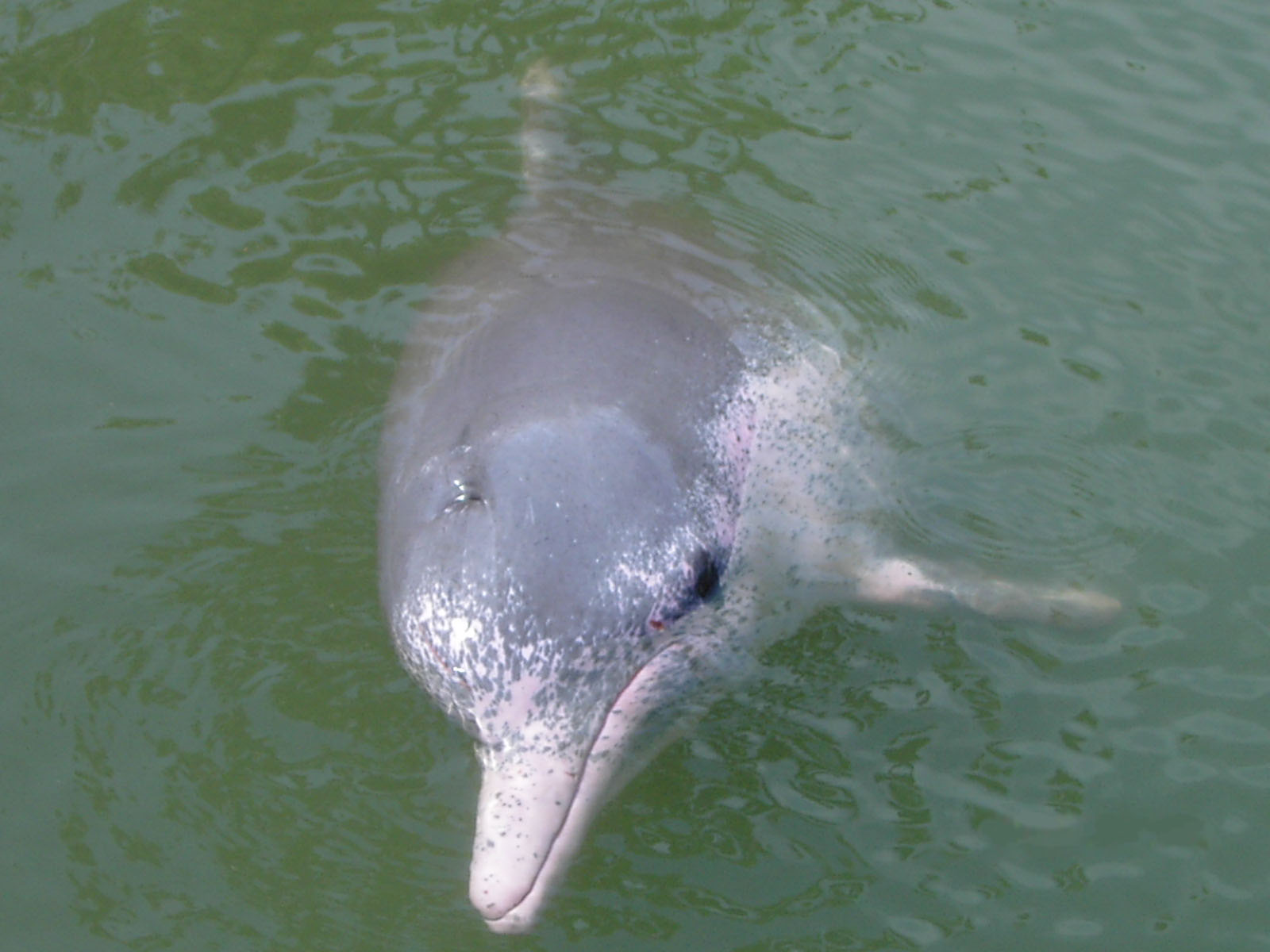
The Cardamom Mountains are thought to shelter at least 62 globally threatened animal species and 17 globally threatened tree species. Cambodia's largest population of Asian elephants roams here -- possibly the largest in all of Indochina, though this has yet to be confirmed. Tigers held on in these forests as their last Cambodian refuge until they went extinct in the country by 2007. Clouded leopards, dholes, gaur, banteng, Malayan sun bears, pileated gibbons, and Sunda pangolins persist in the understory. The rivers harbor both Irrawaddy and humpback dolphins, some of the last Siamese crocodiles on earth, and Cambodia's only remaining population of the nearly extinct northern river terrapin, known locally as the royal turtle. More than 450 bird species inhabit the forests -- half of Cambodia's total -- with four species found nowhere else: the chestnut-headed partridge, Lewis's silver pheasant, the green peafowl, and the Siamese partridge. A 2007 reptile survey led by Dr. Lee Grismer of La Sierra University continued to turn up species new to science.
Last Stronghold, Twice Over
The inaccessibility that protects the wildlife also attracted those fleeing defeat. After Vietnamese forces toppled the Khmer Rouge in 1978, the mountains became one of the regime's final sanctuaries, with the Thai border providing a conduit for foreign support and an eventual escape route. Part of the range remains home to indigenous Pearic peoples -- the Chhong in both Thailand and Cambodia, and the ethnic Por in Pursat Province -- communities collectively known in Cambodia as Khmer Loeu. These groups had lived in the mountains long before the Khmer Rouge arrived and long before the forests became a geopolitical chess piece. Their traditions of elephant capture, forest-product trade, and jar burial represent a cultural continuity that the wars of the 20th century interrupted but did not erase.
The Forest Fights Back
In 2002, a transborder highway to Thailand was completed along the coast south of the Cardamoms, fragmenting habitats for elephants, big cats, and primates while opening the forest to slash-and-burn agriculture and poaching. International conservation organizations -- Wildlife Alliance, Conservation International, Fauna and Flora International -- responded by partnering with the Cambodian government. In 2016, the Southern Cardamom National Park was established, and nearly the entire range now holds some form of protected status. The village of Chi Phat, once a logging and hunting community, was transformed into a model ecotourism destination beginning in 2008 under Wildlife Alliance's guidance. By recent counts, approximately 3,000 annual visitors generate more than $150,000 for the local community through homestays, guided treks, mountain biking, and birdwatching tours. Enforcement remains the challenge. Violations of protection laws have come from every direction -- opportunistic locals, business entrepreneurs, government institutions, foreign companies, and international criminal organizations. Armed rangers with arresting authority now patrol the parks, a sign that the Cardamoms' remoteness alone can no longer guarantee their survival.
From the Air
The Cardamom Mountains (12.0N, 103.25E) occupy a broad swath of southwestern Cambodia, extending northwest into Thailand's Chanthaburi Province. From cruising altitude, the range appears as an unbroken dark green expanse contrasting sharply with the agricultural lowlands to the east and the Gulf of Thailand coastline to the southwest. Phnom Aural (1,813m), Cambodia's highest peak, is in the northeastern portion. The 2002 coastal highway is visible as a thin line cutting through the southern edge. Nearest airports: Sihanoukville International Airport (VDSV), approximately 60km south of the range's southern edge; Phnom Penh International Airport (VDPP), roughly 150km east. Cloud cover is frequent, especially on the western slopes during monsoon season (May-October).