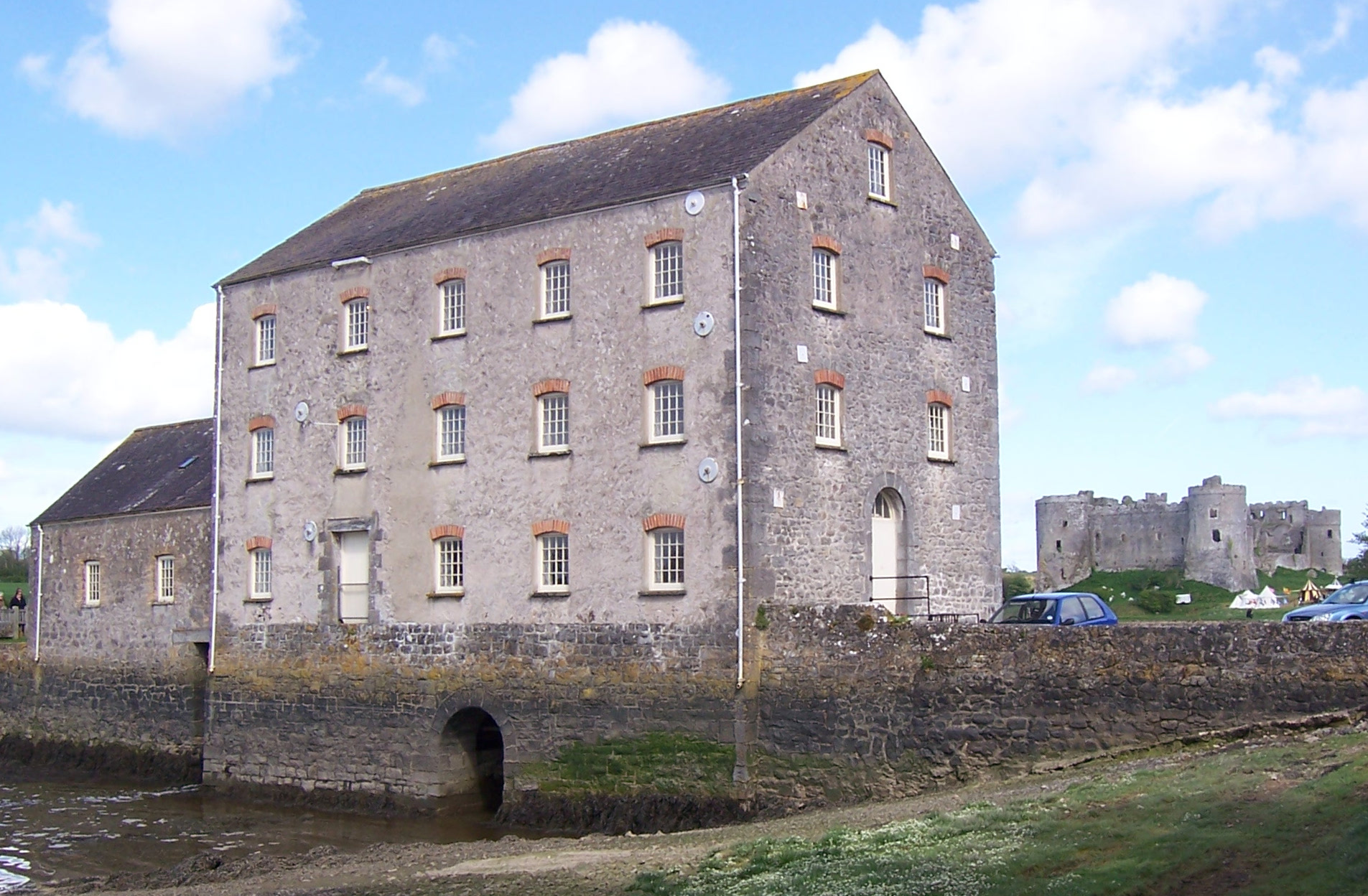
Carew Castle
The Carew family has owned this castle for more than nine centuries, yet the site was already ancient when they arrived. Recent excavations in the outer ward uncovered multiple defensive walls of an Iron Age fort, pushing the military use of this limestone bluff above the Milford Haven estuary back at least 2,000 years. What makes Carew Castle unusual is not its age but its legibility: walk through the ruins and you can read the ambitions, fashions, and political gambles of every century since the Normans arrived.
A Princess's Dowry
Around the year 1100, Gerald de Windsor built a stone keep on this bluff overlooking the Carew inlet. Gerald had been made castellan of Pembroke Castle during the first Norman invasion of Pembrokeshire, and around 1095 he married Nest, princess of Deheubarth -- the woman whose beauty and turbulent love life would earn her the epithet 'the Helen of Wales.' Nest brought the manor of Carew as part of her dowry, and Gerald cleared the existing Iron Age fortifications to raise his own castle on Norman lines. Only the keep was stone; the outer walls were still timber. That original stone tower survives today within the later structure, known simply as the Old Tower. Gerald's son William took the family name from the place itself, becoming William de Carew and founding a dynasty that would outlast the castle's military purpose by centuries.
The Gambler Who Bet on a King
By the late Middle Ages, the de Carews had fallen on hard times. The Black Death devastated their wealth, and they mortgaged the castle. It passed into the hands of Rhys ap Thomas, a Welsh knight with a talent for reading the political winds. In 1485, when Henry Tudor landed in Pembrokeshire to claim the English throne, Rhys made the decisive bet of his life: he switched sides and backed the challenger just before the Battle of Bosworth Field. The gamble paid spectacularly. Henry VII rewarded Rhys with wealth and influence, and Rhys poured his new fortune into Carew, hosting a famous tournament there and remodelling the great hall. But royal favour proved fickle across generations. Rhys's grandson fell out with Henry VIII and was executed for treason in 1531, and the castle reverted to the crown.
An Elizabethan Transformation
In 1558, Sir John Perrot acquired Carew. Rumoured to be an illegitimate son of Henry VIII -- a claim supported by contemporaries who noted his physical resemblance to the king -- Perrot was a Lord Deputy of Ireland and an Elizabethan plutocrat with grand ambitions. He transformed the castle's northern defensive wall into a Tudor range with ornate windows and a long gallery, importing Cotswold stone for the window frames where local Carboniferous limestone would not do. The architectural shift is still visible in the ruins: the hard, practical Norman towers at the back, and the elegant, light-hungry Tudor facade at the front, facing the estuary as if posing for a portrait. Perrot's own fortunes followed the pattern of so many who rose high under the Tudors. He fell from favour and died imprisoned in the Tower of London in 1592.
The Long Return
The Civil War brought one final round of violence. Royalists refortified the castle, but south Pembrokeshire was Parliamentarian territory. After changing hands three times, the south wall was pulled down to render Carew indefensible. At the Restoration, the castle was returned to the de Carew family, who occupied the eastern wing until 1686 before finally abandoning it. For the next two centuries, the ruins were looted for building stone and lime burning. Since 1984, Cadw has funded restoration through the Pembrokeshire Coast National Park Authority. Beside the castle stands the only restored tidal mill in Wales, often called the French Mill for its use of French burrstone millstones. Evidence suggests a mill existed on the site by 1542, and one of its water wheels bears the date 1801. The mill ground its last grain in 1937, closing out a tradition nearly as old as the castle itself.
From the Air
Located at 51.698N, 4.831W on the Carew inlet of the Milford Haven Waterway in Pembrokeshire, Wales. The castle and adjacent tidal mill are visible from low altitude. Haverfordwest Airport (EGFE) is approximately 8 nm northwest. The castle's mixture of Norman towers and Tudor facade is best seen from the south or east at 1,000-1,500 ft.