Carl Sandburg Home National Historic Site
"This is the place. We will look no further." Carl Sandburg spoke those words in 1945 when his wife Lilian showed him Connemara, a Greek Revival farmhouse nestled against the slope of Big Glassy Mountain in Flat Rock, North Carolina. The three-time Pulitzer Prize winner was 67 years old, a Midwesterner by birth and temperament, yet something about this rolling Blue Ridge estate spoke to him. He would live here for the remaining 22 years of his life, publishing more than a third of his total works from rooms so packed with books that the shelves eventually needed Plexiglas covers to protect them. Today, the Carl Sandburg Home National Historic Site stands as the first unit of the National Park System dedicated to a poet, preserving a house where the creative mess of a working writer still fills every corner.
Before the Poet: Rock Hill's Three Lives
The house had already lived through three distinct identities before Sandburg arrived. In the late 1830s, Christopher Memminger of Charleston, South Carolina, built a grand summer home here in the Greek Revival style, calling it Rock Hill after the gradual slope of Big Glassy Mountain beneath it. He dammed a stream in 1855 to create a small lake in front of the house. During the Civil War, the Memmingers lived at Rock Hill full-time, fortifying the house as a shelter against raids by Union soldiers and Confederate deserters turned bandits. After Memminger's death, Colonel William Gregg Jr. bought the property and used it for about a decade before selling it in 1900 to Captain Ellison Adger Smyth. Smyth renamed the house Connemara after his ancestral district in Ireland, winterized the structure, enclosed the porch into a dining room, and even installed an eight-hole golf course across the pastures. When Smyth died in 1942, Connemara sat vacant for three years, waiting for its final owner.
The Poet and the Goat Farmer
The Sandburgs' move to Connemara was driven by an unlikely partnership between poetry and dairy farming. Carl needed solitude for his writing. His wife Lilian needed warmer pastureland for her champion Chikaming dairy goats. They found both on the 264-acre property outside Hendersonville, purchasing it on October 18, 1945, for $45,000. The remodeling took two and a half years: new heating, plumbing, electrical work, chimneys, bathrooms, and dozens of bookshelves to hold the vast library shipped by train from their old home in Harbert, Michigan. The original kitchen building became a three-car garage. The Sandburgs filled the house with their extended family: Carl and Lilian, their three daughters Margaret, Janet, and Helga, and Helga's two children, John Carl and Karlen Paula. The goats grazed the rolling pastures while Sandburg worked late into the night in his upstairs study, surrounded by towers of books and manuscripts.
A Working Writer's Refuge
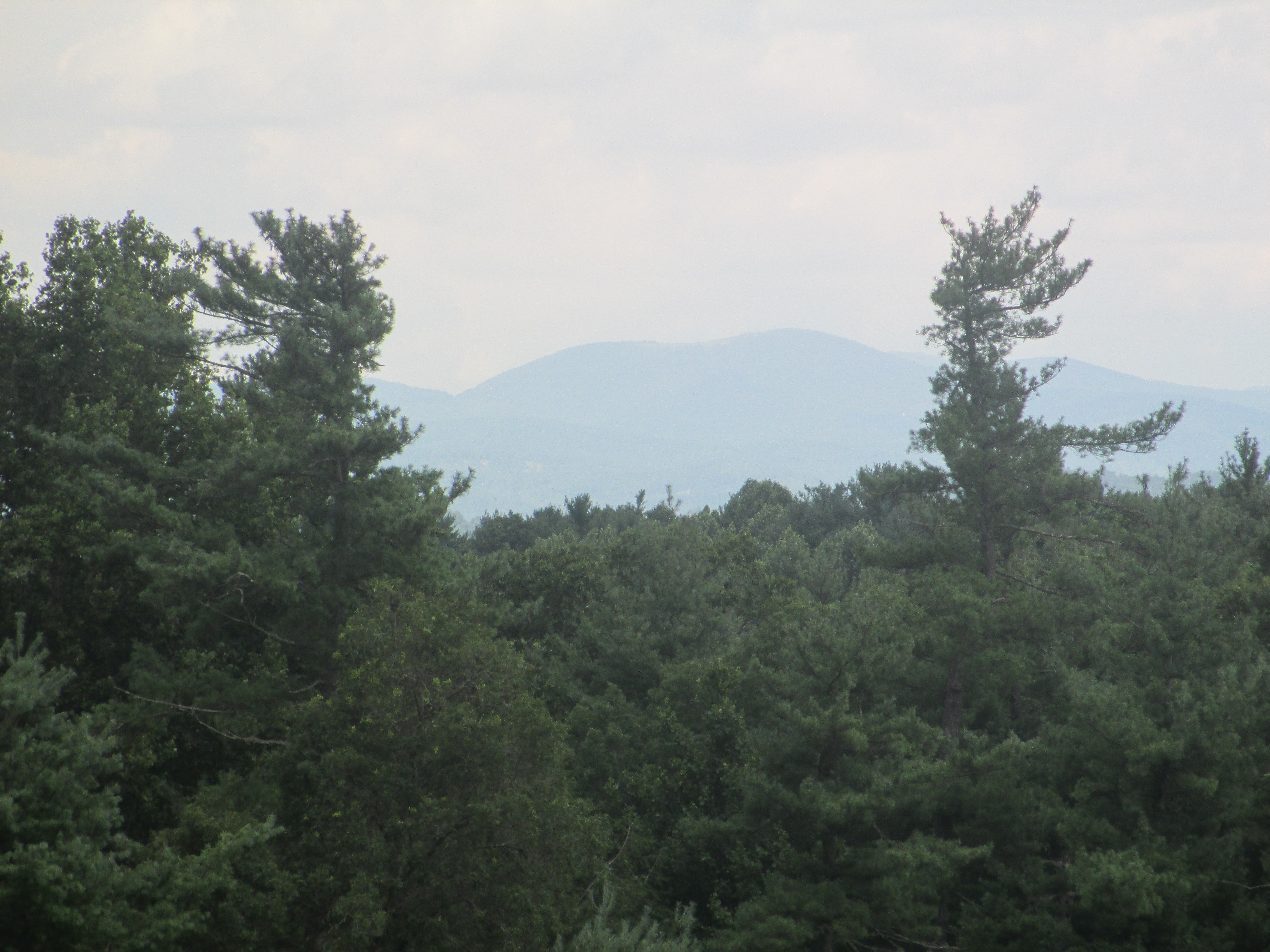
Walking through the Sandburg home today, visitors encounter a house frozen in creative disorder. Books crowd every surface: shelves line the hallways, stacks rise from tabletops, periodicals spill across desks. The study where Sandburg wrote overflows with research material. The parlor holds a piano, reflecting the family's devotion to singing and folk music. A 1950s television set in the dining room was used mainly for news and public affairs programs. From the front porch, the Blue Ridge Mountains fill the horizon. Sandburg published prolifically here, working on poetry, biography, novels, and his beloved Rootabaga Stories for children. From mid-June through mid-August, live performances of those stories and excerpts from the Broadway play The World of Carl Sandburg are still staged at the park amphitheater, keeping his words alive in the mountain air.
From Private Home to Public Trust
Sandburg died of natural causes at Connemara in 1967. His widow Lilian chose to preserve the house as a memorial rather than let it pass into private hands. Secretary of the Interior Stewart Udall, a family friend, visited that October. Lilian signed a deed of gift in June 1968, and on October 18 of that year, President Lyndon Johnson approved a congressional act establishing the site. The home opened to the public in 1974, becoming the first national park to honor a poet. Today, more than 85,000 visitors come each year to walk the 5 miles of hiking trails through mountainside woods, visit the dairy barn where about fifteen goats still live as a federally designated historic herd, and tour the house arranged much as the Sandburgs kept it during the 1950s. A writer-in-residence program, launched in 2010, invites emerging authors to live and work at Connemara for three weeks each April, continuing the creative tradition Sandburg established.
From the Air
Located at 35.271N, 82.447W in Flat Rock, North Carolina, on the slope of Big Glassy Mountain in the Blue Ridge foothills. Best viewed at 2,000-3,000 feet AGL. The 264-acre estate with its white farmhouse, pastures, and two small lakes is visible against the wooded mountainside. Nearest airport is Hendersonville Airport (0A7) approximately 4 nm north. Asheville Regional Airport (KAVL) is about 16 nm northwest. The Blue Ridge Parkway runs nearby as a visual reference.