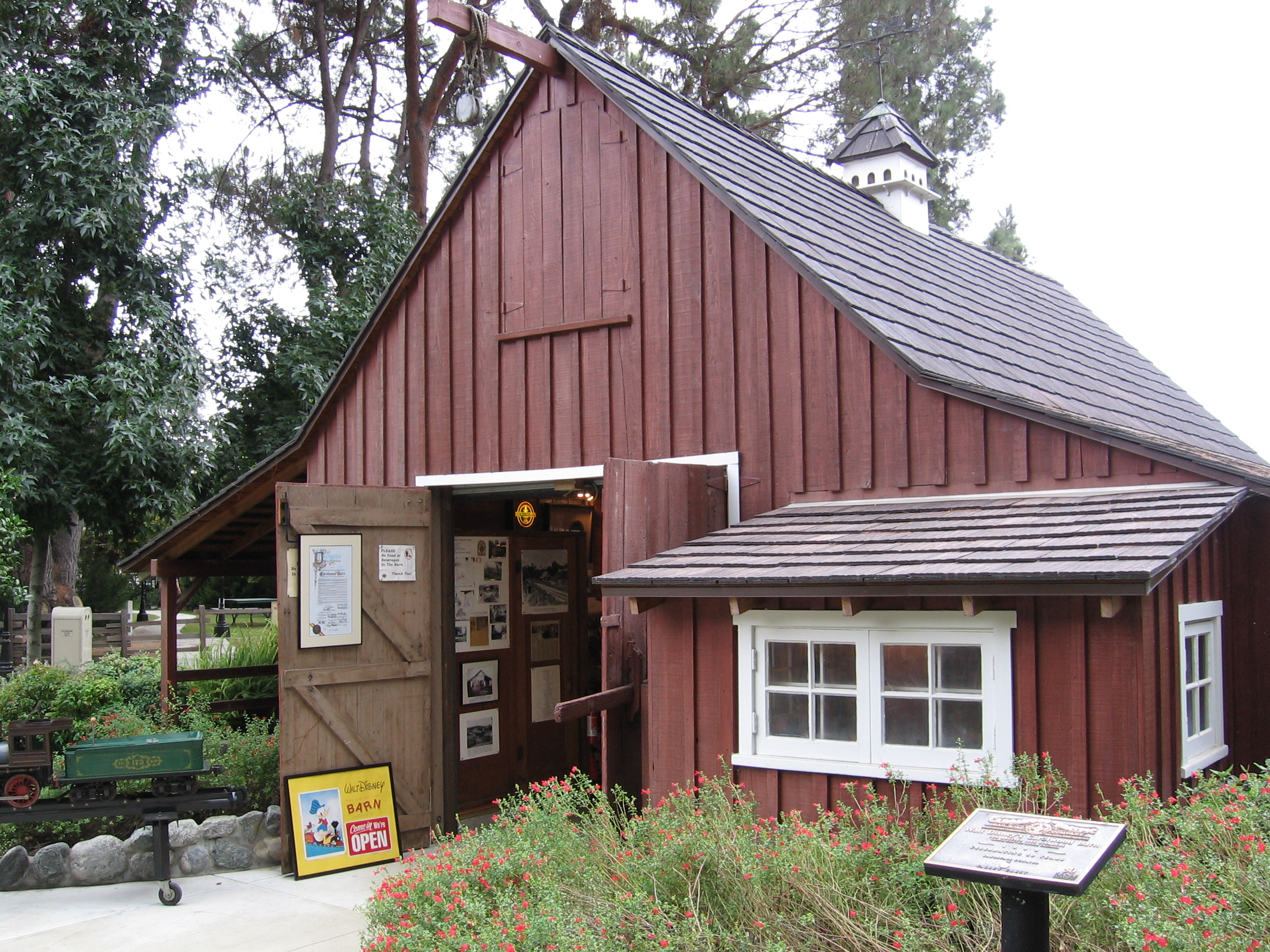
Carolwood Pacific Railroad
Before Disneyland existed, it existed in Walt Disney's backyard. In the quiet residential streets of Holmby Hills, beneath the boughs of mature oaks and eucalyptus, a 7¼-inch-gauge steam locomotive named the Lilly Belle circled the property of 355 Carolwood Drive. The railroad wasn't a toy. It was a serious engineering project, a creative obsession, and—though nobody quite knew it yet—the prototype for the most famous theme park on Earth.
The Man Who Needed a Railroad
Walt Disney had loved trains since childhood. By the late 1940s, he was the most powerful man in American animation, but success had done nothing to dim that original fascination. When he and his wife Lillian moved into their new home on Carolwood Drive in 1950, Walt didn't plant a rose garden or install a swimming pool. He built a railroad.
The Carolwood Pacific Railroad took shape over months of careful planning. Disney hired the Studios' own machine shop to construct the locomotive—a one-eighth-scale replica of a Central Pacific 4-4-0 engine—and he named it the Lilly Belle after Lillian. The sentiment was real, though Lillian herself was reportedly less enchanted with the project than her husband. She didn't want the tracks running through her rose garden.
Engineering Under the Roses
Walt's compromise was ingenious: he tunneled. Rather than cut through Lillian's prized garden, he designed a 90-foot tunnel beneath it, complete with a retaining wall and careful drainage. The track wound 2,615 feet around the full perimeter of the property, crossing a 46-foot trestle bridge and passing through the tunnel before returning to the barn-style roundhouse where the Lilly Belle was stored.
The locomotive could carry a full load of passengers at scale speeds that felt genuinely thrilling. Disney ran it on weekends, inviting friends, colleagues, and neighborhood children to ride. Ward Kimball, one of Disney's key animators and a fellow train enthusiast, was a frequent visitor. The railroad had its first run on Christmas Eve, 1949—Walt's birthday gift to himself.
From the Backyard to the World
What the Carolwood Pacific really was, Disney biographers would later understand, was a thinking space. As Walt rode the Lilly Belle around his property, he was working through something larger. He had been sketching ideas for a kind of park where parents and children could experience things together—not just watch, but inhabit. The railroad was part of the vocabulary.
By 1953, Disney had outgrown his backyard experiment. He purchased 160 acres of orange groves in Anaheim and began designing Disneyland in earnest. The Main Street Railroad that would circle that park—and every Magic Kingdom that followed—traced its conceptual lineage directly to the Carolwood Pacific. Walt never claimed otherwise.
The railroad operated at Carolwood Drive from 1950 until 1953, when the property was sold. The Lilly Belle locomotive and much of the rolling stock were preserved. Walt's barn—the structure he had built as the railroad's engine house—was eventually moved to Griffith Park, where it still stands at the Los Angeles Live Steamers Railroad Museum, open to the public on the third Sunday of each month.
What Remains
The barn is a modest wooden structure, easy to overlook beside the full-scale locomotives and clubs of serious hobbyists that populate the Live Steamers grounds. But inside, the original workbench where Walt tinkered with his engines survives, along with photographs and memorabilia from the Carolwood years.
The house at 355 Carolwood Drive still stands in Holmby Hills, though it has changed hands and been renovated over the decades. Nothing marks the route of the old railroad from the street. The roses Lillian insisted on protecting are long gone too. What persists is the idea—that a person could look at a small patch of land and see, running through it, something much larger than what was there.
From the Air
Holmby Hills lies just east of the 405 freeway and north of Wilshire Boulevard in the Westside corridor. The neighborhood is flanked by Beverly Hills to the east and Bel Air to the north. From the air at 2,000 feet MSL, the tree-canopied streets around Carolwood Drive are visible as a pocket of dense green between UCLA to the south and the Santa Monica Mountains to the north. The Los Angeles Live Steamers Railroad Museum, where Walt's barn now sits, is in Griffith Park near the junction of the 5 and 134 freeways—look for the green expanse of the park northeast of downtown. Nearest airport: KHHR (Hawthorne Municipal) or KVNY (Van Nuys Airport) to the north.