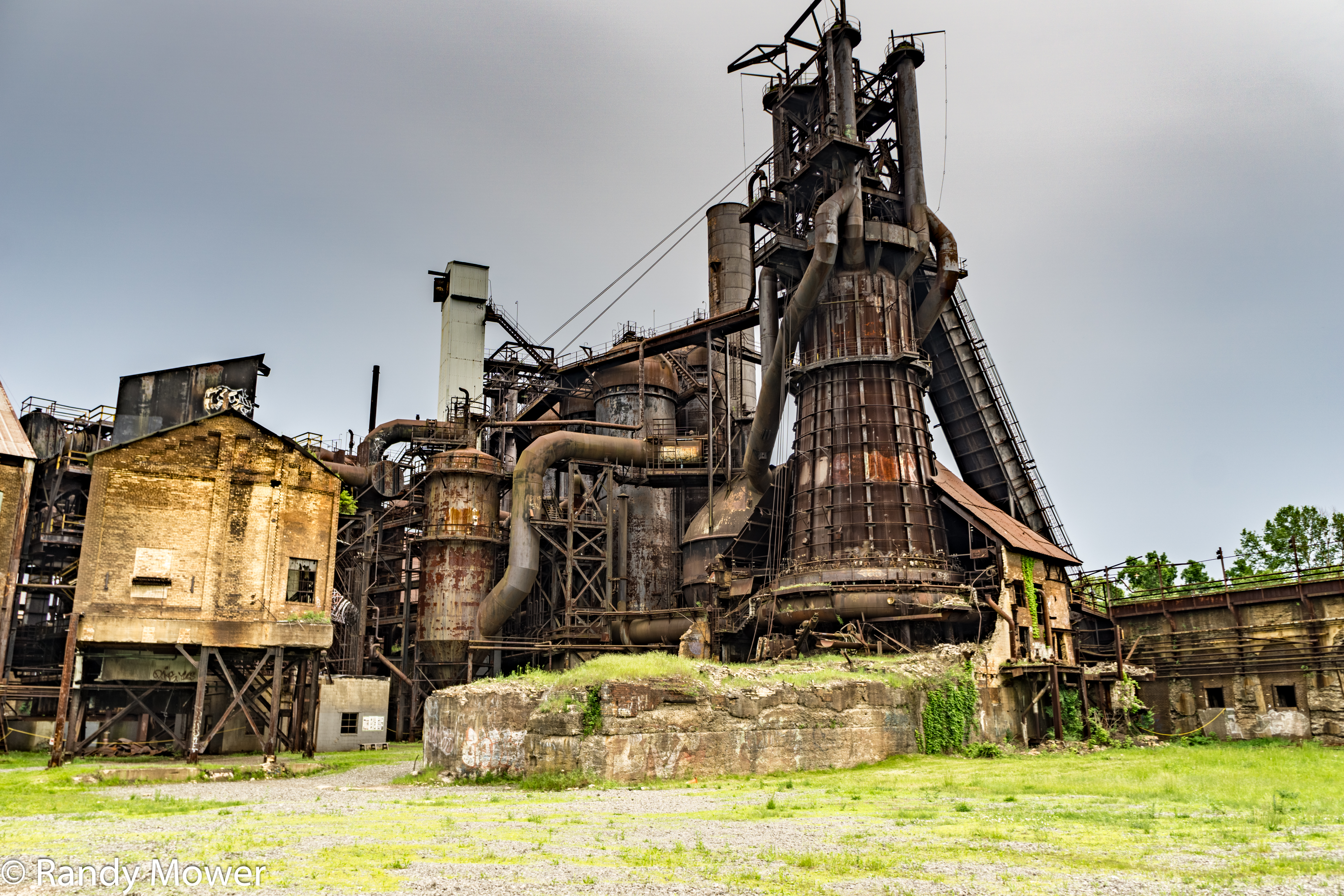
Carrie Furnaces
On the banks of the Monongahela River in Rankin, Pennsylvania, two blast furnaces stand silent. Carrie Furnaces 6 and 7 are the last surviving blast furnaces from Pittsburgh's once-mighty Homestead Steel Works - the mill where Andrew Carnegie built his fortune, where the bloody Homestead Strike of 1892 killed workers and Pinkerton guards, and where U.S. Steel produced armor plate, structural beams, and the steel that built America. The furnaces operated from 1907 until 1978, producing iron for over 70 years. When they closed, preservation seemed unlikely - these were industrial ruins, not historic monuments. But the Carrie Furnaces survived demolition, and today they stand as the most accessible and dramatic surviving blast furnace complex in the country, a monument to industrial power and its costs.
The Works
The Homestead Steel Works was one of the largest and most important steel mills in American history. Andrew Carnegie acquired the mill in 1883 and transformed it into a centerpiece of his steel empire. At its peak, Homestead employed 20,000 workers and produced vast quantities of structural steel, armor plate for naval vessels, and other products. The Carrie Furnaces were across the river from the main works, producing pig iron that was transported by rail for conversion to steel. The complex included dozens of blast furnaces, open hearth furnaces, rolling mills, and support facilities stretching for miles along the Monongahela.
The Strike
Homestead is infamous for the 1892 strike and lockout that turned into one of the bloodiest labor confrontations in American history. When the Amalgamated Association of Iron and Steel Workers resisted wage cuts and changes to work rules, Carnegie's manager Henry Clay Frick locked out workers and hired 300 Pinkerton agents to secure the mill. Workers and townspeople battled the Pinkertons on July 6, 1892; by day's end, nine workers and seven Pinkertons were dead. The state militia eventually broke the strike. The union was crushed, and steelworkers remained largely unorganized for 40 years. Homestead became synonymous with industrial violence.
The Furnaces
Carrie Furnaces 6 and 7 were built in 1907, replacing earlier furnaces on the site. Each furnace stands approximately 92 feet tall, with associated hot blast stoves, skip hoists, cast houses, and blowing engines. The furnaces produced pig iron - the raw material for steel - by heating iron ore, limestone, and coke to extreme temperatures. Workers 'tapped' the furnace periodically, releasing molten iron that flowed into ladles for transport. The work was dangerous, dirty, and hot. The furnaces operated until 1978, when U.S. Steel closed them amid industry-wide decline. For decades afterward, they sat abandoned, slowly rusting.
The Preservation
By the 2000s, the Carrie Furnaces faced demolition. Most American blast furnace complexes had been scrapped - the steel was too valuable to leave standing. Rivers of Steel National Heritage Area, established in 1996 to preserve the region's industrial heritage, worked to save Carrie. Allegheny County acquired the site in 2005. Volunteers and preservationists stabilized the structures, cleared debris, and developed tours. The furnaces now host art installations, concerts, and industrial heritage programs. The decay is preserved - rust, peeling paint, and crumbling infrastructure remain, giving visitors an authentic sense of industrial scale and decline.
Visiting Carrie Furnaces
Carrie Furnaces is located at 801 Carrie Furnace Boulevard in Rankin, Pennsylvania, on the Monongahela River. Tours are offered seasonally through Rivers of Steel National Heritage Area; advance reservations required. Standard tours take 2 hours and explore the furnace complex, blowing engine house, and industrial landscape. The site hosts special events including art installations, concerts, and photography opportunities. Comfortable shoes and appropriate clothing are essential - this is an industrial site with uneven surfaces. Pittsburgh is 10 miles west; downtown is accessible via the Hot Metal Bridge. Pittsburgh International Airport is 20 miles west. The site is not accessible to wheelchairs due to terrain.
From the Air
Located at 40.41°N, 79.89°W on the Monongahela River in Rankin, Pennsylvania. From altitude, Carrie Furnaces appear as two distinctive vertical structures amid industrial terrain on the river's east bank. The Hot Metal Bridge crosses nearby - named for the ladles of molten iron that once crossed it from Carrie to the Homestead works. The former Homestead Steel Works site is visible across the river, now largely redeveloped. Downtown Pittsburgh is 10 miles west, where the Monongahela meets the Allegheny and Ohio Rivers. The industrial heritage of the Mon Valley is visible in the terrain - former mill sites, railroad corridors, and riverside infrastructure.