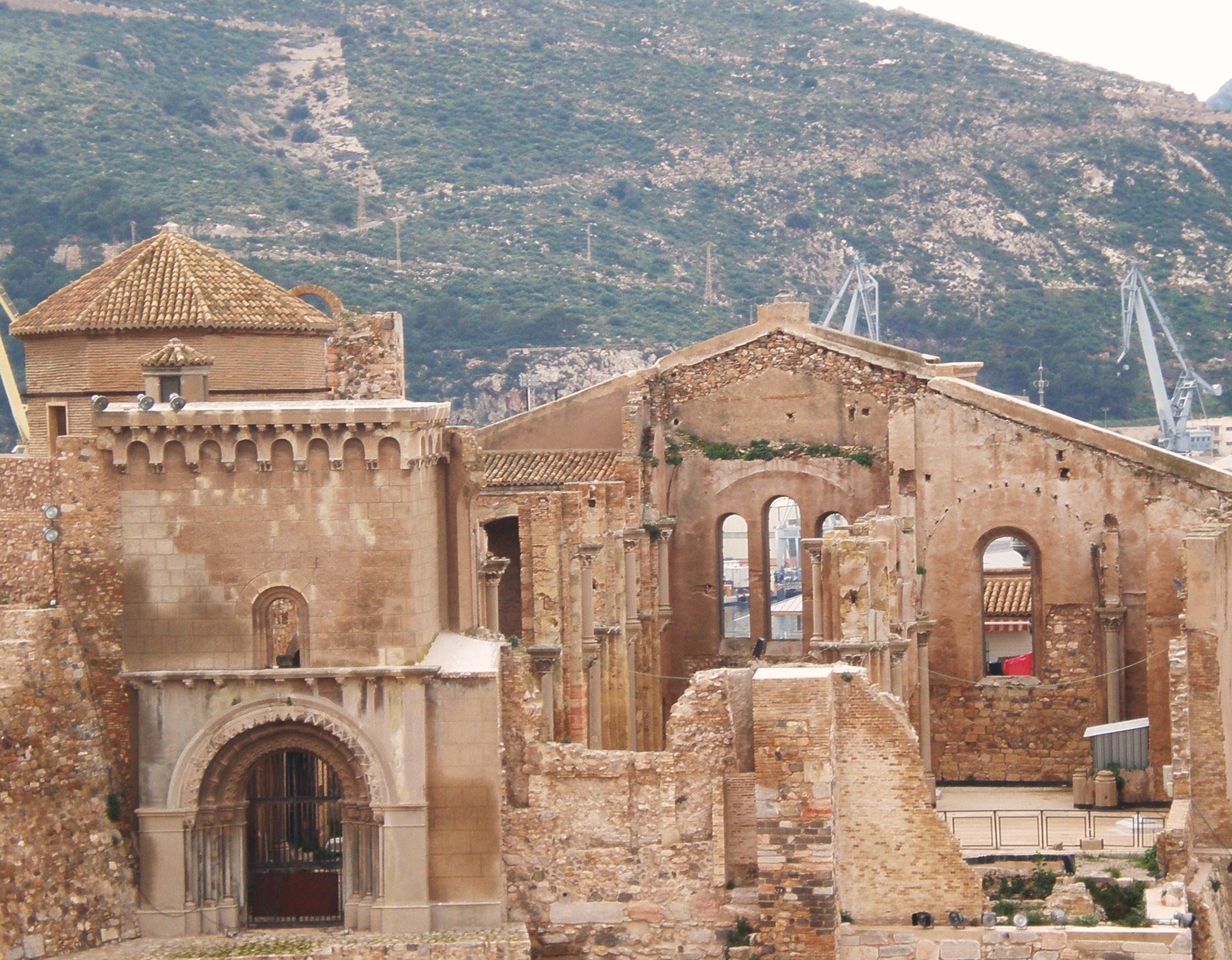
Cartagena Cathedral
Francis Drake's cannonball struck the column dead-on. The impact brought down two more columns and the arches they supported, collapsing a section of ceiling into rubble. It was 1586, and the Cathedral of Saint Catherine of Alexandria had been nearly finished after a decade of painstaking construction. Drake held the city for six weeks, demanding ransom, and when the Cartagenians finally paid 110,000 silver ducats, the English privateer sailed away with the money that had been earmarked to complete their church. The bishop, Friar Juan de Montalvo, died weeks later -- of grief, the chronicles say, at the demolition of his cathedral.
Three Churches, One Stubborn Faith
The current cathedral is actually the third to stand in Cartagena. The first was barely a church at all -- a humble structure of thatched roof and reeds, built in 1535 just two years after the city's founding, promoted by the Dominican friar Tomas de Toro y Cabrero, the first bishop of Cartagena, appointed by Pope Paul III. That building lasted seventeen years before a fire consumed much of the city in 1552 and reduced it to ruins. By 1575, civic leaders called a public contest to design a proper replacement, and master builder Simon Gonzalez won the commission. His design drew on the basilicas of Andalusia and the Canary Islands, translating their warm Mediterranean forms into the stone and heat of the Colombian Caribbean.
The Weight of Every Stone
Construction began in earnest in 1577, and the decisions made during those early years still define the building today. When city councilors proposed rotating the cathedral's axis ninety degrees, Captain Sebastian Perez donated 200 pesos toward acquiring the necessary properties -- but the sum fell short, and the neighbors who had already contributed to the construction fund voted to press on as planned. Gonzalez himself discovered that the local stone lacked the strength he expected, so he added a seventh pair of columns to his original design of six, providing extra support for the ceiling. By 1585, the main volume was covered. Then Drake arrived, and the project stalled for years as Cartagena struggled to recover economically from his raid.
Slow Resurrection
Repair came grudgingly. A master builder named Benito de Morales, passing through on his way to Quito, examined the damage and confirmed that the walls and foundations remained sound. He recommended finishing the building according to Gonzalez's original vision. But money was scarce -- Drake had looted it -- and the work crept forward over decades. Bishop Antonio de Hervias wrote despairingly to the king in 1591, lamenting the slow pace. Despite the pessimism and the frequent friction between military and church authorities, the cathedral was eventually completed around 1612, some thirty-seven years after its foundation stones were laid.
Marble, Time, and a French Architect
Later centuries brought refinement rather than rebuilding. Between 1778 and 1792, the prelate Fray Jose Diaz de Lamadrid installed a Carrara marble pulpit and marble pavement, along with the elegant arcades that sustain the central nave. The balconies, main portal, and cornices survived from the original colonial construction, unchanged. In 1908, the French architect Gaston Lelarge refurbished the tower and dome, giving the cathedral the profile it carries today -- a blend of sixteenth-century Andalusian proportions and early twentieth-century European flourish, standing beside the Parque de Bolivar in the heart of Cartagena's historic center.
An Unbroken Thread
The Cathedral of Cartagena remains the episcopal see of the Archbishop of Cartagena de Indias, one of the oldest in the Americas. Dedicated to Saint Catherine of Alexandria, it anchors the same neighborhood where Spanish colonial power once concentrated itself -- the civil headquarters, the grand houses, the churches that announced permanence to a coastline constantly threatened by pirates and foreign navies. What makes this building remarkable is less its grandeur than its persistence. Three attempts, one pirate raid, decades of poverty, and nearly five centuries of Caribbean weather, and the cathedral still stands much as Gonzalez designed it.
From the Air
Located at 10.4236N, 75.5510W in the heart of Cartagena's walled old city. The cathedral dome and tower are visible from approaches to Rafael Nunez International Airport (SKCG), roughly 2 nautical miles to the northeast. Best viewed at 2,000-3,000 feet AGL on a southwesterly approach. The historic center's terracotta roofline contrasts sharply with the modern high-rises of Bocagrande to the southwest. The Caribbean coastline and Cartagena Bay provide unmistakable orientation landmarks.