Casablanca
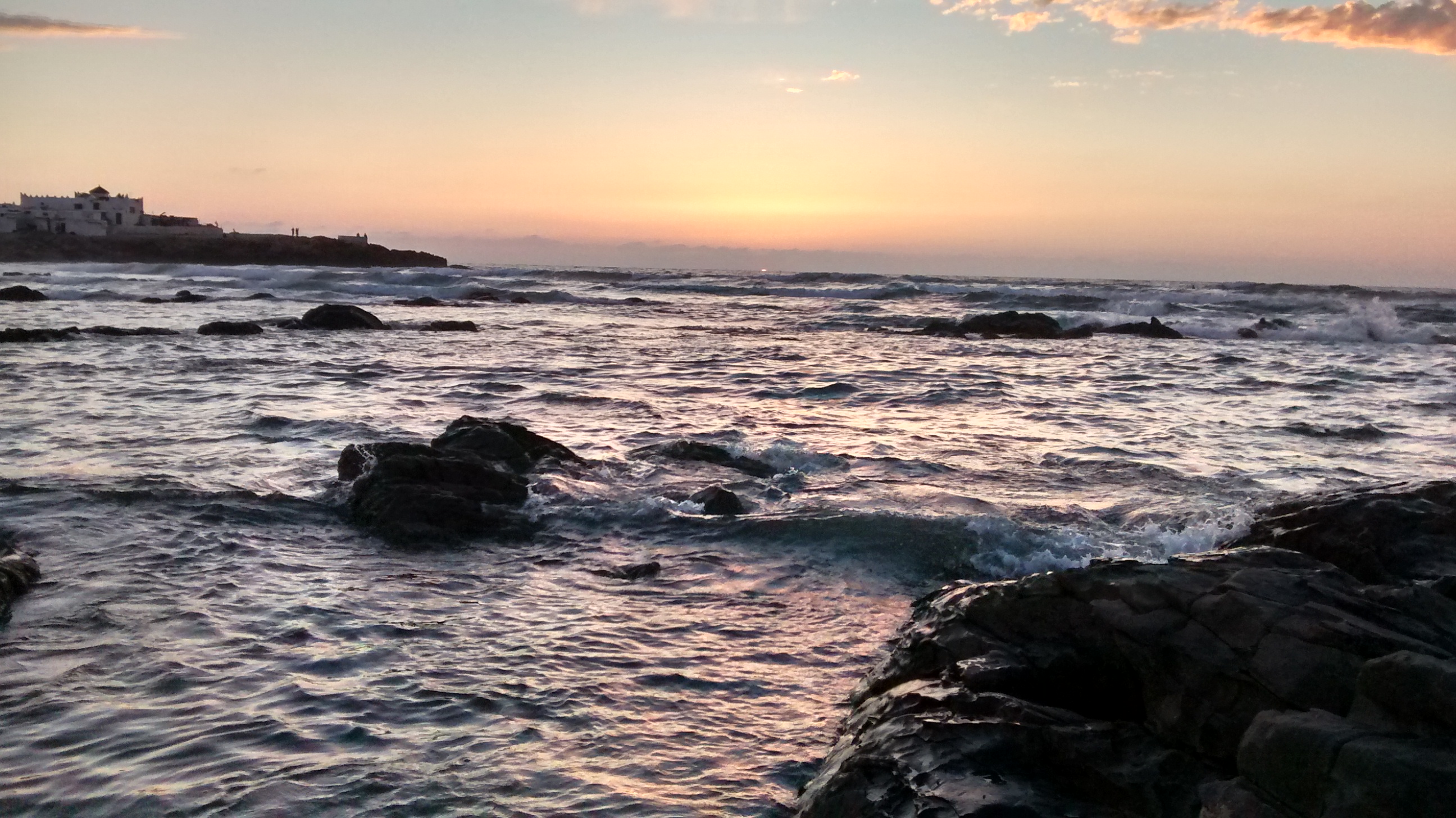
Casablanca is Morocco's largest city but not its capital - that honor belongs to Rabat, while the cultural heart beats in Marrakech and Fes. Casablanca is commerce, industry, the port that handles most of Morocco's international trade, a place built for business rather than beauty. The French colonial administration transformed a small coastal town into an economic center in the early 20th century; the Art Deco buildings of the Nouvelle Ville reflect that era's ambitions. The Hassan II Mosque, completed in 1993, provides the beauty that colonial planners forgot - its minaret the tallest in the world, its prayer hall extending over the Atlantic on a platform designed to fulfill the Quranic verse that God's throne was built upon water. Casablanca holds 3.7 million people, Morocco's economic engine, a city that the famous film made legendary despite being shot entirely in Hollywood studios.
The Hassan II Mosque
The Hassan II Mosque cost an estimated $700 million, funded by public donations and royal instruction, built in six years by 35,000 workers laboring around the clock. The minaret rises 210 meters, the tallest religious structure in the world, visible from across the city and from ships at sea. The prayer hall holds 25,000 worshippers; the courtyard holds 80,000 more. The retractable roof, the heated floor, the laser that points toward Mecca from the minaret top - the mosque combines traditional craftsmanship with modern engineering.
The mosque stands partly on land and partly over the Atlantic, the platform extending into the water fulfilling King Hassan II's vision of a throne upon the sea. The project employed master craftsmen from across Morocco: woodcarvers, tile makers, stucco artists, metalworkers, the traditional crafts that risk dying employed on a scale that ensures their survival. The mosque is one of the few in Morocco open to non-Muslims, the tours emphasizing the craftsmanship that non-believers can appreciate.
The Art Deco City
The French built modern Casablanca as a showcase for colonial urbanism, hiring architects who created one of the world's largest concentrations of Art Deco buildings. The Nouvelle Ville that emerged between the 1920s and 1950s blended European modernism with Moroccan motifs - geometric tilework on Art Deco facades, horseshoe arches framing streamlined windows, a hybrid that seemed to promise that colonialism could be beautiful.
The buildings have survived better than their ideology. The Villa des Arts, the cinema Rialto, the residential blocks along Boulevard Mohammed V - the Art Deco heritage attracts architectural tourists who discover that Casablanca offers something Marrakech cannot. The preservation is incomplete; some buildings have been demolished, others poorly maintained. But enough remains to show what the French imagined and what independent Morocco inherited.
The Film That Never Was
The 1942 film Casablanca, starring Humphrey Bogart and Ingrid Bergman, was shot entirely on a Warner Bros. soundstage in Burbank. The filmmakers had never visited the real city; the Morocco they depicted was Hollywood's imagination of North Africa, romantic and dangerous and entirely fictional. The film became one of the most beloved in cinema history, its dialogue entering common language, its title giving a small Moroccan port city global recognition.
The real Casablanca was never Rick's Cafe. The city was a French military base during World War II, not a den of intrigue; the refugees who passed through left few traces of the drama the film invented. Yet visitors still seek the romance the film promised, and tourism has obliged with a Rick's Cafe that opened in 2004, serving the nostalgia that Hollywood created. The film made Casablanca famous for something that never happened there.
The Medina
The old medina of Casablanca is small compared to Fes or Marrakech, its walls enclosing a fraction of the city's area. The neighborhood has none of the tourist infrastructure of other Moroccan medinas - no riads converted to guesthouses, few restaurants aimed at visitors, a working-class quarter that commerce has not discovered. The authenticity that tourists seek in manicured medinas exists here in unpolished form.
The medina's neglect is its preservation. The souks sell to locals rather than foreigners; the prices reflect what Moroccans can afford rather than what tourists will pay; the lanes remain genuinely confusing rather than signposted. Casablanca's medina is not a destination but a reminder that the city has history beneath its commercial present, that Morocco existed here before the French arrived and remains after they departed.
The Economic Capital
Casablanca generates roughly a third of Morocco's GDP, its port handling the imports and exports that connect Morocco to the world economy. The Casablanca Stock Exchange, the banks that line Boulevard Mohammed V, the offices of companies that do business across Africa - the city functions as Morocco's economic engine, the place where money is made if not always displayed.
The economic role shapes the city's character. Casablanca is not charming like Marrakech or historic like Fes; it is functional, commercial, a place that exists to work. The traffic that chokes the streets, the construction that transforms neighborhoods, the ambition that draws migrants from across Morocco - these define a city that has always been about opportunity more than beauty. Casablanca's gift to Morocco is prosperity, not atmosphere.
From the Air
Casablanca (33.59N, 7.62W) lies on Morocco's Atlantic coast. Mohammed V International Airport (GMMN/CMN) is located 30km south of the city center with two runways: 17L/35R (3,720m) and 17R/35L (3,200m). The Hassan II Mosque on its oceanfront platform is visible from coastal approaches. The Art Deco Nouvelle Ville is in the city center. The Atlantic coastline extends in both directions. The terrain is flat coastal plain. Weather is Mediterranean with Atlantic influence - mild year-round with some winter rain. Atlantic fog and haze can reduce visibility. The ocean moderates temperatures.