Castle Air Museum: Where the Cold War Came to Rest
In November 1979, a B-17 Flying Fortress touched down at Castle Air Force Base for the last time. It would never fly again. That landing marked the beginning of something unexpected: a museum built not by generals or government planners but by a small group of aviation enthusiasts who believed the warplanes of the twentieth century deserved more than a smelter. Within two years, they had hauled World War II-era barracks to the museum site, arranged a dozen aircraft on the tarmac, and opened to the public as part of the United States Air Force Museum system. What started as twelve planes on a patch of Atwater, California asphalt has grown into one of the largest military aircraft collections on the West Coast - more than 80 machines spanning from propeller-driven trainers to Cold War reconnaissance jets.
Born on a Bomber Base
Castle Air Force Base was a Strategic Air Command installation for decades, home to B-52 Stratofortresses and KC-135 tankers that stood nuclear alert during the tensest years of the Cold War. The base's identity was inseparable from heavy bombers. So when enthusiasts began collecting retired aircraft in 1979, the location made a kind of poetic sense - where better to preserve the machines than on the concrete they once rumbled across? Ground was broken in December 1980, and by March 1981 a barracks and office building from World War II had been moved to the site. The museum opened on June 20, 1981, and within four months had already added four more aircraft. Growth came quickly, but not without stumbling. A 1983 audit criticized the museum's leadership for poor accountability, displaying aircraft outside its stated mission, and inadequate security. The criticism forced a reset, and by 1987 the museum was raising funds for a new exhibit building called the "Flight of Fancy."
Surviving the Base Closure
The real crisis came in 1991, when the Department of Defense announced that Castle Air Force Base was on the closure list. For the museum, this was existential. Closure meant the aircraft could be reassigned to another installation, scattered or mothballed. After study and negotiation, an agreement was struck: the museum would continue operating as a private, nonprofit entity on the decommissioned airfield. In the months before the base officially closed in April 1995, volunteers rushed to repaint and restore aircraft while federal resources were still available - a race against bureaucratic sundown. The transition to private operation was rough. Without federal funding, the museum struggled financially through the late 1990s and early 2000s. By 2002, planners were drafting proposals for a new building to shelter the most fragile aircraft and establish a research library, though funding remained elusive for years.
A Presidential Cabin and a Blackbird
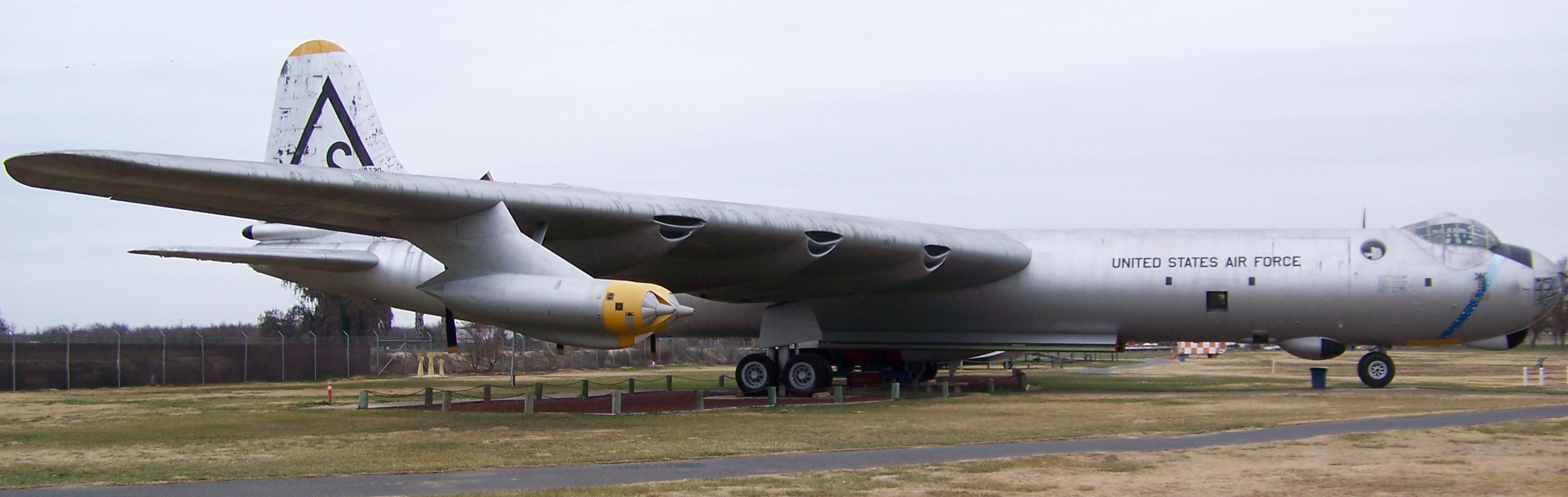
The collection's range is striking. On the outdoor flightline, a Convair RB-36H Peacemaker - a six-engine Cold War giant with a wingspan longer than the Wright Brothers' first flight - dwarfs everything around it. Nearby sits an SR-71 Blackbird, the Mach 3 reconnaissance aircraft that still holds the speed record for an air-breathing manned airplane. A Soviet-built MiG-21 stands as a Cold War counterpoint, one of the few in American museum collections. But the aircraft that draws the most curiosity may be the McDonnell Douglas VC-9C, a jet that served as an alternate Air Force One and Air Force Two when the primary presidential aircraft were impractical. Presidents Ronald Reagan and Bill Clinton, vice presidents Al Gore and Dick Cheney, and first ladies Nancy Reagan, Barbara Bush, and Hillary Clinton all flew aboard it. In October 2013, when the jet was towed to its display spot at Castle, it carried decades of state secrets in its cabin walls and none in its fuel tanks.
Rescued from Everywhere
Castle's collection has grown through resourcefulness as much as prestige. In May 2008, the museum marked its 50th aircraft with a Douglas A-4L Skyhawk, shipped from another location in 2006 and restored for $12,000. When the Naval Air Museum at Barbers Point in Hawaii closed in 2019, Castle received five of its aircraft in 2021 - a cross-Pacific rescue mission. A TBM Avenger that had been ditched off Daytona Beach in 2022 was fished out, restored, and delivered to Merced County the following year. In June 2023, three donations totaling $4 million were announced for a new Aviation Pavilion, giving the museum its most significant construction funding since its founding. Volunteers continue to restore aircraft in a separate World War II-era hangar, preparing each one for display. The museum now spans 35 acres and includes indoor exhibits of artifacts, photographs, uniforms, war memorabilia, aircraft engines, and a restored B-52 cockpit. A Copper Wings Cafe opened in July 2023, and an RV park operates nearby for visitors who want to camp beside the jets.
Thirty-Five Acres of Sky
From the air, Castle Air Museum is unmistakable. The aircraft sit in rows on the old military ramp at Castle Airport, their wingtips and tail fins casting long shadows across the pale Central Valley concrete. The surrounding landscape is flat agricultural land - almond orchards and row crops stretching to the horizon - which makes the cluster of military hardware all the more incongruous. The museum exists because people refused to let these machines disappear. Every aircraft on the line was scheduled for disposal, decommissioning, or neglect before someone intervened. That the collection sits on a former SAC base where some of these types once served operationally adds a layer of continuity. The bombers have not left home. They have simply stopped flying.
From the Air
Located at 37.37N, 120.58W at Castle Airport (KMER) in Atwater, California, in the San Joaquin Valley. The museum's outdoor aircraft collection is clearly visible on the airport's west side. Aircraft are arranged in rows on the old military ramp. Elevation approximately 190 feet MSL. Flat terrain with excellent visibility most days; summer temperatures often exceed 100F with haze possible. Nearest major airport is Modesto City-County Airport (KMOD) 25nm north. Fresno Yosemite International (KFAT) is approximately 50nm southeast.