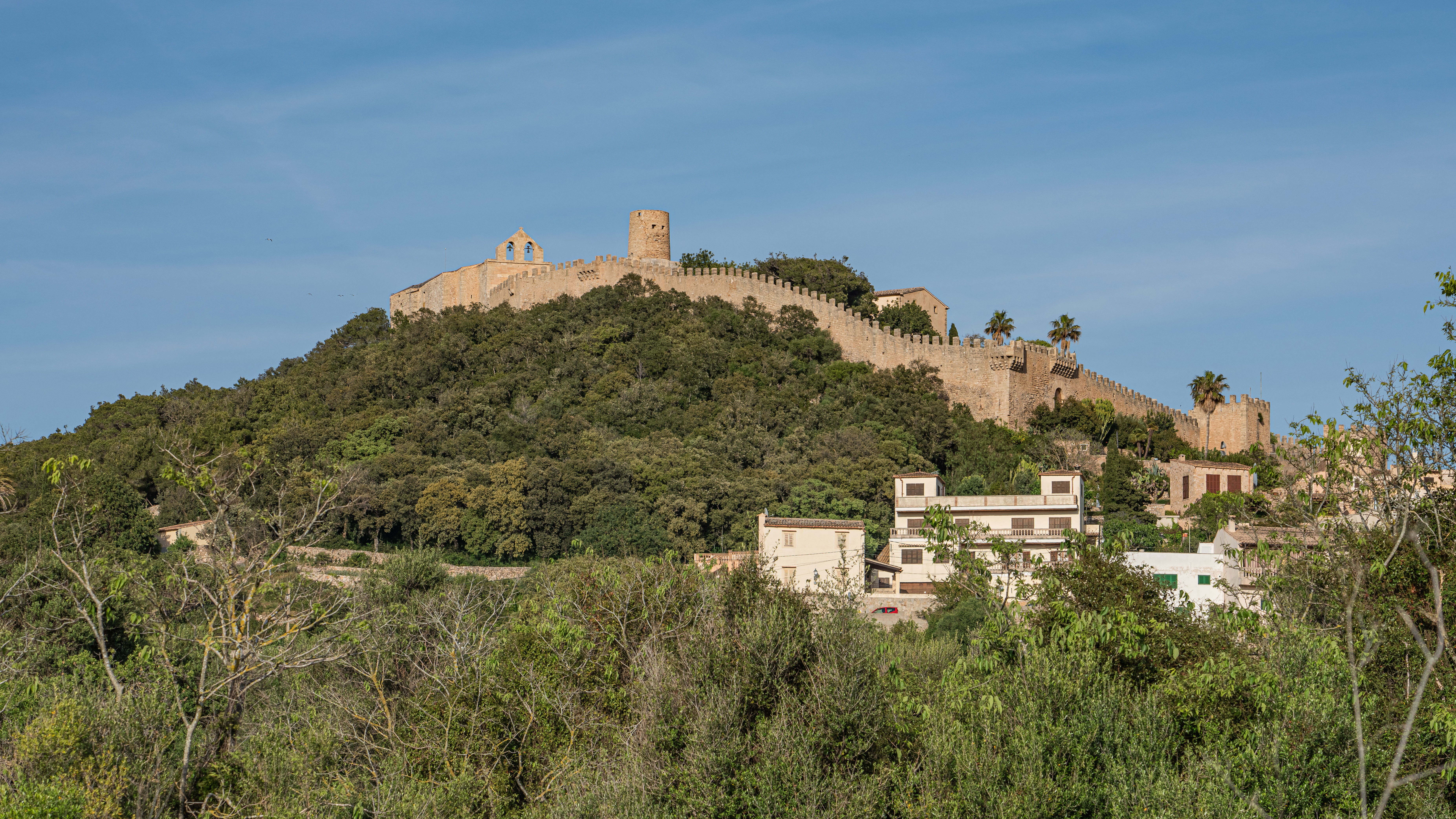
Castle of Capdepera
The bonfires burned all night. From Menorca, thirty miles across the channel, they looked like the campfires of an enormous army massing for invasion. That was the idea. King James I of Aragon, having just conquered Majorca, needed his troops for the campaign against Valencia and could not afford another amphibious assault. So he ordered bonfires lit along the hilltop at Capdepera, on Majorca's northeastern tip -- enough fires to make the Muslim Menorcans believe a vast force was preparing to cross the strait. The ruse worked. Menorca's leaders surrendered without a fight, and at this very castle, James I signed the Treaty of Capdepera, securing the island through deception rather than blood.
Layers of Conquest
The hilltop at Capdepera has been fortified longer than anyone can precisely date. Romans built the first defensive structure here, drawn by the same strategic advantage that every subsequent occupier recognized: the hill commands views of both the surrounding land and the sea channel separating Majorca from Menorca. The Moors enlarged the Roman fortification during their centuries of control over the Balearics. When Christian forces conquered Majorca in 1229, they destroyed much of the existing structure but later built their own castle on the same foundations -- a pattern repeated at fortified sites across the Mediterranean, where each conqueror recycled the stones and the strategic logic of the one before.
James and the Bonfire Bluff
The Treaty of Capdepera, signed at the castle, was one of the more elegant military deceptions of the medieval period. James I had conquered Majorca, but Menorca remained under Muslim control, and the king lacked the resources for a sustained naval campaign. Instead, he exploited geography: Capdepera's hilltop is visible from Menorca on clear nights, and the strait between the islands is narrow enough that fires on the shore would be unmistakable. The Menorcan Muslims, seeing what appeared to be an invasion force assembling, chose negotiation over resistance. Under the treaty, they were permitted to remain on Menorca, retaining their property and their faith, in exchange for acknowledging the sovereignty of the King of Aragon and paying tribute. It was a deal struck under false pretenses, but by medieval standards it was also a remarkably merciful one -- no siege, no sack, no massacre.
A Walled Town on a Hill
The castle visitors see today dates primarily from the fourteenth century. King James II, who had already founded the town of Capdepera in 1300, ordered the scattered local population to consolidate within a walled enclosure built around one of the existing watchtowers, now known as the Miquel Nunis tower. The result was not merely a castle but a fortified town -- a walled community perched on a hilltop where residents could see approaching threats by sea or land long before they arrived. The strategic position allowed surveillance of the strait to Menorca and the adjacent coastline, making Capdepera one of the most important defensive positions on the island. The castle is among the largest in Majorca, its walls enclosing a substantial area of the hilltop.
Abandonment and Return
Military troops occupied the Castle of Capdepera until 1854, when the garrison was withdrawn and the fortress was abandoned. For nearly 130 years, the castle passed into private ownership and gradually deteriorated. In 1983, the private owners donated the castle to the Capdepera Town Council, beginning a new chapter. The council undertook restoration work and in 2000 organized a celebration marking 700 years since the founding of the fortified town. Today the castle is open to visitors year-round, its walls and towers offering the same views that made the site valuable to Romans, Moors, and Aragonese kings alike -- the coastline curving away to the south, the town of Capdepera clustered below, and on the horizon, across the blue strait, the faint outline of Menorca, the island that was won with fire and cunning rather than the sword.
From the Air
Located at 39.70N, 3.43E on the northeastern tip of Majorca, the castle sits on a prominent hilltop overlooking the town of Capdepera and the Menorca channel. Nearest major airport is Palma de Mallorca (LEPA), approximately 80 km southwest. The castle walls are visible from altitude as a distinct hilltop enclosure. The strait between Majorca and Menorca, across which the famous bonfire bluff was directed, is clearly visible from the air. Best viewed at 2,000-4,000 feet to appreciate the castle's commanding position and the narrow sea channel.