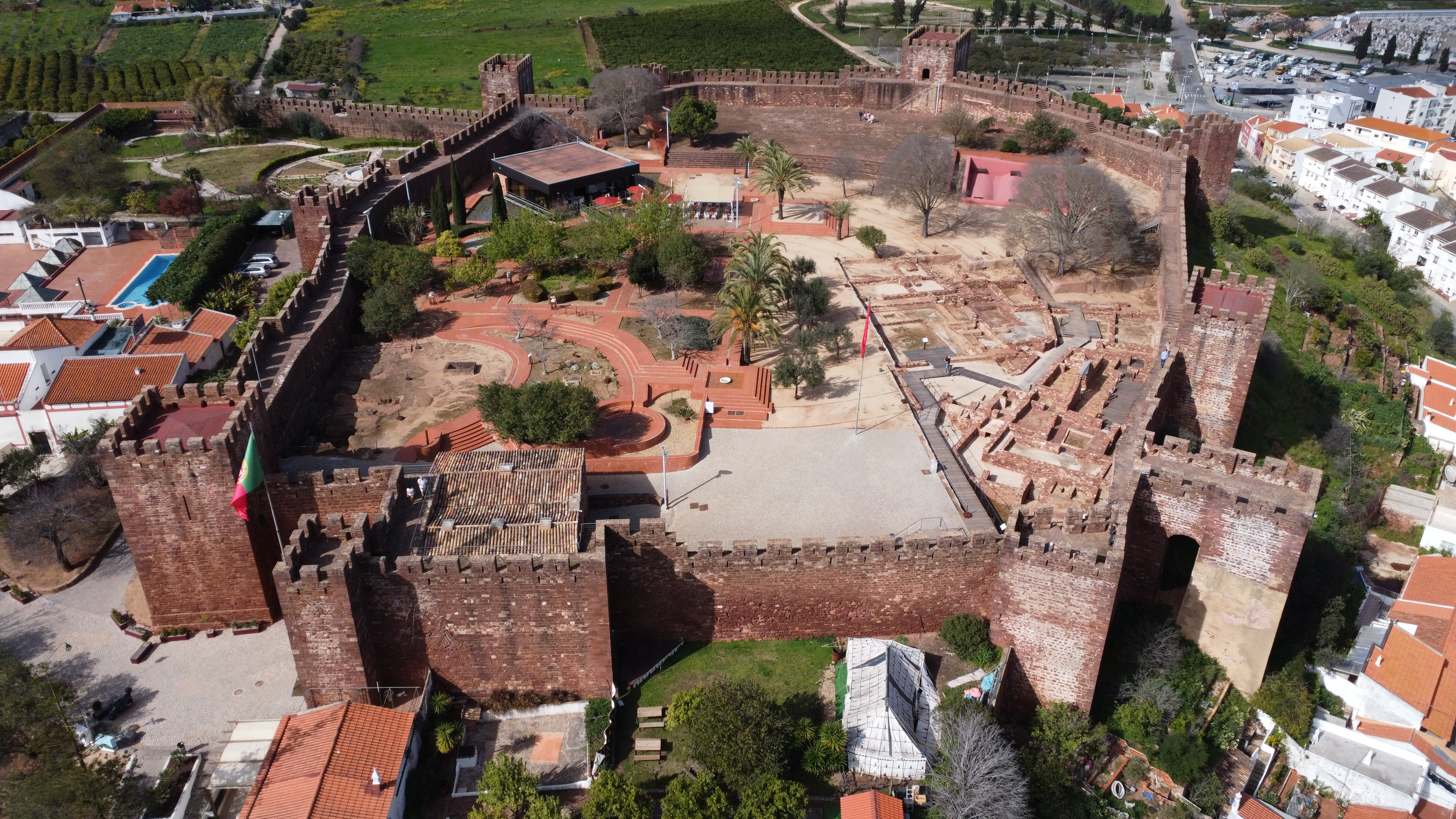
Castle of Silves
The red sandstone walls of Silves Castle have seen more flags raised and lowered than almost any fortress in Portugal. Phoenicians, Greeks, and Carthaginians passed through. Romans conquered the hilltop around 201 B.C. and held it for five centuries. The Moors arrived and made it magnificent, building the Palace of Balconies where the poet-king Al-Mutamid composed verse under polychromatic stucco ceilings. Then came the Crusaders, the Almohads, and finally the Portuguese -- each wave reshaping the fortress but never quite erasing the layers beneath.
The Siege That Didn't Hold
In 1189, King Sancho I of Portugal arrived at Silves with a powerful Crusader army and laid siege. The city fell after a prolonged assault, and the Christian forces celebrated their conquest. But the celebration was premature. Just two years later, in 1191, a grande army under the Almohad caliph recaptured the city. The walls and towers that visitors see today date primarily from these turbulent 12th and 13th century campaigns -- construction and reconstruction by the Almoravid and Almohad dynasties who understood that controlling the Algarve meant controlling access to the western Mediterranean. It would take another half century before the fortress changed hands for the last time. During the reign of Afonso III, forces under the command of Paio Peres Correia definitively captured Silves in the 13th century, ending Muslim rule in the region for good.
Water Beneath the Stones
The castle's most remarkable engineering lies underground. The Cistern of Moura, a subterranean reservoir ten meters high with a surface area of 820 square meters, is an architectural marvel of five naves marked by four rows of columns connected by semi-circular archways. This rainwater-fed cistern provided fresh water not just to the castle garrison but to the surrounding community -- remarkably, it remained in use as late as the 1920s, nearly eight centuries after its construction. A second water source, the Cisterna dos Caes, plunges sixty meters straight down into the rock, a vertical shaft that supplemented the castle's supply during sieges. These engineering solutions reveal the sophistication of the Moorish builders who understood that in the dry Algarve, a fortress was only as strong as its water supply.
A King's Unexpected Tomb
When King John II of Portugal died unexpectedly in nearby Alvor in 1495, Silves Cathedral -- which sits just below the castle walls -- became his provisional burial place. His body rested in the main chapel until 1499, when King Manuel I oversaw the exhumation and transfer of the remains to the Monastery of Batalha. But the original tomb slab, carved with a Gothic inscription, still lies embedded in the cathedral floor. The castle and cathedral together tell the story of Silves's decline. Prince Henry the Navigator was named alcalde of the fortress in 1457, and new concessions followed in 1487 under John II, but little development came of either. The 1755 Lisbon earthquake dealt the final blow to any remaining grandeur, destroying the cathedral tower and much of the castle walls. During the Liberal Wars of the 19th century, locals repaired the walls under the guerrilla leader Remexido, ignoring the original foundations in their haste.
Digging Through the Layers
Archaeological excavations beginning in 2005 brought new attention to what lies beneath the castle's surface. Archaeologists Rosa and Mario Varela Gomes uncovered vestiges of the 11th-century governor's palace, including fragments of polychromatic stucco decoration from Al-Mutamid's residence. Near the southwest wall, they found the foundations of a house believed to have been occupied by Prince Henry during his time as alcalde -- complete with a stone staircase, the remains of a vaulted ceiling, an olive oil press, and spaces carved into the rock. Today the castle stands as an irregular polygon on its hilltop, four towers and seven crenellated posts linked by battlemented walls, overlooking the whitewashed town that cascades down the slopes below. Two gates provide access: the principal entrance between two towers, and the so-called Traitor's Gate carved into the northern wall. On the second floor of the old Governor's residence, painted wooden ceilings survive, one depicting royal arms framed in shells and acanthus leaves, the other an allegory of Mars flanked by floral medallions -- echoes of the centuries when this remote Algarve hilltop was a seat of power.
From the Air
Located at 37.19N, 8.44W in the town of Silves in the central Algarve, Portugal. The castle's red sandstone walls are highly distinctive from the air, contrasting sharply with the white buildings of the town below. The hilltop location makes it visible from considerable distance. Recommended viewing altitude: 2,000-4,000 feet. Nearest airport: Faro (LPFR), approximately 30 nm east. Portimao aerodrome (LPPM) is about 10 nm southwest. Clear weather is typical in the Algarve, with excellent visibility most of the year.