Castle Ward
Bernard Ward and his wife Anne could not agree on architecture. He wanted the restrained elegance of Palladian classicism; she preferred the fashionable drama of the Gothic Revival. Rather than compromise, they split the house down the middle. The southeast facade of Castle Ward, facing the rolling parkland of County Down, is symmetrical, ordered, and classical. Walk around to the northeast side, overlooking the grey waters of Strangford Lough, and the building transforms into something altogether more theatrical -- pointed arches, pinnacles, and fan vaulting. The interior follows the same divide: classical rooms on one side, Gothic on the other. It is an 18th-century marriage rendered in sandstone, and one of the most architecturally eccentric country houses in Ireland.
Four Centuries on the Lough
The Ward family arrived at the northern end of Strangford Lough in 1570, when Bernard Ward purchased the site from the Earls of Kildare. The property, originally called Carrick na Sheannagh, was renamed Castle Ward, and Nicholas Ward built a defensive tower house in the estate's farmyard in 1610 -- a precaution that made sense in the volatile politics of Plantation-era Ulster. The estate encompasses 332 hectares of landscaped gardens that slope down toward the lough, one of the largest sea inlets in the British Isles. Strangford Lough itself is a place of powerful tidal currents and rich marine life, its Norse name -- Strangfjorthr, meaning 'strong fjord' -- a testament to the force of water that rushes through its narrow mouth.
A Compromise That Refused to Compromise
The present house dates to the 1760s, when the 1st Viscount Bangor commissioned its construction. The architectural standoff between the Wards produced something stranger and more interesting than either pure style alone could have achieved. The classical facade, likely influenced by architect Robert Morris, presents a dignified face of Ionic pilasters and pediments. The Gothic side, by contrast, revels in ornamental excess. Inside, the divide continues with unsettling precision. Lady Bangor's Gothic sitting room, with its elaborate plasterwork ceiling, sits across the central hall from her husband's classical rooms. The couple eventually separated -- whether the house caused the rift or merely reflected it remains a matter of speculation. The National Trust acquired the property and its grounds, which today include a Victorian laundry, a working corn mill, and the Strangford Lough Wildlife Centre.
Winterfell and the Troubles
Castle Ward found a new kind of fame when HBO selected its grounds as a filming location for Winterfell in the television series Game of Thrones. The estate's rugged farmyard and stone outbuildings stood in for the ancestral seat of House Stark, and visitors can now take archery lessons where Jon Snow once practiced. But the estate carries a darker, real-world history as well. On 10 February 1973, during the Troubles, two members of the Provisional IRA -- Leonard O'Hanlon, aged 23, and Vivienne Fitzsimmons, aged 17 -- were killed when a bomb they had planted detonated prematurely within the grounds. The incident is a reminder that Northern Ireland's stately homes were not immune to the conflict that shaped the province for decades.
The View from the Lough Shore
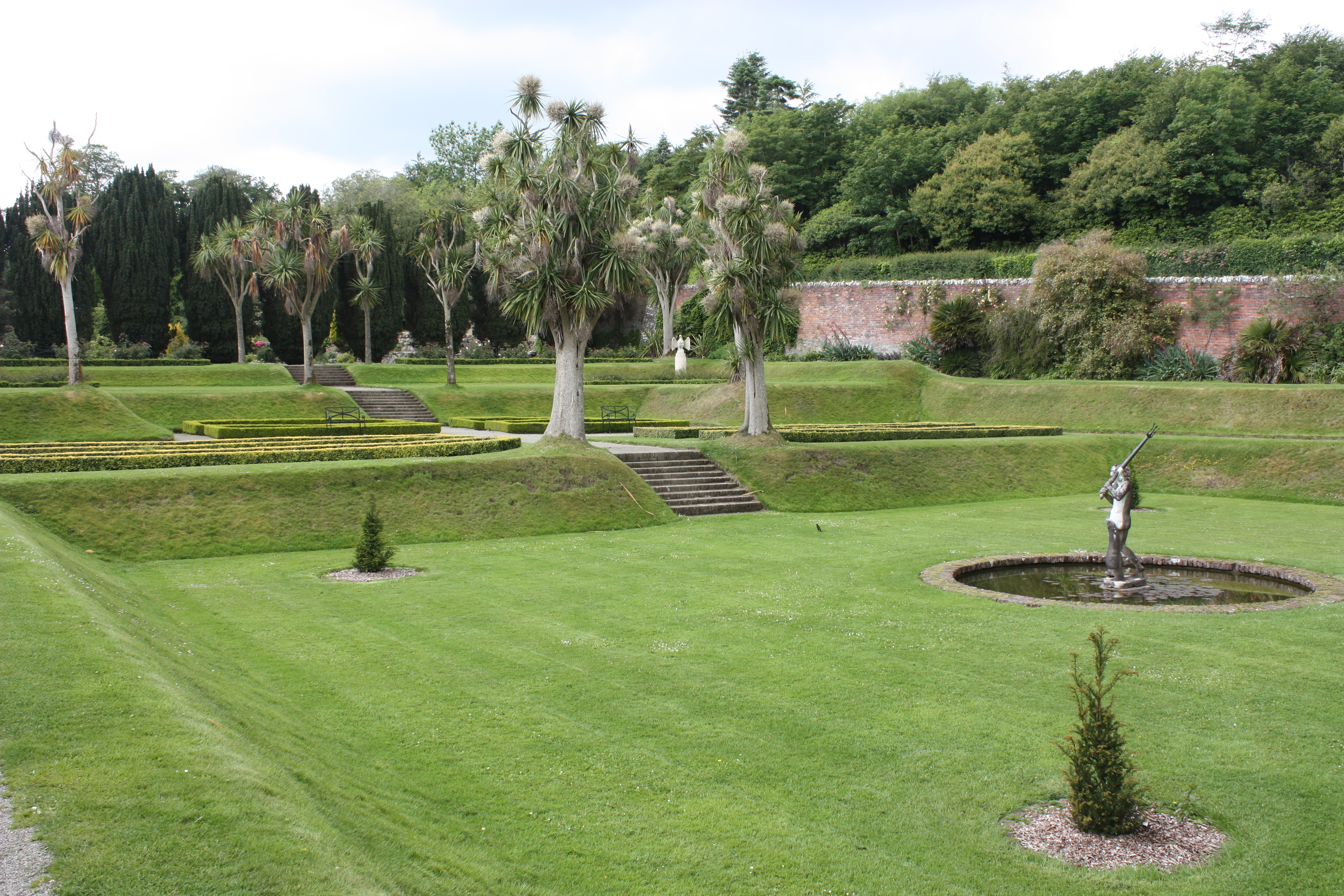
Castle Ward's setting is as memorable as its architecture. The estate stretches from woodland and parkland down to the shores of Strangford Lough, where the remains of a medieval tower and an 18th-century temple dot the landscape. Walking paths wind through ancient trees, past a sunken garden, and along the shoreline where wading birds pick through the mudflats at low tide. The lough's tidal flats are among the most ecologically significant in Northern Ireland, home to common seals, brent geese, and vast beds of horse mussels. Seven miles from Downpatrick -- the reputed burial place of St. Patrick -- and a short distance from the quiet village of Strangford, Castle Ward sits at the intersection of natural beauty, architectural oddity, and deep Irish history.
From the Air
Castle Ward sits at 54.37N, 5.58W on the western shore of Strangford Lough in County Down, Northern Ireland. Best seen at 2,000-3,000 feet when approaching from the east over the lough. The estate's parkland and the distinctive house are visible against the surrounding green countryside. Nearest airports: Belfast City (EGAC, 20nm northeast) and Belfast International (EGAA, 40nm north). Strangford Lough itself is a prominent navigational feature from altitude.