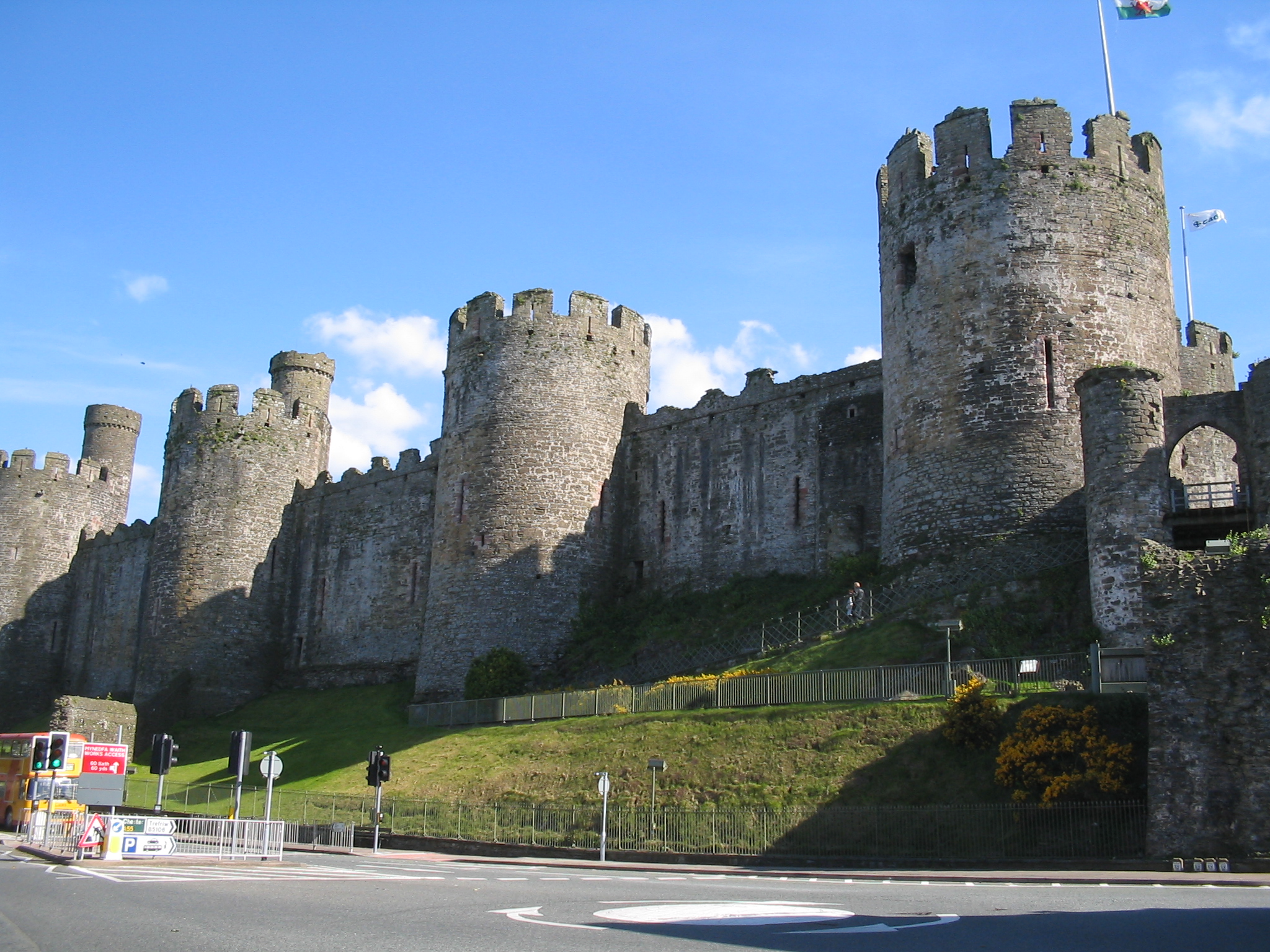
Castles and Town Walls of King Edward in Gwynedd
No medieval king spent more on castles than Edward I spent in Wales. Between 1283 and 1330, he poured the modern equivalent of hundreds of millions of pounds into a chain of fortifications designed not merely to hold territory but to end, permanently, the independence of the Welsh princes. Four of those fortifications -- Caernarfon, Conwy, Harlech, and Beaumaris -- survive in such remarkable condition that UNESCO designated them a collective World Heritage Site in 1986, calling them the "finest examples of late 13th century and early 14th century military architecture in Europe." They are, simultaneously, masterpieces of engineering and monuments to imperial domination.
The Ring of Iron
Edward invaded North Wales in 1282 after the death of Llywelyn ap Gruffudd, the last native Prince of Wales, and moved quickly to lock down his conquest. The strategy was borrowed from his castle-building campaigns in Gascony: plant fortified towns at strategic points, garrison them with loyal English settlers, and use the castles to control the surrounding countryside. Edward recruited Master James of Saint George, the greatest military architect of the age, from Savoy to oversee the project. James designed each castle to exploit its terrain -- Harlech on a clifftop, Conwy wedged between river and mountain, Beaumaris on flat ground where concentic geometry could be perfected, and Caernarfon at the mouth of the River Seiont where it meets the Menai Strait. The project was enormously expensive. Royal resources were stretched to the breaking point, and Edward's later wars in Scotland consumed the funding needed to finish the work.
Four Castles, Four Strategies
Each castle represents a different solution to the problem of controlling hostile territory. Beaumaris, begun in 1295 after the Madog ap Llywelyn revolt, is considered the most technically perfect concentric castle ever built -- symmetrical rings of walls within walls, designed so that defenders on the inner ring could fire over the heads of those on the outer. It was never finished. Harlech sits on a cliff so steep that its main vulnerability, the sea-facing side, was defended by a fortified stairway descending to a water gate. Conwy, protected by eight massive towers and two barbicans, enclosed an entire town within its walls. And Caernarfon, the administrative capital, used polygonal towers and banded stone to invoke the Walls of Constantinople, making a political statement as much as a military one. Together, they formed what later historians called the "Iron Ring" -- a chain of fortifications that encircled Gwynedd and made Welsh revolt logistically almost impossible.
Revolt and Resilience
Almost impossible was not the same as impossible. In 1294, barely a decade after their construction began, the castles faced their first serious test when Madog ap Llywelyn led a fresh Welsh rebellion. Conwy and Harlech, kept supplied by sea, held out against the siege. But Caernarfon, still only partially completed, was stormed and badly damaged. Edward responded by reinvigorating the building programme and ordering construction to begin at Beaumaris. A century later, during the Glyndwr Rising of 1400 to 1415, the castles were tested again. Harlech fell to Glyndwr's forces in 1404 and served briefly as his capital and parliament, not being retaken until 1409. The fortified towns attached to each castle -- with their own walls, gates, and English settler populations -- proved nearly as important as the castles themselves. Edward had understood that conquest required colonisation, not just garrisons.
Living Monuments
What makes the UNESCO designation significant is not just the castles' survival but their completeness as a system. The town walls of Caernarfon and Conwy remain among the best-preserved medieval urban defences in Europe. The concentric design of Beaumaris -- never finished, never improved upon -- represents the theoretical peak of medieval military architecture. Harlech's clifftop position still takes the breath away. Together, they document a single, coherent campaign of conquest with a clarity that no other medieval building programme can match. Master James of Saint George left his signature across all four sites, and the UNESCO citation recognises the ensemble as a unified artistic and military achievement. Whether you view them as architectural triumphs or as instruments of colonial subjugation -- and they are both -- the castles demand engagement with the full weight of what they represent. Wales has not forgotten what they cost.
From the Air
The four castles span northwest Wales: Caernarfon (53.14N, 4.28W), Conwy (53.28N, 3.83W), Harlech (52.86N, 4.11W), and Beaumaris (53.26N, 4.09W on Anglesey). All four are visible from the air in clear conditions. A flight from Caernarfon east to Conwy and south to Harlech covers the full circuit at approximately 30nm. Nearest airports: RAF Valley (EGOV), Caernarfon, Llanbedr (EGOD). Best viewed at 2,000-3,000ft AGL. Snowdonia's peaks lie between Conwy and Harlech.