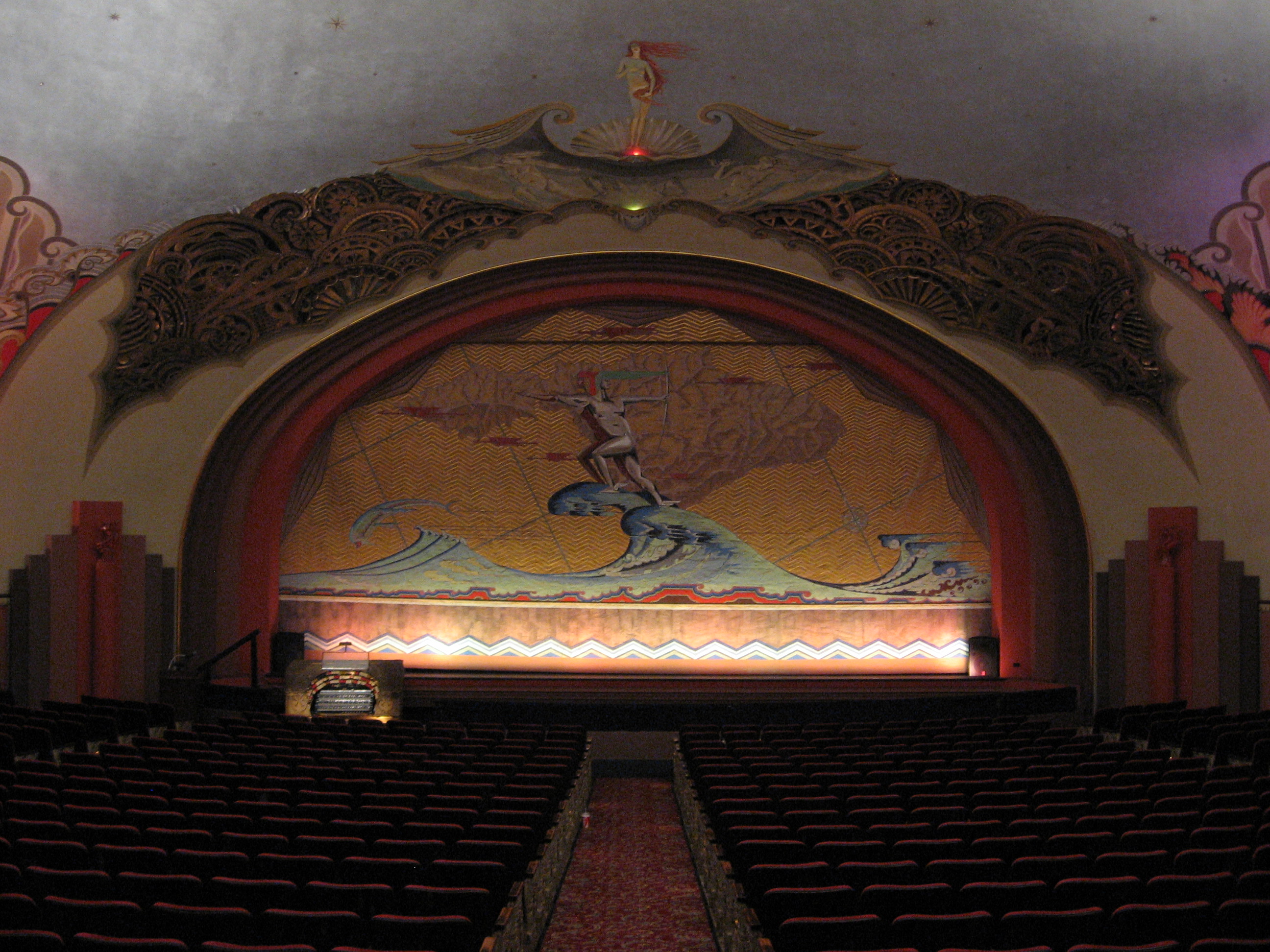
Catalina Casino
The ferry from the mainland approaches Avalon Bay, and there it stands: a twelve-story white cylinder rising from the rocky point at the harbor's edge, its Art Deco crown catching the California sun. First-time visitors assume it must be a casino in the Las Vegas sense. They are wrong. The Catalina Casino has never hosted a single slot machine or poker table. Its name comes from the original Italian meaning, a gathering place, and for nearly a century this building has gathered dancers, moviegoers, and dreamers on an island twenty-two miles off the coast of Los Angeles.
A Chewing Gum Empire Builds an Island Paradise
When William Wrigley Jr., the chewing gum magnate whose name still adorns ballparks and gum wrappers alike, purchased the controlling stake in Santa Catalina Island in 1919, he saw potential in a rocky outcrop called Sugarloaf Point. The site had been graded for a hotel that was never built. Wrigley constructed a modest dance hall there, the Sugarloaf Casino, which served double duty as Avalon's first high school. But as the island's popularity grew through the Roaring Twenties, the little ballroom proved too small for the crowds arriving by steamship. In 1928, the Sugarloaf was razed. Workers blasted away more of the namesake rock itself to clear ocean views for something far more ambitious.
The Palace That Rose from the Pacific
The new Catalina Casino opened in 1929, its circular form revolutionary in an age of rectangular ballrooms. The upper level houses a 20,000-square-foot dance floor, the world's largest circular ballroom without supporting pillars, capable of accommodating 1,500 dancers swirling beneath a ceiling adorned with murals. Below, a movie theater took shape with walnut-paneled lobbies and a massive single screen. The theater still contains its original four-manual, sixteen-rank pipe organ built by the Page Organ Company of Lima, Ohio. When talkies arrived and silent films faded, the organ fell quiet, but it remains, a monument to an era when movies were accompanied by live music rising from the orchestra pit.
Glamour, War, and the Changing Tides
Through the 1930s and 1940s, the Casino ballroom attracted big band orchestras and Hollywood celebrities who made the crossing from the mainland. Mrs. Wrigley conceived a bird park nearby, incorporating the steel framework of the demolished Sugarloaf Casino into what became one of the world's largest aviaries. The island served various roles during World War II, and afterward, as air travel and television changed American leisure, the Casino adapted. In 1993, photographer Hiroshi Sugimoto captured the theater for his art series 'Theatres,' turning its empty screen into a meditation on light and time. A $750,000 restoration in 1994 cleaned the murals and reupholstered every seat.
A Screen That Refuses to Go Dark
By the 2010s, the theater faced the same pressures as movie palaces everywhere. In a town of just 4,000 residents, streaming services and satellite television drew audiences away from the single-screen cinema. Attendance became, in the words of one owner, upside-down. Yet the Avalon Theatre persists. It hosts the annual Catalina Film Festival and a Silent Film Benefit that reunites the pipe organ with moving images. Daily tours bring visitors through the lobby, past the walnut paneling, into the auditorium where murals depict an undersea fantasy world. The theater remains a working cinema, though its future depends on visitors who understand that some experiences cannot be streamed.
Immortalized in Fiction and Games
The Catalina Casino has embedded itself in popular culture in unexpected ways. In 1984, the television series Airwolf used the Casino as a filming location, and a replica was dramatically set ablaze on screen. The theater appeared in an episode of California's Gold with Huell Howser, introducing it to a new generation. Most surprisingly, the Casino became a symbol of hope in the 2020 video game The Last of Us Part II. After players complete the post-apocalyptic story, the main menu transforms to show a beachfront with the Casino visible in the distance, implying that a character has finally reached the island to reunite with loved ones. For a building that has never hosted gambling, the Catalina Casino has always been a place where people come to bet on something better.
From the Air
Located at 33.349N, 118.326W on the eastern shore of Santa Catalina Island. The Casino is the most prominent landmark in Avalon Bay, visible as a distinctive white circular tower when approaching from the mainland. KAVX (Catalina Airport) is located at the island's interior, approximately 10 miles northwest. The flight from Long Beach (KLGB) or Torrance (KTOA) offers spectacular views of the building against the harbor. Best viewed descending below 2,000 feet on approach to the island.