Catalina Island
Twenty-six miles across the sea, Santa Catalina is a-waitin' for me - so sang the Four Preps in 1958, though the island actually lies twenty-two miles from the mainland, a discrepancy the song acknowledges with a wink. The distance hardly matters. What matters is that 88% of Santa Catalina Island is owned by the Catalina Conservancy, protected from the development that consumed the rest of Southern California. A ferry ride from Long Beach or San Pedro delivers passengers to a world apart: one incorporated city of 4,000 people, one hamlet of 150, and a rugged interior where bison roam - descendants of animals brought for a 1920s film production and simply left behind.
Avalon and Two Harbors
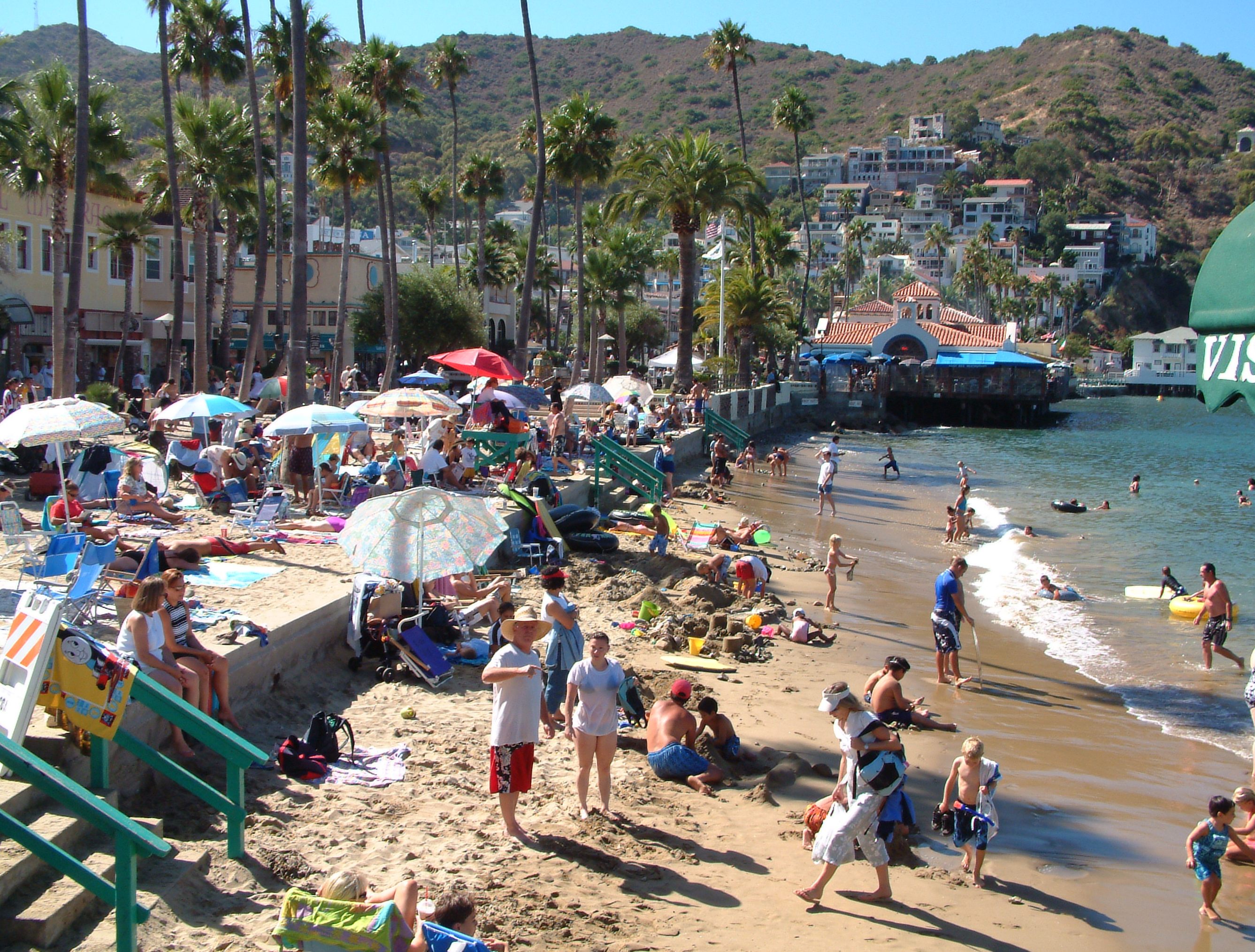
City is a relative term on Catalina. Avalon, incorporated in 1913, crowds around its harbor on the island's eastern end - a compact town where golf carts outnumber cars and visitors explore on foot or bicycle. The iconic Casino building, a 1929 Art Deco theater that has never hosted gambling, anchors the waterfront with its distinctive circular form. Twelve miles across the island's mountainous spine, Two Harbors hunkers at an isthmus so narrow that both coasts are visible simultaneously. Perhaps 150 people live there year-round, managing 720 moorings for the boating community that considers this the island's true heart. A sailboat from the mainland takes seven hours; a ski boat makes it in one. Either way, arrival feels like reaching somewhere genuinely different from anywhere else in Los Angeles County.
Bison Country
The interior tours are a Catalina tradition, winding into the Conservancy's protected lands where the famous bison herd roams. The original fourteen animals arrived in 1924 for the filming of a silent western; the studio found it cheaper to leave them than to ship them back. The herd has fluctuated over the decades - at times exceeding 600, now managed at around 150 to prevent overgrazing. Encountering these massive creatures on the golden hills of a California island, the Los Angeles skyline hazy on the horizon, creates a cognitive dissonance that captures Catalina's essential strangeness. This is neither quite wilderness nor theme park, but something in between: a landscape preserved by accident and intention, where the unexpected has become tradition.
The Underwater World
Catalina is a haven for divers in the Los Angeles region. Casino Point, protected as a marine preserve, offers the easiest access - concrete steps descending directly into water where garibaldi, bat rays, octopus, giant black sea bass, and horn sharks patrol the kelp forests. The dive boats that depart from Long Beach and San Pedro offer three-tank trips to sites around the island's inaccessible coves. Known shipwrecks include the Diosa del Mar, sunk in 1990 near Ship Rock, and the Su-Jac off Casino Point. The yacht Valiant burned and sank near Descanso Beach with $75,000 in jewelry never recovered. For those who prefer to stay dry, glass-bottom boats and semi-submarines reveal the underwater world without immersion. Sea Trek offers helmet diving - no certification required - for underwater walking tours of the reef.
Yacht Club Row
Catalina hosts more yacht club outposts than any comparable stretch of California coast. The Catalina Island Yacht Club operates from Avalon Bay; the Isthmus Yacht Club occupies the 1864 Union Army Barracks at Two Harbors. Mainland clubs maintain stations throughout the island's coves - the Los Angeles Yacht Club at Howland's Landing, San Diego Yacht Club at Long Point, Newport Harbor Yacht Club at Moonstone Cove. Fourth of July Cove earned its name from the annual celebration that draws boats from across Southern California. This maritime culture shapes the island's rhythm, with boat traffic varying by season and the harbor fills changing with the direction of the wind. For a place only twenty-two miles from the mainland, Catalina remains surprisingly oriented toward the sea rather than the shore it faces.
Island of the Blue Foxes
The island fox, smaller than its mainland cousins, once faced extinction. The Catalina subspecies dwindled to fewer than 100 individuals by 1999, devastated by canine distemper. Intensive conservation efforts - captive breeding, vaccination, removal of feral cats and pigs - pulled the population back from the brink. Today the foxes thrive again in the island's chaparral and oak woodlands, often surprisingly bold around humans. They represent the Conservancy's broader mission: preserving not just land but the species uniquely adapted to island life. The Channel Islands, of which Catalina is the most accessible, harbor plants and animals found nowhere else on Earth. The Conservancy's lands remain wild enough to maintain these endemic species, even as day-trippers from cruise ships wander Avalon's streets below.
From the Air
Located at 33.38°N, 118.43°W, approximately 22 miles southwest of Los Angeles. The island is 22 miles long and 8 miles wide at its widest point, clearly visible from cruising altitude on clear days. Catalina Airport (KAVX) sits atop the island's central ridge at 1,602 feet elevation - nicknamed 'Airport in the Sky' for its dramatic clifftop location. Long Beach Airport (KLGB) and John Wayne Airport (KSNA) are the nearest major facilities on the mainland. The distinctive round Casino building in Avalon is visible from low altitude on the island's eastern end.