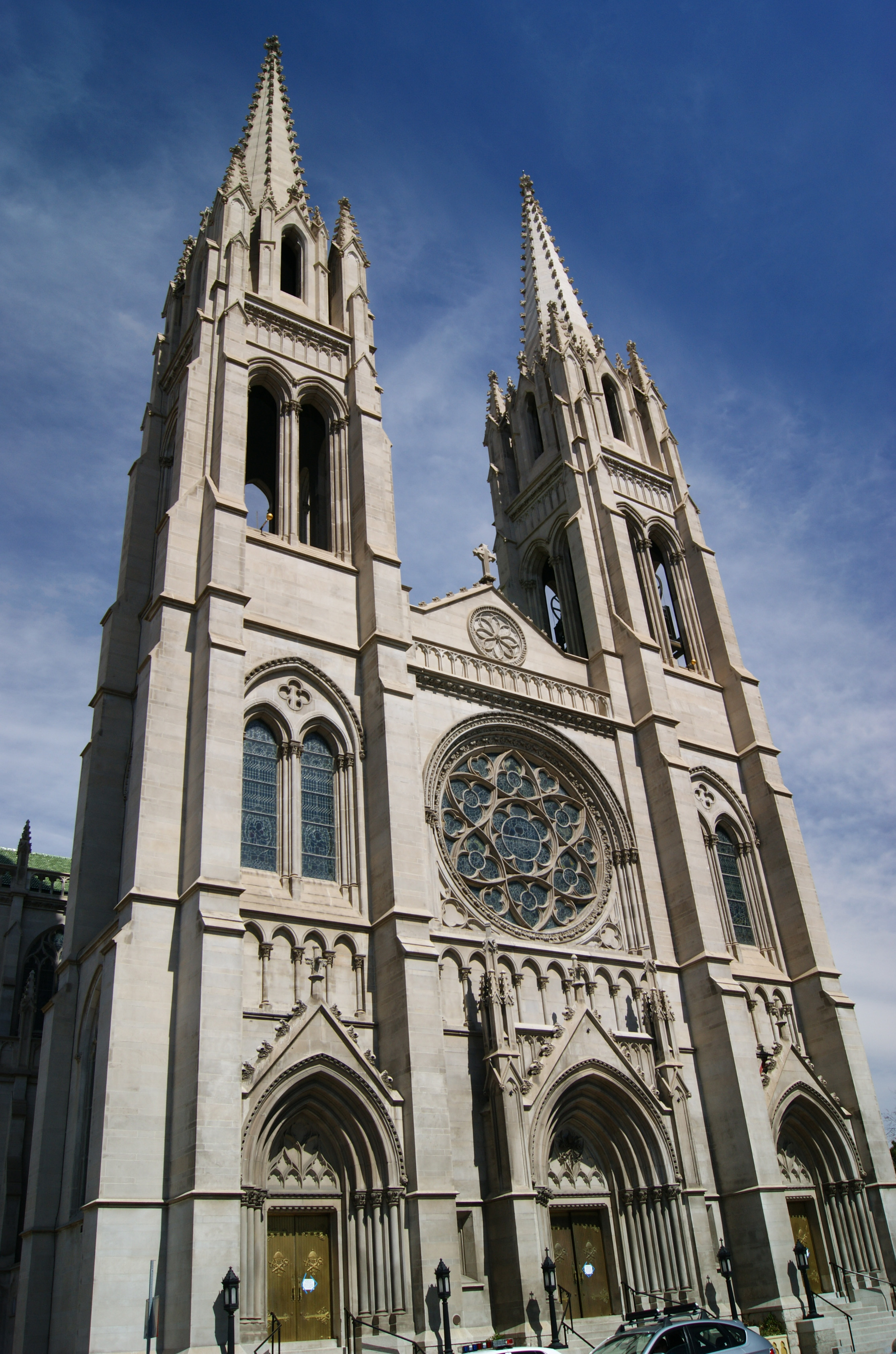
Cathedral Basilica of the Immaculate Conception
The first Catholic church in Denver had no glass in its windows. In 1860, at what is now 15th and Stout streets, a priest named Joseph Machebeuf nailed canvas over the openings and celebrated mass in a frontier town that barely qualified as permanent. Sixty years later, the Cathedral Basilica of the Immaculate Conception would rise on North Capitol Hill with 75 stained glass windows containing 20,000 pieces of Bavarian glass. The journey between those two churches tells the story of Denver's transformation from mining camp to metropolis.
A Cathedral Twice Started
When Reverend Nicholas C. Matz became coadjutor bishop of Denver in 1887, he inherited a diocese bursting at the seams. St. Mary's, the canvas-windowed church of 1860, had become Denver's first cathedral when Pope Pius IX established the Vicariate Apostolic of Colorado and Utah in 1868. But by the 1870s, the growing congregation needed more. Matz spent $51,000 building a temporary brick and sandstone pro-cathedral on Logan Street that doubled as a parish school. It was a placeholder while he dreamed bigger. Construction on the permanent cathedral finally began in 1901, designed by Detroit architect Leon Coquard in the French Gothic style. Then disaster struck. The archdiocese lost $58,000 in investments when mining ventures in Cripple Creek collapsed. Work halted.
Saved by Carnival
Enter Margaret Brown, Denver socialite and future Titanic survivor. In 1906, Brown helped organize the Carnival of Nations, a massive fundraiser that pulled $4,000 from the pockets of Denver's wealthy and allowed construction to resume. When Coquard fell ill, local architects Aaron Gove and Thomas Walsh stepped in to complete the project. The cathedral was finished in 1911, a full decade after ground was broken, and dedicated in 1912. Those 75 stained glass windows, crafted by 50 artisans at the Royal Bavarian Art Institute in Munich, had cost $34,000 alone. They depict the Virgin Mary's presentation in the Temple of Jerusalem, the Last Supper, and the feeding of the multitudes. A rose window above the choir loft shows seven angels. One small window in the Children's Chapel was funded entirely by schoolchildren who donated their pennies, nickels, and dimes.
Chapels and Side Altars
The cathedral's interior holds layers of devotion. The Children's Chapel contains the Guardian Angel Shrine with its statue of Guardian Angel and Child. The St. Paul Chapel offers quiet contemplation. Three side altars honor the Blessed Mother, St. Joseph, and the Sacred Heart, the latter featuring a statue of the Virgin Mary flanked by two angels at its base. In 1974, major renovations updated the space. In 2016, another project addressed defects and safety hazards in the exterior walls and carvings, a century of Colorado weather having taken its toll on the limestone and sandstone. The building was elevated to a minor basilica in 1979, a papal honor recognizing its historical and spiritual significance.
A Building That Endures
The cathedral has weathered more than mountain winters. In May 2020, during nationwide protests following the murder of George Floyd, the neighborhood around the cathedral saw significant unrest. The building was vandalized multiple times with small fires and anti-Catholic graffiti. Police tear gas penetrated its walls. In October 2021, a young woman spray-painted swastikas on doors and statues. She surrendered to authorities in January 2022 and was charged with criminal mischief and a hate crime. Each time, the congregation cleaned the walls and reopened the doors. The Gothic spires that Leon Coquard designed in Detroit more than a century ago still anchor the corner of Logan Street and Colfax Avenue.
Twenty Thousand Pieces of Light
From the air, the cathedral's cruciform footprint is visible just south of the Colorado State Capitol, its twin spires reaching upward from North Capitol Hill. Inside, when morning sun strikes those Bavarian windows, the nave fills with fractured color. The sparkling silver and dry powder paints that Munich artisans used still catch light after more than a century. Denver's first Catholic congregation gathered under canvas in 1860. Their spiritual descendants now worship beneath 20,000 pieces of imported glass, in a building that nearly failed to exist, saved by a woman who would later survive an unsinkable ship's sinking. The cathedral seats 895 people, but its story holds multitudes.
From the Air
Located at 39.740N, -104.982W at the corner of Logan Street and Colfax Avenue in Denver's North Capitol Hill neighborhood. The twin Gothic spires are visible from altitude, positioned just south of the gold-domed Colorado State Capitol. Denver International Airport (KDEN) is 23 miles northeast. Centennial Airport (KAPA) is 16 miles south. Best viewed at 2,500-4,000 feet AGL for neighborhood context.