Cathedral of Saint Vincent de Paul
The bell towers arrived thirteen years late. When the Cathedral of Saint Vincent de Paul opened on Christmas Day 1897, its twin towers remained unfinished -- the diocese had run out of money. The reinforced concrete towers were finally completed in 1910 using the Hennebique technique, a pioneering method that gave the cathedral an oddly modern skeleton beneath its historicist skin. Sitting at the Place de l'Independance where Avenue Habib Bourguiba meets Avenue de France, directly across from the French Embassy, the cathedral is an architectural argument in three voices: Moorish revival, Gothic revival, and Neo-Byzantine, all speaking at once. The result should be cacophony. Instead, it is one of the most distinctive buildings in Tunis.
Cardinal Lavigerie's Ambition
The story begins on November 7, 1881 -- just months after France established its protectorate over Tunisia -- when Cardinal Charles Lavigerie laid the first stone for a church a short distance down what was then Avenue de la Marine. This was only a pro-cathedral; the true cathedral of the archdiocese, then known as Carthage, was the Saint Louis Cathedral at the ancient Carthaginian site. But the pro-cathedral deteriorated quickly due to poor ground conditions, and within a decade the decision was made to build something grander. The architect L. Bonnet-Labranche designed a building that deliberately mixed architectural traditions, as if the cathedral itself were declaring that Christianity in North Africa would draw from every stream of Mediterranean culture. The cornerstone was laid in 1890, and construction began in 1893.
Three Styles, One Building
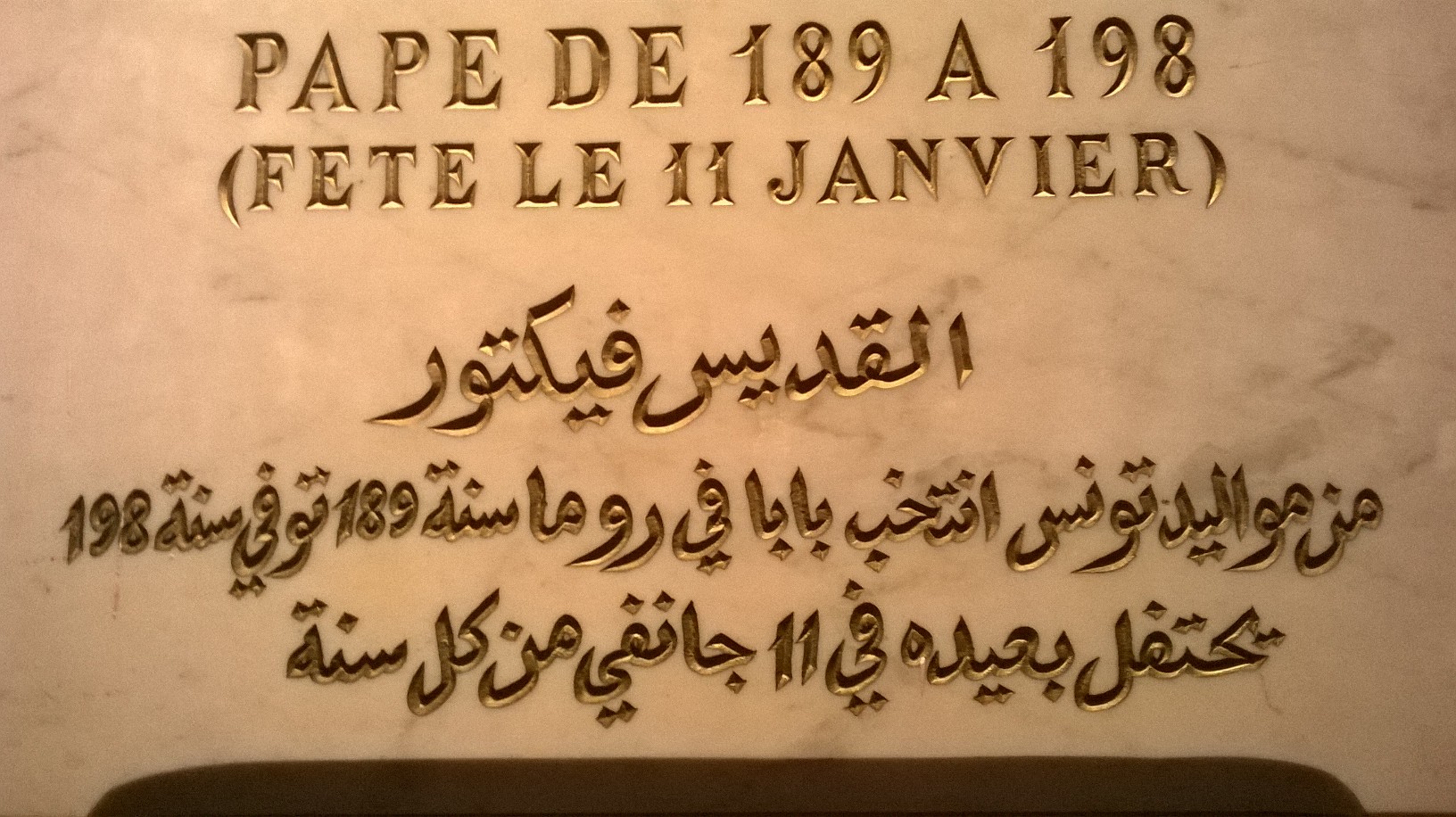
The Moorish revival elements announce the cathedral's North African setting -- horseshoe arches and decorative tilework that echo the Islamic architecture of the surrounding Medina. The Gothic revival elements assert European ecclesiastical tradition, with pointed arches and ribbed vaults reaching upward in the manner of French cathedrals. The Neo-Byzantine elements, with their domes and mosaics, recall the early centuries of Christianity in the region, when North Africa produced some of the faith's most important theologians, including Augustine of Hippo. A bilingual plaque inside commemorates Pope Victor I, who served from approximately 189 to 199 AD and came from Africa Proconsularis -- possibly from the territory of modern Tunisia. The cathedral does not merely sit in North Africa; it argues that it belongs there.
Faith After Empire
The number of Roman Catholics in Tunisia dropped sharply after independence in 1956 as French settlers departed. A modus vivendi between the Republic of Tunisia and the Vatican in 1964 transferred several church properties to the Tunisian state for public use, including the Acropolium of Carthage, the former Saint Louis Cathedral. The Cathedral of Saint Vincent de Paul, however, was explicitly retained by the Roman Catholic Church. It remains the episcopal see of the Archdiocese of Tunis, serving a small but persistent Catholic community. The cathedral's survival is remarkable: a Christian church dedicated to the patron saint of charity, standing at the most prominent intersection in a predominantly Muslim capital, maintained by a diocese that once served a colonial population but now serves a community defined by choice rather than conquest. It endures not as a relic of French rule but as evidence that Tunis has always been a city of many faiths.
From the Air
Located at 36.80N, 10.18E at the Place de l'Independance in central Tunis, at the intersection of Avenue Habib Bourguiba and Avenue de France. The cathedral's twin bell towers and dome are visible from above amid the European-style buildings of the Ville Nouvelle. Best viewed at 2,000-3,000 feet. The French Embassy sits directly across the square. Nearest airport is Tunis-Carthage International (DTTA), approximately 7 km to the northeast.