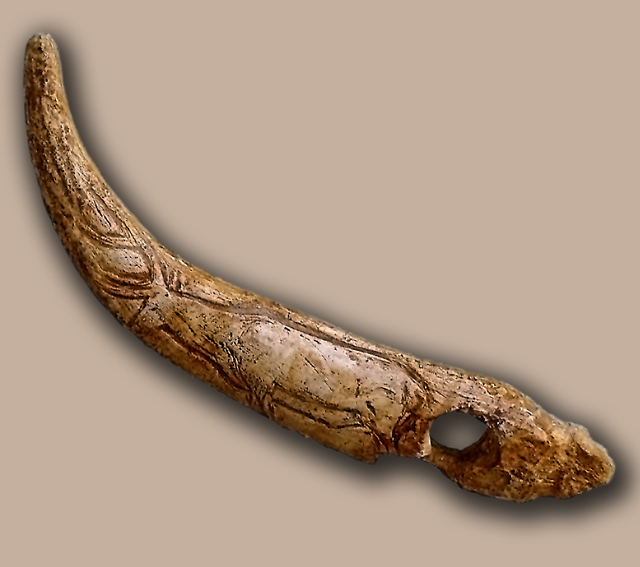
Cave of El Castillo
Some of the oldest marks ever left by a thinking mind may be hiding in a hillside in Cantabria. In 2012, uranium-thorium dating of red discs painted on the walls of El Castillo cave returned dates older than 40,000 years, pushing the art back to the very arrival of anatomically modern humans in Europe. The dates were so old, in fact, that some researchers began asking whether the painters might not have been human at all, but Neanderthals.
Inside Monte Castillo
The Cueva del Castillo sits within the Caves of Monte Castillo complex near Puente Viesgo in Cantabria, northern Spain. It is one of four caves in the hillside, alongside Las Monedas, Las Chimeneas, and La Pasiega, but El Castillo stands apart for the sheer density and age of its art. The cave's archaeological stratigraphy has been divided into roughly 19 layers spanning from the Proto-Aurignacian to the Bronze Age, an unbroken record of human presence covering tens of thousands of years. Spanish archaeologist Hermilio Alcalde del Rio discovered the cave in 1903 and found an extensive sequence of images executed in charcoal and red ochre across the walls and ceilings of multiple chambers. The first monograph, published in 1911, catalogued about 200 motifs. That number would prove to be a small fraction of what the cave actually contained.
Two Thousand Seven Hundred Motifs
Between 2003 and 2023, Marc and Marie-Christine Groenen conducted a comprehensive study of El Castillo that revealed the cave's true scale. They identified 2,698 individual motifs and pieces of archaeological evidence: 541 figurative images including 475 animals, 21 human figures, and one imaginary creature; 924 non-figurative motifs composed of elementary and complex tracings; 884 separate marks; 84 handprints; and 17 lithophones, stones that produce musical tones when struck. The cave is not merely decorated. It is saturated with meaning, layer upon layer of imagery accumulated over millennia by people whose intentions we can only guess at.
Whose Hands Were These?
Eighty-four hand stencils survive on El Castillo's walls, made by pressing a hand against the rock and blowing pigment around it to leave a negative impression. A 2013 study of finger length ratios in Upper Paleolithic hand stencils from France and Spain determined that the majority were likely female, overturning the long-held assumption that cave art was exclusively a male activity. The Manning index, which measures the ratio between the index and ring fingers, differs between sexes, and when applied to the ancient handprints, the analysis suggested women were prominent contributors to the art. The finding remains debated, with some researchers questioning whether anthropological measurements calibrated on modern populations can be reliably applied across tens of thousands of years. What is not debated is that someone stood in these dark chambers, held their hand to the cold stone, and blew pigment through a reed or hollow bone to leave a mark that has outlasted every empire in human history.
At the Edge of Human Memory
The uranium-thorium dates from 2012 placed El Castillo at the center of one of archaeology's most provocative questions. If the red disc paintings are indeed older than 40,000 years, they overlap with the period when Neanderthals still inhabited the Iberian Peninsula. Could they have been the artists? The Proto-Aurignacian culture, the earliest layer in El Castillo's stratigraphy, is generally associated with the first modern humans in Europe, but the boundaries between Neanderthal and modern human cultural production grow blurrier with each new discovery. Whether the oldest marks in El Castillo were made by our species or our closest relatives, they represent something extraordinary: the impulse to leave a record, to say through pigment and stone that someone was here, in this darkness, alive and aware. The cave remains open to visitors through the Cantabrian government, one of the few places on Earth where you can stand face to face with the dawn of symbolic thought.
From the Air
Located at 43.29N, 3.97W near Puente Viesgo in Cantabria, northern Spain. The cave is part of the Monte Castillo complex, a limestone hill visible from moderate altitude. Nearest airport is Santander (LEXJ), approximately 25 km to the north. The town of Puente Viesgo sits along the Pas River valley. Fly at 2,000-3,000 feet AGL to see the hill and surrounding valley. The caves are part of the UNESCO World Heritage designation for Paleolithic Cave Art of Northern Spain.