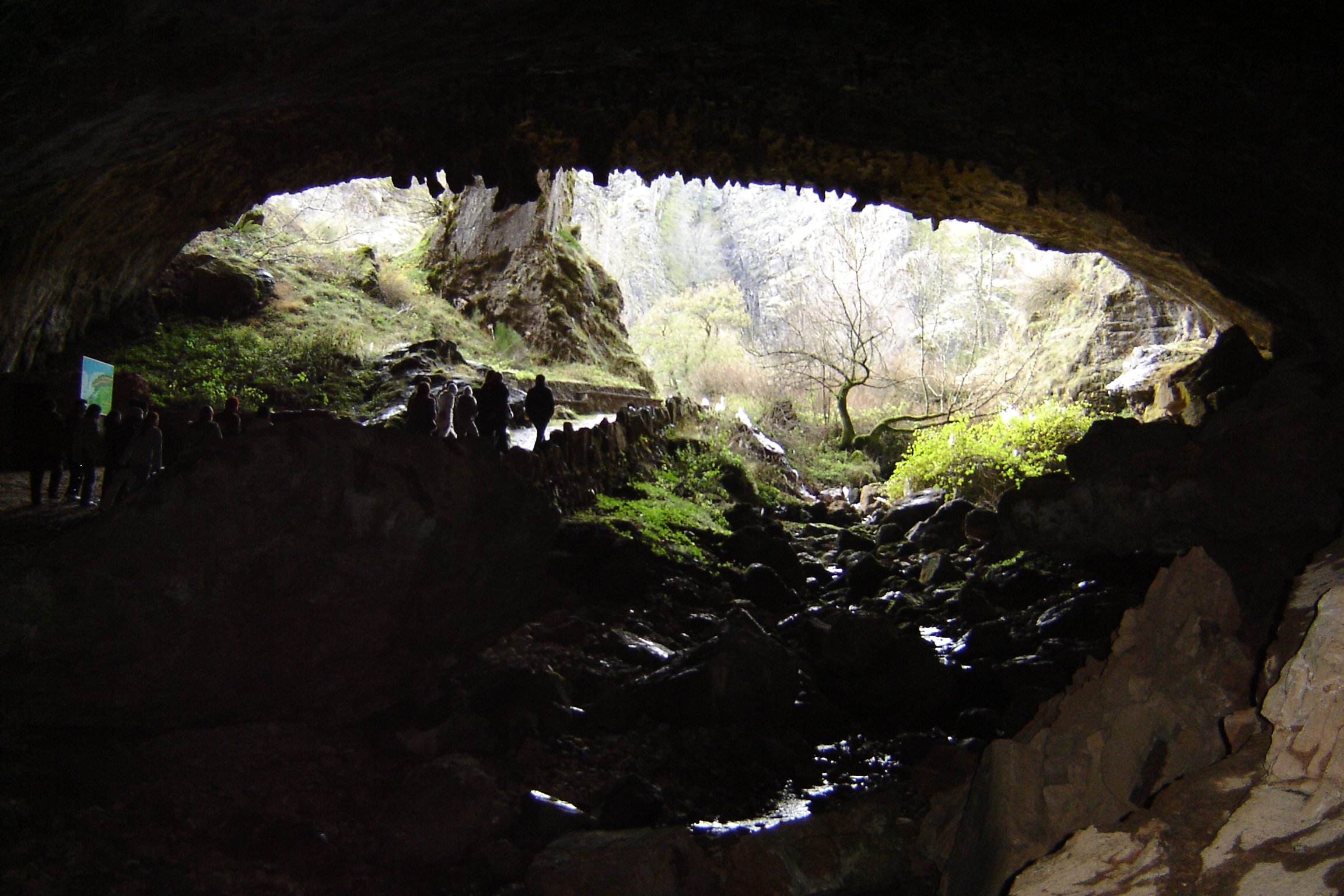
Cave of Valporquero
The name of the final chamber says everything the cave wants you to know. After passing through five halls of stalactites, flowstone, and underground architecture, the path ends in the Sala de las Maravillas -- the Hall of Marvels. It is the cave's own crescendo, the geological equivalent of a symphony that saves its most complex movement for last. Located forty-seven kilometers north of the city of Leon in the mountains of Castile and Leon, the Cave of Valporquero has been guiding visitors through its underground galleries since 1966, each hall more intricate than the one before.
Six Chambers of Stone
The tourist route through Valporquero stretches 1,300 meters through six named halls, each with its own character. The journey begins in the Sala de Pequenas Maravillas -- the Hall of Small Marvels -- where delicate formations offer a preview of what lies deeper. From there, visitors pass through the Gran Rotonda, a vast circular chamber, and then into the Sala de las Hadas, the Hall of the Fairies, where thin, translucent formations catch the light. The Cementerio Estalactitico -- the Stalactite Cemetery -- takes its name from the broken and fallen formations that litter its floor, remnants of geological processes that built and then destroyed in equal measure. The Gran Via opens into a broad corridor before the route reaches its culmination in the Maravillas, where the cave's most elaborate and diverse formations are concentrated.
The River Below
Beneath the tourist route lies a second, far longer world. The cave's bottom level extends 3,150 meters through passages carved by a subterranean river that still flows through the darkness. This lower system is the engine that created everything above -- water dissolving limestone over millions of years, depositing calcium carbonate in formations that range from hair-thin soda straws to massive columns connecting floor to ceiling. The village of Valporquero de Torio, nestled in the municipality of Vegacervera, sits above this hidden hydrology, its surface landscape shaped by the same karst processes that hollowed out the mountain beneath it. The Cantabrian Mountains surrounding the site provide the elevation and rainfall that keep the underground river fed.
A Provincial Treasure
The cave has been managed by the Diputacion de Leon -- the provincial government -- since it opened to tourism in 1966, making it one of Spain's earlier show caves and a point of pride for a province better known for its medieval architecture and Camino de Santiago pilgrimage routes. The six halls represent increasing complexity and diversity of geological formations, a natural progression that the tourist route follows deliberately. Visitors move from simple to spectacular, from the modest formations of the first hall to the overwhelming variety of the Maravillas. It is a walk through deep time made accessible -- forty-seven kilometers from the provincial capital, a short drive into the mountains, and then down into a world that has been building itself, patiently and in total darkness, for longer than any human civilization has existed.
From the Air
Located at 42.91N, 5.56W in the Cantabrian Mountains of northern Leon province, Spain. The cave entrance is near the village of Valporquero de Torio in the municipality of Vegacervera. Nearest significant airport is Leon (LELN), approximately 47 km to the south. The mountainous terrain requires careful altitude management. The narrow valley leading to the cave is visible from above in clear weather.