CBGB: The Dive Bar That Invented Punk Rock
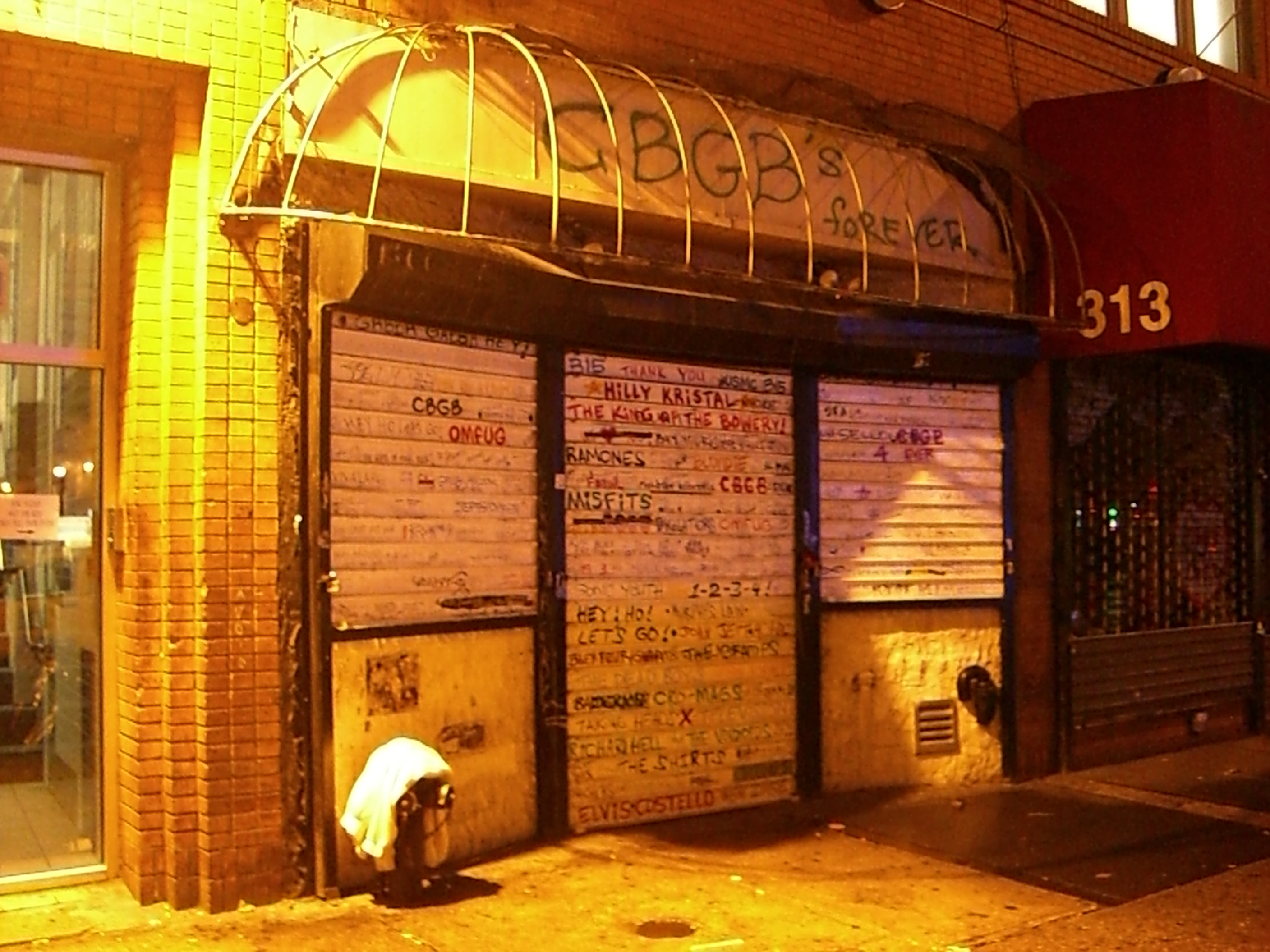
The letters stood for Country, Bluegrass, and Blues. That was what Hilly Kristal had in mind when he opened his club at 315 Bowery in 1973, on a block so rough it was mostly known for its flophouses. Instead, something happened at CBGB that no one planned: a generation of bands with no record deals, no polish, and no patience for the bloated arena rock of the 1970s found the one stage in New York City that would let them play original music. The Ramones played their first shows here. Television, Blondie, Patti Smith, Talking Heads, and the Dead Boys followed. Within a few years, a dingy club with notoriously filthy bathrooms had become the most important rock venue in America.
The Collapse That Started Everything
CBGB's origin story begins with a building that fell down. In August 1973, the Mercer Arts Center in Greenwich Village literally collapsed, its walls caving in and burying the performance spaces where New York's unsigned bands had been playing original music. Suddenly, groups like Suicide, Jayne County, and the Magic Tramps had nowhere to go. Two locals, Bill Page and Rusty McKenna, convinced Kristal to let them book rock concerts at his Bowery club. In February 1974, a band called Squeeze began a Tuesday-Wednesday residency, and the shift from country to original rock was underway. Kristal had two rules: bands had to move their own equipment, and they had to play mostly original songs. That second rule changed music history.
The Class of '74
On April 14, 1974, Patti Smith and Lenny Kaye sat in the audience watching Television's third gig. Smith's own group debuted at CBGB the following February. That same year, a band called Angel and the Snake, soon renamed Blondie, began playing the club, with Deborah Harry on vocals. The Ramones arrived in August 1974, delivering sets so fast and furious they rarely lasted twenty minutes. Mink DeVille, Talking Heads, the Heartbreakers, and the Fleshtones followed in quick succession. Media coverage came not from the New York Times or Village Voice, which largely ignored the scene, but from scrappy publications like the SoHo Weekly News, Punk magazine, and New York Rocker. In April 1977, the Damned played CBGB, marking the first time a British punk band had ever performed in America.
Sunday Matinees and Hardcore Afternoons
By the late 1970s, CBGB was drawing acts from across the country. Elvis Costello opened for the Voidoids in 1978. The Police played their first American gigs on the club's stage. But as punk's first wave evolved into new wave and its stars signed major label deals, a harder, faster sound was growing in CBGB's Sunday matinees. Known as "thrash day," Sunday afternoons belonged to hardcore: Reagan Youth, Bad Brains, Beastie Boys, Agnostic Front, Cro-Mags, Gorilla Biscuits, and Sick of It All turned the club into the beating heart of New York hardcore punk. The matinees became an institution, running from afternoon into evening. In 1990, violence inside and outside the venue prompted Kristal to suspend hardcore bookings, though they returned periodically in later years.
The Final Show
By 2005, the Bowery was gentrifying, and CBGB faced a rent dispute with its landlord, the Bowery Residents' Committee. The club had been paying $19,000 a month but was sued for $90,000 in allegedly unpaid increases. A judge ruled the debt was not owed, but Kristal and the landlord reached an agreement: CBGB would vacate by October 31, 2006. Bands flooded back for the final weeks, hoping their presence might somehow keep the doors open. On October 15, 2006, Patti Smith played the last show. The storied club closed. Kristal died from lung cancer on August 28, 2007. The space is now a John Varvatos fashion store, which preserved the club's rock and roll stickers on the walls and the graffiti in the bathrooms.
An Awning in the Hall of Fame
CBGB's second awning, the one that hung above the entrance when the club closed, was moved to the lobby of the Rock and Roll Hall of Fame in Cleveland. In 2013, the building at 315 Bowery was added to the National Register of Historic Places as part of the Bowery Historic District. Dead Boys guitarist Cheetah Chrome captured the bittersweet legacy: "All of Manhattan has lost its soul to money lords," he said, but added, "If that alley could talk, it's seen it all." The alley behind the building, known as Extra Place, is now a pedestrian mall. A CBGB-branded festival produced large free concerts in Times Square and Central Park in 2012, keeping the name alive even as the original space faded into retail.
From the Air
CBGB was located at 315 Bowery (40.7253N, 73.9919W) in the East Village neighborhood of Lower Manhattan. The building still stands, now a fashion retail space. Nearby airports: KJFK (John F. Kennedy, 23km SE), KLGA (LaGuardia, 14km NE), KEWR (Newark Liberty, 14km W). The Bowery runs north-south through the Lower East Side, identifiable from altitude as a wide straight avenue. Best viewed at 2,000-4,000 feet AGL approaching from the East River.