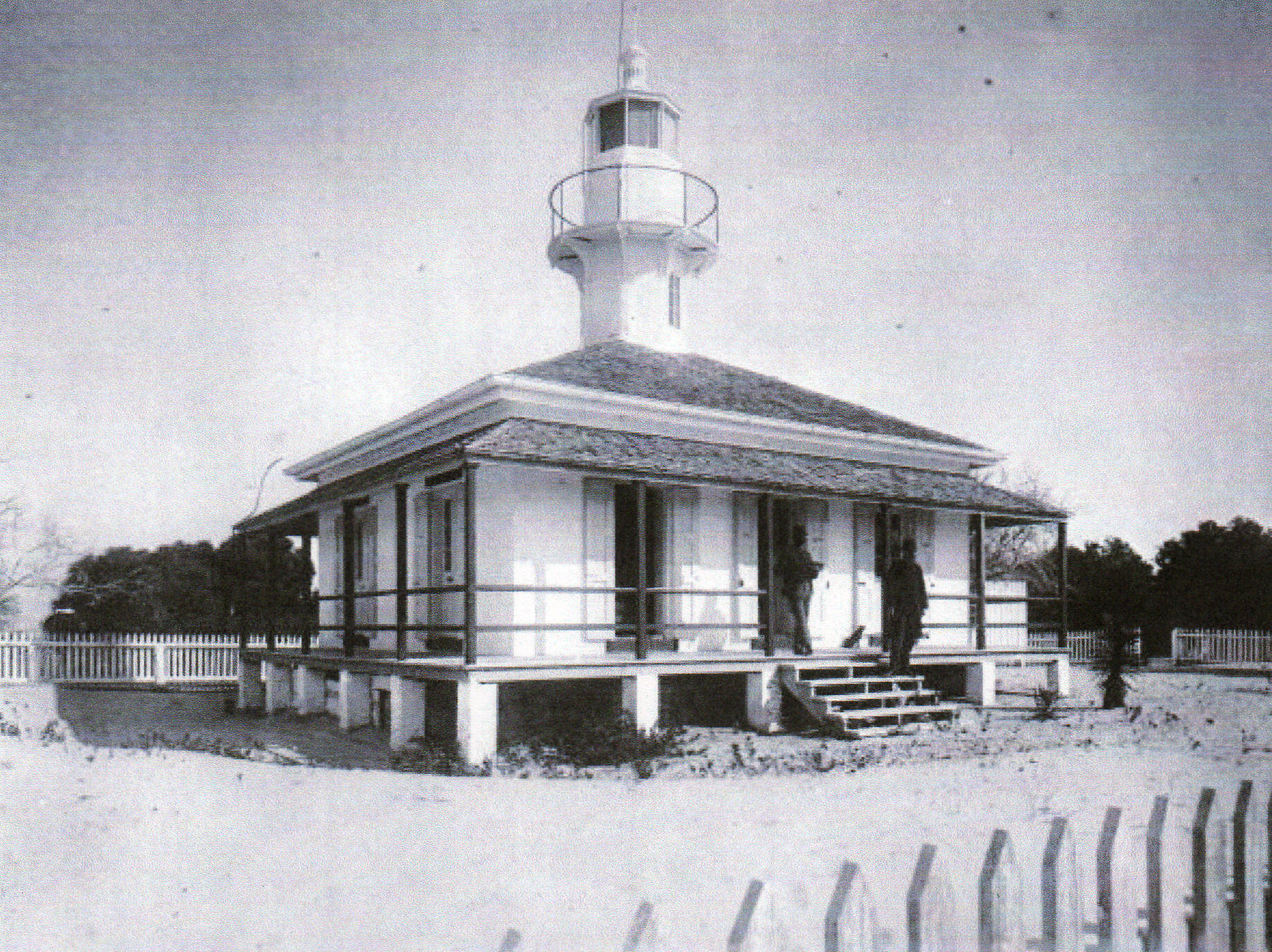
Cedar Key Light
The building stands only twenty-eight feet tall, but it sits on the highest point of Seahorse Key, giving its light a focal plane of seventy-five feet above the Gulf of Mexico. That modest height was enough to guide ships into Cedar Key harbor for six decades, through the collapse of an independent nation, two wars, and the slow fade of a once-vital port. The Cedar Key Light, completed in 1854, is the oldest standing lighthouse on Florida's west coast. And today, its keeper's quarters serve a purpose no one in the 1850s could have imagined: as a dormitory for University of Florida marine biology students.
The Adventurer's Watchtower
Before the lighthouse, Seahorse Key belonged to one of the strangest chapters in American frontier history. In 1801, William Augustus Bowles -- a Maryland-born actor, soldier, and self-proclaimed diplomat -- erected a watchtower on this very island. Bowles had declared himself Director General of the State of Muskogee, an ambitious and ultimately doomed attempt to carve an independent nation from the western portion of Spanish East Florida. His watchtower scanned the horizon for Spanish warships, and rightly so: a Spanish naval force destroyed it in 1802, and Bowles himself was captured and imprisoned in Havana, where he died two years later. The island then took on a darker role during the Second Seminole War, from 1835 to 1842, when the federal government used it as a detention center for captured Seminoles awaiting forced removal to the West.
A Future General's Design
Cedar Key grew into an important Gulf port during the 1840s, and by 1850 Congress had appropriated funds for a proper lighthouse. The assignment fell to Lieutenant George Meade of the Army Corps of Topographical Engineers -- the same George Meade who, thirteen years later, would command the Union Army at Gettysburg. Meade designed a compact cottage-style lighthouse with a hipped roof, its spiral staircase rising through the center to a lantern room fitted with a fourth-order Fresnel lens. Construction crews arrived by boat in early 1854, and on August 1 of that year, keeper William Wilson lit the wicks for the first time. The beam reached fifteen miles across the dark Gulf waters, guiding timber ships and fishing vessels into the Cedar Keys archipelago.
Extinguished and Rekindled
When the Civil War broke out, Confederate sympathizers on the mainland crept out to Seahorse Key and extinguished the light -- a small act of sabotage with real consequences for Union naval operations along the Gulf Coast. Federal troops took the island in 1862 and repurposed it yet again, this time as a military prison. The lighthouse was relit after the war ended, and it continued to serve through the decades as Cedar Key's commercial importance slowly diminished. By 1915, the port had declined enough that the light was officially decommissioned. Seahorse Key and its lighthouse became part of the Cedar Keys National Wildlife Refuge when it was established in 1929, and the tower went dark for more than a century.
From Lighthouse to Laboratory
In 1952, the University of Florida leased a portion of the wildlife refuge, including the lighthouse, for use as the Seahorse Key Marine Laboratory. The keeper's cottage that once housed lighthouse tenders now bunks marine biology students who come to study the rich estuarine environment of the Cedar Keys. The surrounding waters teem with fish, sea turtles, and migratory birds, making the archipelago an outdoor classroom unlike any other. Then, on July 5, 2019, more than a century after the light went dark, a replica of the original fourth-order Fresnel lens was installed and the Cedar Key Light was ceremonially reactivated. It glows now only for special occasions, but the beam still carries the same message it always has: something worth finding lies just beyond the horizon.
From the Air
Located at 29.10N, 83.07W on Seahorse Key, a small island in the Cedar Keys archipelago off Florida's Gulf Coast in Levy County. The lighthouse sits at the island's highest point, visible from moderate altitudes. The nearby Cedar Key waterfront and fishing village are distinctive landmarks. George T. Lewis Airport (KCDK) is located one nautical mile west of Cedar Key. Gainesville Regional Airport (KGNV) is about 55 miles to the northeast. The Cedar Keys National Wildlife Refuge encompasses multiple islands visible from the air. Best viewed at 1,500-2,500 feet AGL for the full archipelago context.