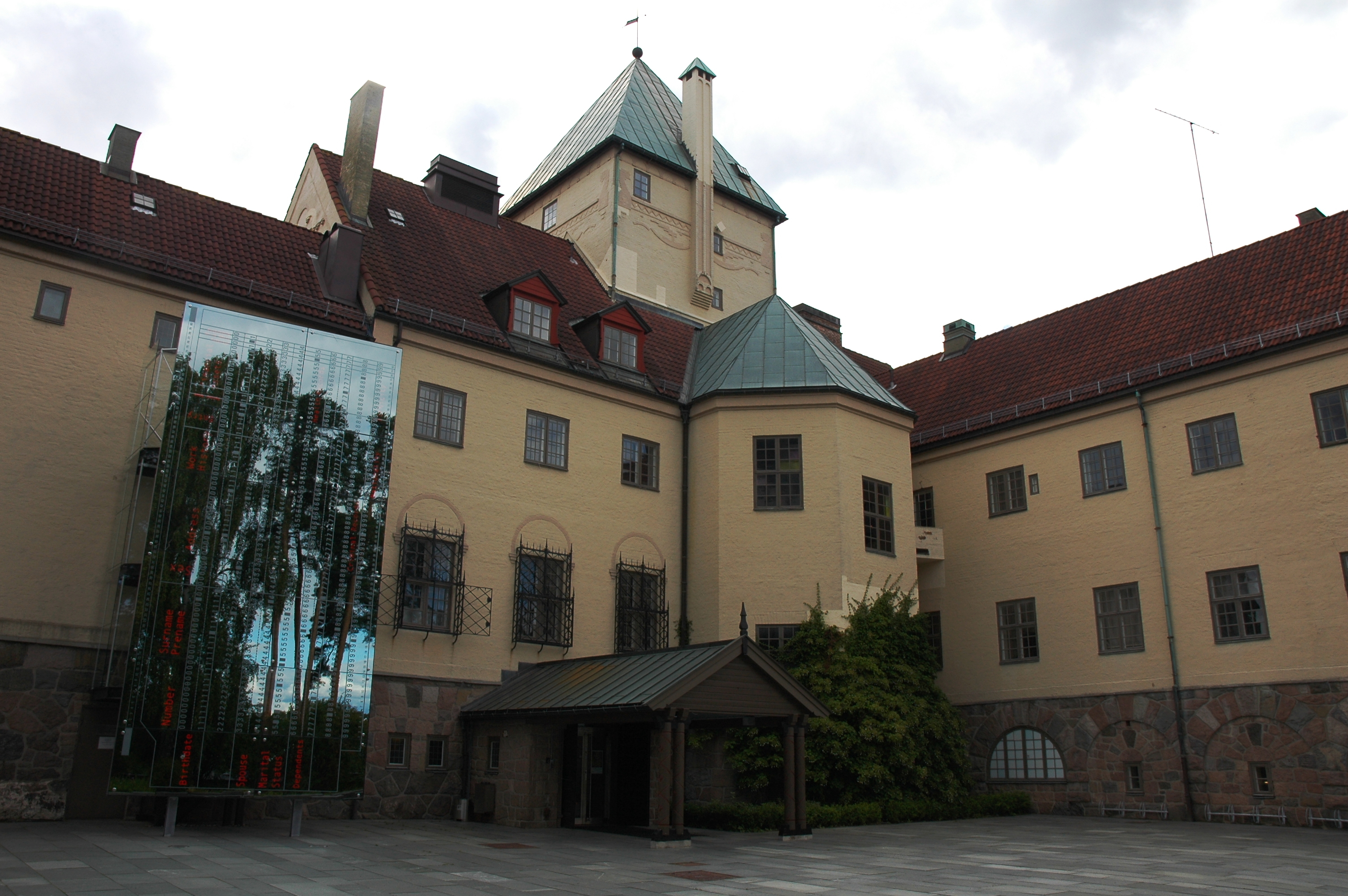
Center for Studies of the Holocaust and Religious Minorities
The building on Bygdoy peninsula is called Villa Grande, and its most infamous resident was Vidkun Quisling, the Norwegian politician who collaborated with Nazi Germany so eagerly that his surname became a dictionary word for traitor. Today, Quisling's former home houses the Center for Studies of the Holocaust and Religious Minorities, known in Norwegian as HL-senteret. The transformation is deliberate. Where a collaborator once lived in comfort while his countrymen were deported to death camps, researchers now document exactly what happened to those who were taken and examine the conditions that made such betrayal possible.
From Collaboration to Conscience
The center was established in 2001, funded by an endowment from the Norwegian government. That funding was not simply an act of cultural generosity. It came at the request of Norway's Jewish community as part of a broader restitution program addressing the confiscation of Jewish property during the German occupation. Norwegian Jews had their assets seized under laws enacted by the Quisling regime, and many were deported to Auschwitz and other death camps. The restitution acknowledged what had been taken, and the center's establishment ensured that the history of how it was taken would be preserved and studied. In 2006, the center moved from the University of Oslo campus to Villa Grande, choosing to inhabit the space where collaboration had been most comfortable.
The Norwegian Holocaust
Norway's experience of the Holocaust is less widely known than that of other occupied countries, but it was no less devastating for those who suffered it. Before the war, approximately 2,100 Jews lived in Norway. During the occupation, over 770 were arrested and deported, primarily to Auschwitz. Only 34 survived the camps. The center's mission encompasses the full scope of that persecution: disenfranchisement, arrests, confinement, confiscation of property, and deportation. It also extends to the study of antisemitism past and present, and to the broader examination of how ethnic and religious minorities are treated in Norwegian society. The research is affiliated with the University of Oslo and maintains formal relationships with Yad Vashem in Jerusalem and the Jewish Museum in Trondheim.
Memory in a Difficult Place
Villa Grande sits on Bygdoy, a leafy peninsula in western Oslo known for its museums and royal estate. The setting is beautiful, which makes the history it carries all the more unsettling. Quisling lived here during the occupation while running his puppet government. The decision to place a Holocaust center in his home was not universally straightforward, but the symbolism is potent. The center offers exhibitions, educational programs, a museum, and a library. A concentration camp uniform bearing a red triangle stands among the displays, tangible evidence of a system designed to categorize, dehumanize, and destroy. The center's work extends beyond history. Its researchers were called to testify at the trial of Anders Behring Breivik in 2012, connecting historical extremism to its contemporary manifestations and insisting that the past is never safely past.
From the Air
The Center for Studies of the Holocaust and Religious Minorities (59.90N, 10.68E) is located at Villa Grande on the Bygdoy peninsula in western Oslo. The peninsula, home to several museums including the Fram Museum and the Viking Ship Museum, is identifiable from above as the wooded promontory extending into the Oslofjord west of the city center. Oslo Gardermoen Airport (ENGM) lies 47km north. Best viewed at 2,000-3,000 feet to identify the museum cluster on Bygdoy. The building sits within a residential and parkland setting, less visually prominent than the nearby maritime museums.