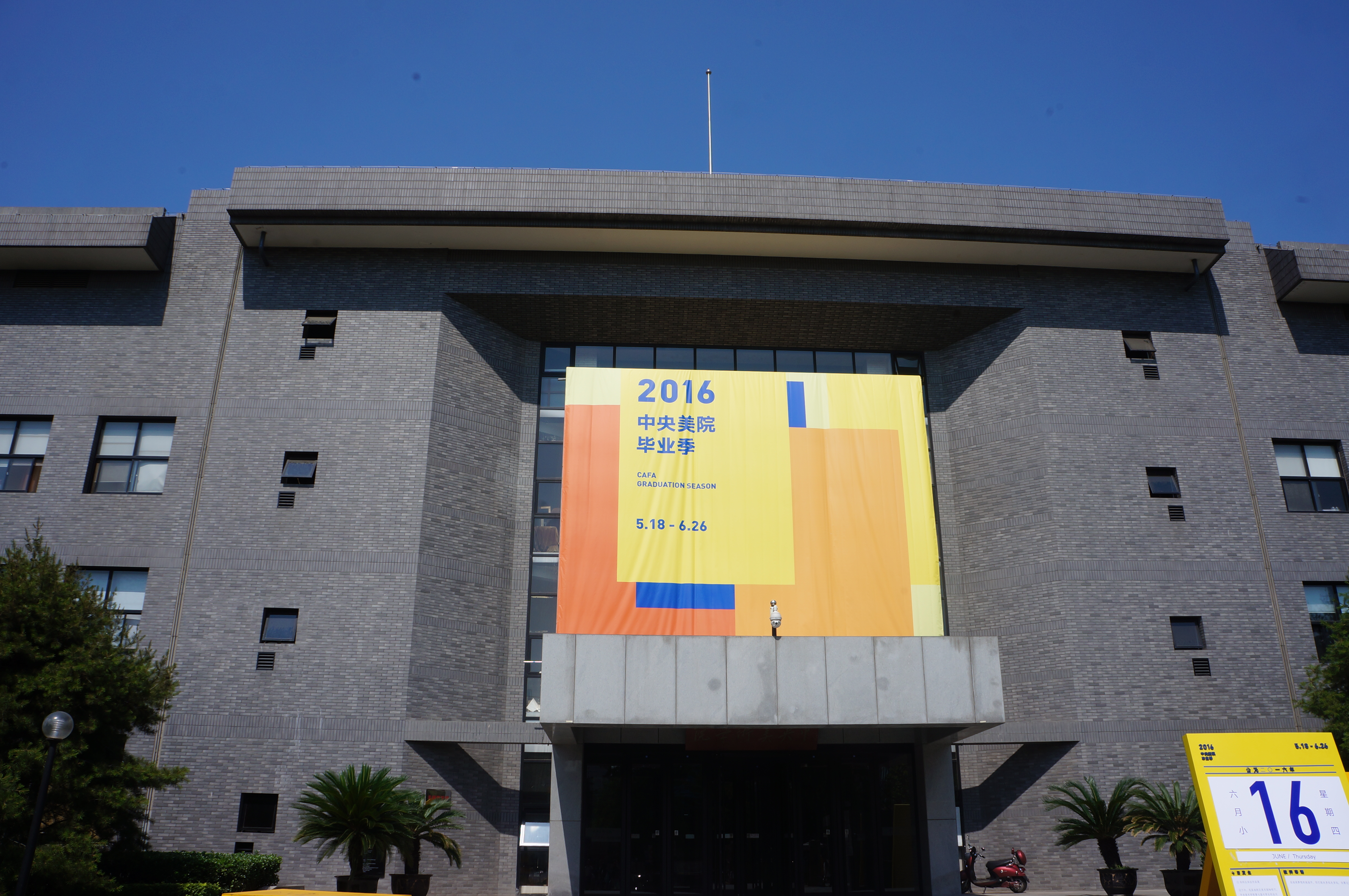
Central Academy of Fine Arts
In the spring of 1989, students from the Central Academy of Fine Arts built a statue in Tiananmen Square. They called it the Goddess of Democracy, and it stood for five days before soldiers destroyed it. The statue was assembled quickly, from styrofoam and papier-mache over a metal armature, by young people who had spent years learning classical technique. The academy that trained them was already seventy years old. It had survived revolution, invasion, and political upheaval. The statue did not survive, but the school endures.
China's First Art School
The academy's lineage reaches back to 1918, when the educator Cai Yuanpei advocated for the founding of the National School of Fine Arts in Beijing. It was the first national art school in China and marked the beginning of modern art education in the country. In April 1950, the school was reconstituted as the Central Academy of Fine Arts through a merger of the National Art School in Beiping with the fine arts department of North China University. Its early presidents included Xu Beihong, one of China's most celebrated painters, known for his ink wash horses, and Wu Zuoren, who succeeded him. The school rejects more than 90 percent of its applicants each year. In 2019, the acceptance rate was 1.58 percent.
A Museum Designed by a Master
The CAFA Art Museum, designed by the Japanese architect Arata Isozaki, opened in October 2008 to mark the academy's 90th anniversary. The six-floor building covers 14,777 square meters and houses a collection of 13,000 works spanning Chinese painting, oil, printmaking, sculpture, and folk art. Among its most prized holdings are more than 2,000 Chinese scroll paintings from the Ming dynasty. The museum sits at the northeast corner of the Wangjing campus, its angular form a statement of contemporary architecture against the functional buildings of an academic campus. Inside, rotating exhibitions keep the collection alive, while the permanent holdings provide a through-line from ancient brush technique to modern experimentation.
Designing the Modern Nation
CAFA's influence extends well beyond the gallery wall. The School of Design, revived in 1995 after a four-decade hiatus and elevated to its own college in 2002, played a central role in the visual identity of the 2008 Beijing Olympics. Students and faculty contributed to the design work that branded the Games for a global audience. The academy publishes two national first-class academic journals, Fine Arts Study and Fine Arts of the World, and its library holds 360,000 books alongside specialized collections of woodblock New Year pictures, thread-bound ancient books, and Han dynasty stone rubbings. In 2018, an asteroid was named 118418 Yangmei in honor of the school, placing CAFA's name among the stars.
Where the Brushstroke Meets the World
As of 2023, CAFA was ranked 15th globally for art and design by the QS World University Rankings. The school comprises six specialized colleges: Fine Art, Chinese Painting, Design, Architecture, Humanities, and Urban Design. With 534 faculty members serving 3,800 students and over 100 international enrollees, it operates at a scale that belies its exclusivity. Its alumni include Xu Bing, whose installations have shown in museums worldwide, and Fang Lijun, a leading figure in Chinese contemporary art. The academy continues to occupy the uncomfortable space between tradition and rupture that has defined it since 1918 -- training artists in classical methods while knowing that some of its best graduates will use those methods to challenge the very institutions that taught them.
From the Air
Located at 39.98°N, 116.46°E in the Wangjing area of Beijing's Chaoyang District. The campus and its distinctive museum building are visible from lower altitudes in the northeastern urban area. Nearest major airport is Beijing Capital International (ZBAA/PEK), approximately 15 km to the east.