The Emperor Who Crowned Himself
The crown was modeled on Napoleon's. The throne was golden, shaped like an eagle. The ceremony cost one-third of the Central African Republic's entire annual budget and consumed all of France's foreign aid for the year. Not a single foreign leader attended. On December 4, 1977, Jean-Bedel Bokassa crowned himself Emperor of Central Africa, and the world watched with a mixture of disbelief and dark amusement at a spectacle that would end, less than two years later, with the murder of schoolchildren and French paratroopers landing in Bangui.
From President to Emperor
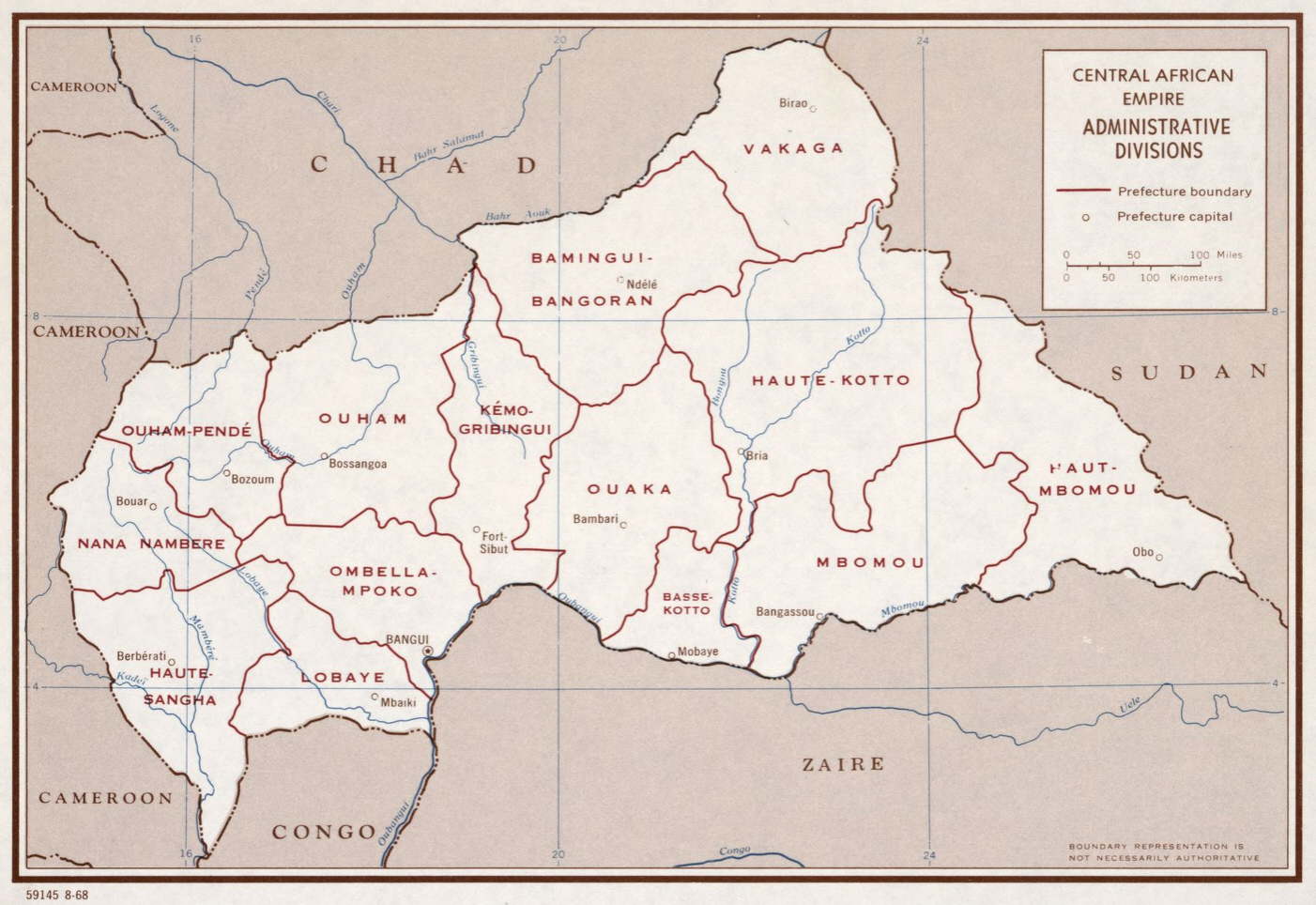
Bokassa had already been president for over a decade, having seized power in a 1966 coup. In September 1976, he dissolved the government and replaced it with the Central African Revolutionary Council. At a congress of the ruling MESAN party on December 4, 1976, he declared the republic a monarchy and himself its sovereign. He briefly converted to Islam earlier that year, then converted back to Roman Catholicism in time for the declaration. The coronation itself followed exactly one year later, a lavish ceremony explicitly modeled on Napoleon's transformation of the French First Republic into the First French Empire. Bokassa's full title ran: "Emperor of Central Africa by the Will of the Central African People, United within the National Political Party, the MESAN." He justified the move by claiming a monarchy would help Central Africa "stand out" from the rest of the continent. International reaction ranged from ridicule to comparisons with Uganda's Idi Amin.
The Price of a Crown
The coronation was more than symbolic excess - it was a fiscal catastrophe for one of the world's poorest nations. The regalia, the golden eagle throne, and the imperial crown all came from France, whose complicated relationship with its former colony produced a strange dynamic: Paris supplied the props for a spectacle it would later use as justification for intervention. French President Charles de Gaulle had originally refused to receive Bokassa, reportedly calling him a "bloody idiot," and only met him in 1969 after persistent urging from his chief of staff, Jacques Foccart. De Gaulle's successor, Valery Giscard d'Estaing, developed a warmer relationship - one that became politically toxic when it was revealed Bokassa had given him gifts of diamonds and ivory.
The Schoolchildren of Bangui
The empire's end began with school uniforms. In January 1979, riots broke out in Bangui, and French support for Bokassa began to erode. Between April 17 and 19, high school students were arrested for protesting against the requirement to purchase expensive government-mandated uniforms. An estimated 100 were killed in what became known as the Ngaragba Prison massacre. Reports, later confirmed by investigations, stated that Bokassa personally participated - that he beat dozens of children to death with his own cane. The international press coverage that followed stripped away whatever legitimacy the empire had retained. These were not political opponents or armed rebels. They were students, arrested for objecting to the cost of their clothes, and murdered by the man who had spent their country's budget on a golden throne.
Operation Barracuda
France had tolerated Bokassa for years, but the massacre of schoolchildren made continued support untenable. When Bokassa traveled to Libya to meet Muammar Gaddafi in September 1979, France saw its opening. On September 20, French troops launched Operation Barracuda, landing in Bangui and restoring former president David Dacko to power. Bokassa returned to find his empire gone. The operation was called "France's last colonial expedition" by Jacques Foccart, the veteran diplomat who had helped engineer it. President Francois Mitterrand, who took office two years later, declared that France would never intervene in this manner again - a promise that the decades since have tested repeatedly.
The Weight of Absurdity
The Central African Empire lasted from December 4, 1976, to September 21, 1979 - not quite three years. It is tempting to treat Bokassa's reign as pure farce, a dictator playing dress-up with Napoleon's wardrobe. But the farce was built on real suffering. The coronation money came from a population that had almost nothing. The uniforms that sparked the protests were mandatory purchases imposed on families who could not afford them. The children who died in Ngaragba Prison were real children with real families. Behind the golden eagle throne and the absurd imperial title was a country drained of its resources by the man who claimed to embody its will. The empire is gone. The Central African Republic remains one of the poorest countries on Earth.
From the Air
Located at 6.70°N, 20.90°E, centered on Bangui, the capital of the Central African Republic, situated on the northern bank of the Ubangi River which forms the border with the Democratic Republic of the Congo. From the air, Bangui is visible as a sprawling city along a wide, brown river. The former imperial palace and government district are in the city center. Bangui M'Poko International Airport (FEFF) is the primary airport, located within the city. The terrain is flat tropical savanna, with the Ubangi River providing the dominant geographic feature visible from altitude.