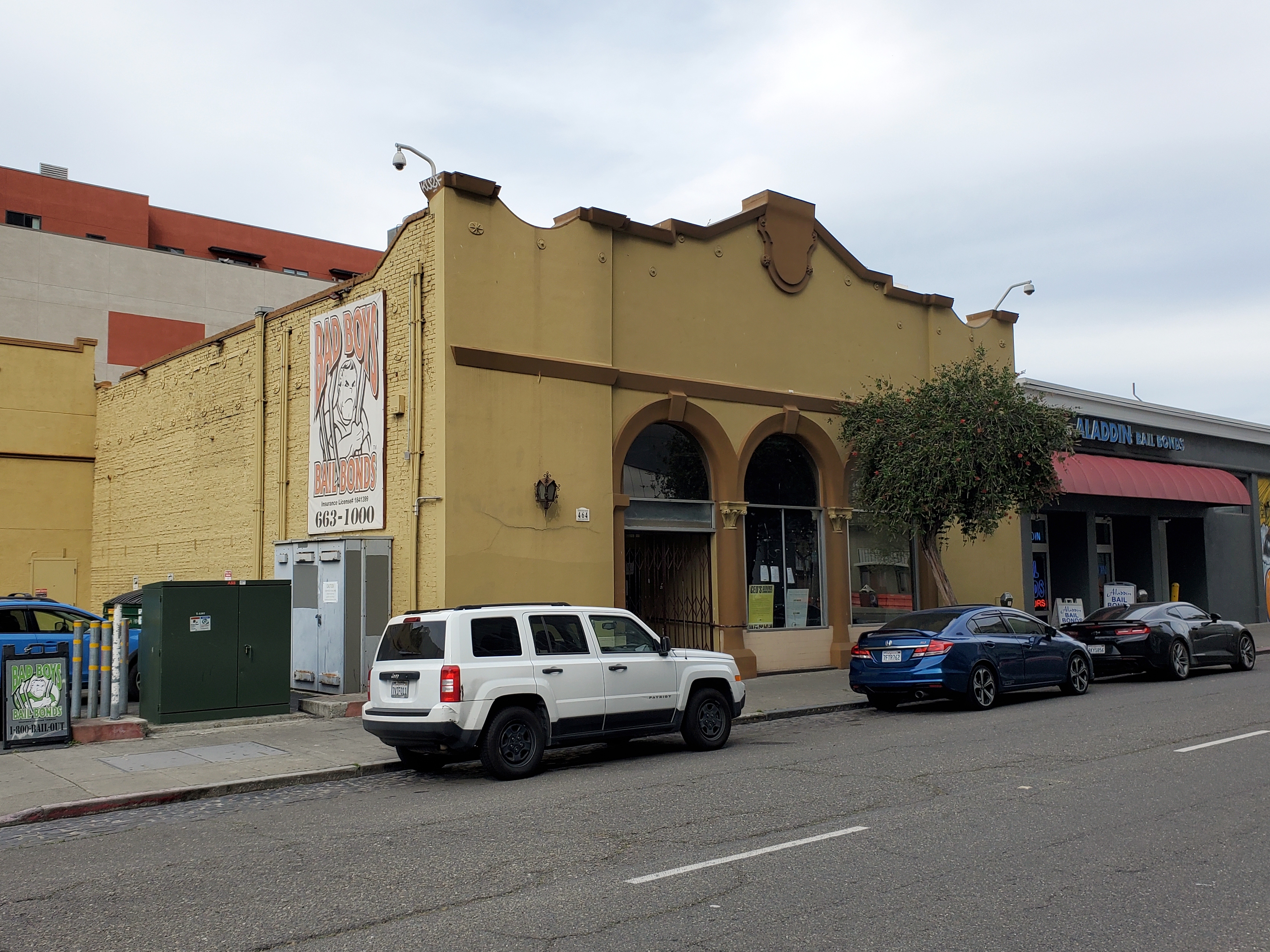
Central Pacific Railroad Depot (Oakland)
The building where the transcontinental railroad met the Pacific has been making tortillas since 1939. That sentence sounds like a joke, but it is the actual history of the Central Pacific Railroad Depot on 7th Street in Oakland. When the first train from the east rolled into this station, it completed a connection that had consumed the nation's imagination for decades. Today, the same structure houses the Mi Rancho Tortilla Factory, and the scent of masa has long since replaced the smell of coal smoke. No plaque on the National Register marks the building -- it was evaluated in 1994 and rejected because the facade had been altered too much. The depot's significance lives in what happened here, not in what it looks like now.
Where the Continent Came Together
The station began its life as the western terminal of the San Francisco and Oakland Railroad, a local line connecting Oakland's waterfront to the ferry landings that linked the East Bay to San Francisco. When the Central Pacific Railroad was searching for the final link in its transcontinental route, it chose this line and acquired both it and the 7th Street station in 1869. That acquisition was more than a business deal. It made this modest Oakland depot the Pacific endpoint of the railroad that had been ceremonially joined at Promontory Summit, Utah, with a golden spike just months earlier. Freight and passengers arriving from the east now poured through this building on their way to the ferries, and Oakland became the true western terminus of the transcontinental railroad, even as San Francisco received most of the glory.
Southern Pacific and the Key System
Railroads in the late 19th century were restless enterprises, always merging, always expanding. Southern Pacific began operating the line through the depot in 1885, absorbing it into a network that would dominate California transportation for decades. The station hummed along until 1912, when the new 16th Street Station opened and most passenger traffic shifted there. The 7th Street depot did not close entirely. An additional track was laid at some point and both lines were electrified for use in the Key System, the interurban rail network that carried East Bay commuters across the bay on trains and ferries. A stop continued to operate in front of the old depot building, keeping it tethered to the transit network even as its original purpose faded. The Key System itself would eventually be dismantled, its tracks pulled up as buses and automobiles reshaped Bay Area transportation.
From Rail Station to Tortilla Factory
In 1939, with the railroad long gone from the building, Mi Rancho moved in and converted the former depot into a tortilla factory. It is a transformation that seems almost too perfect in its metaphor: a building that once processed the flow of a nation now processes corn and flour. Mi Rancho has operated continuously from the site, becoming one of the best-known tortilla brands in California. The building's exterior was modified over the decades, enough that when it was evaluated for the National Register of Historic Places in 1994, assessors concluded it was unlikely to qualify. The changes to the facade had obscured the architectural evidence of its railroad origins. What remains is a working factory inside a structure whose historical importance is invisible from the street.
Oakland's Forgotten Railroad Landmarks
The Central Pacific Depot is not the only railroad landmark in Oakland, but it may be the most overlooked. The Western Pacific Depot on 3rd Street and the modern Amtrak station at Jack London Square both have clearer identities as rail buildings. The 16th Street Station, the grand Beaux-Arts terminal that replaced this depot's passenger service in 1912, stood abandoned for decades before redevelopment began. Oakland's relationship with the railroad has always been complicated. The city owes much of its early growth to being the western rail terminus, yet San Francisco captured the cultural credit. The 7th Street depot embodies that dynamic: the building where the transcontinental railroad actually ended its journey sits quietly behind a factory facade, recognized by the city as a local landmark but passed over for national honors. Its story endures not in bronze or marble, but in the daily production of tortillas.
From the Air
The Central Pacific Railroad Depot is located at 37.800N, 122.275W, on 7th Street west of Broadway in downtown Oakland. From the air, it is not distinguishable as a historic site; it appears as a commercial building in the dense urban grid near the waterfront. The Jack London Square area and the Oakland Inner Harbor are the primary visual references. Oakland International Airport (KOAK) is approximately 6 nautical miles south. Metropolitan Oakland International (KOAK) and San Francisco International (KSFO) at 14 nm provide the nearest major approaches. Best viewed at 1,500-2,000 feet AGL when following the Oakland waterfront.