Centralia
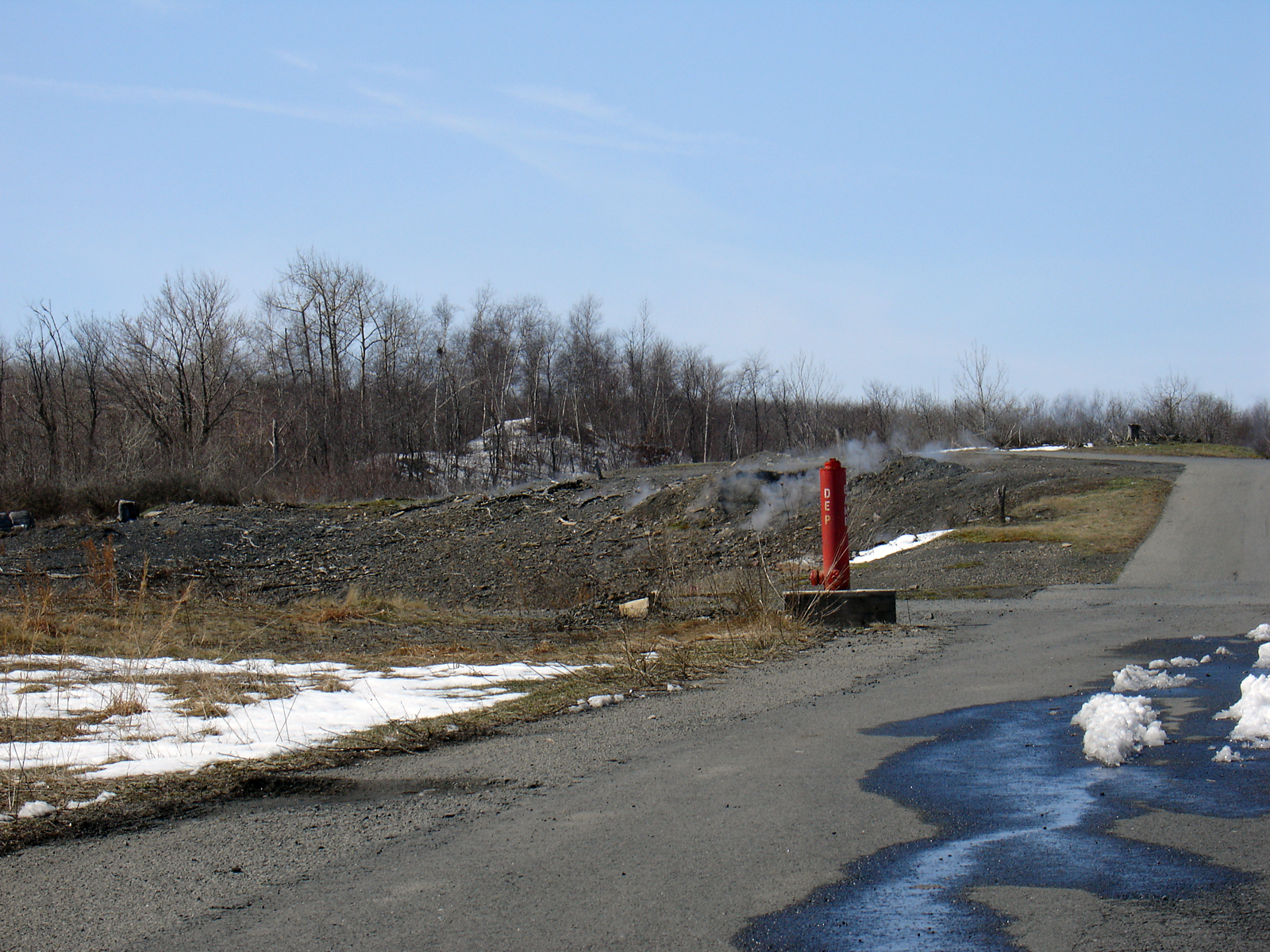
Somewhere beneath your feet, if you're standing in Centralia, Pennsylvania, fire is burning. It has been burning since 1962, when a trash fire in an abandoned strip mine ignited an exposed coal seam. It will likely continue burning for another 250 years, working its way through the eight miles of anthracite coal seams that honeycomb the earth beneath this former mining town. At its peak, Centralia had 1,400 residents, a high school, seven churches, and five hotels. Today, fewer than ten people remain, living among abandoned streets and forests reclaiming former neighborhoods. Steam rises from cracks in the pavement. The ground is warm to the touch. Sinkholes have swallowed yards. Route 61, the main highway through town, was permanently closed after subsidence cracked the road and vents released toxic gases. Yet a handful of residents refused to leave, fighting the government for the right to live above an eternal inferno. Centralia has become a pilgrimage site for urban explorers and a symbol of America's abandoned industrial heartland.
The Fire Begins
The most likely origin story places the blame on a routine trash burn in May 1962. Centralia's landfill was located in an abandoned strip mine pit at the edge of town. Firefighters, as they had done many times before, set the trash alight, doused it with water, and left. But this time, the fire had found its way into an exposed coal seam - one of many in the anthracite region. Underground fires had plagued the Pennsylvania coal country for a century, but no one realized until weeks later that this one was still burning. Initial attempts to dig it out failed; the fire was already too deep. Engineers tried flooding it, trenching around it, and boring holes to vent the gases. Nothing worked. The fire followed the coal seams, spreading horizontally and downward, eventually encompassing an area of more than 400 acres.
The Long Decline
For twenty years, Centralia's residents lived alongside the fire, dealing with occasional smoke, heat, and sinkholes as peculiar inconveniences. That changed in 1981, when twelve-year-old Todd Domboski fell into a sudden sinkhole in his grandmother's backyard. The pit was four feet wide and 150 feet deep, billowing steam and lethal levels of carbon monoxide. His cousin pulled him to safety. The near-tragedy finally galvanized state and federal action. Studies confirmed that temperatures beneath some houses exceeded 900 degrees Fahrenheit. Carbon monoxide levels in basements were dangerous. The federal government offered to buy out residents, and most accepted. By 1984, Congress had appropriated $42 million for relocation. Houses were demolished, streets were abandoned, and the population dropped from over 1,000 to a handful of holdouts who refused to leave.
The Holdouts
Not everyone left. A small group of residents - at times as many as a dozen, now fewer than ten - fought for the right to stay in their homes. They formed organizations, filed lawsuits, and lobbied politicians. They argued that the government had exaggerated the danger, that their particular homes were safe, that they had the right to risk their own lives on their own property. The state seized their homes through eminent domain in 1992, but allowed them to remain as tenants until death. The last residents are aging now, their homes surrounded by the grids of vanished streets and the forest that has reclaimed former neighborhoods. When they die, their houses will be demolished. Centralia's zip code was revoked in 2002. The town is legally dead even as it continues, barely, to exist.
Graffiti Highway
Route 61 once ran straight through Centralia. When subsidence cracked the road and toxic gases vented through fissures, the state rerouted the highway around the town. The abandoned stretch became known as Graffiti Highway, a three-quarter-mile canvas covered in spray-painted declarations of love, political statements, and crude drawings. It became a tourist attraction, drawing thousands of visitors who walked the buckled, steaming pavement and added their own marks. In 2020, the property owner buried the road under dirt, citing liability concerns and the impact of crowds on the remaining residents. The graffiti is gone now, but visitors still come, parking along the new Route 61 and walking into the woods to see what remains of a town consumed by fire.
Visiting Centralia
Centralia lies in Columbia County, Pennsylvania, about 90 miles northwest of Philadelphia. There is nothing official to see - no visitor center, no tours, no services. What remains is haunting: abandoned streets marked only by fire hydrants and street signs, concrete stairs leading to vanished houses, steam rising from cracks in the ground, a few occupied homes amid the emptiness. The municipal building and two cemeteries survive. Assumption of the Blessed Virgin Mary Ukrainian Greek Catholic Church still holds occasional services. Visitors park along the rerouted Route 61 and walk in, but they should be aware that the ground is unstable, gases can accumulate in low areas, and the remaining residents value their privacy. Centralia is not a spectacle; it's a tragedy still in progress. The fire will outlive everyone currently alive. The town that burns forever has become a monument to the persistence of disaster and the stubbornness of those who refuse to surrender their homes to it.
From the Air
Located at 40.80°N, 76.34°W in Columbia County, Pennsylvania. From altitude, Centralia appears as a largely empty grid of former streets now overgrown with forest, punctuated by occasional steam plumes. The surrounding coal region features strip mines and spoil piles. Wilkes-Barre/Scranton International Airport (AVP) is 35 miles northeast. Harrisburg International Airport (MDT) is 55 miles southwest.