Cepu Forest Railway
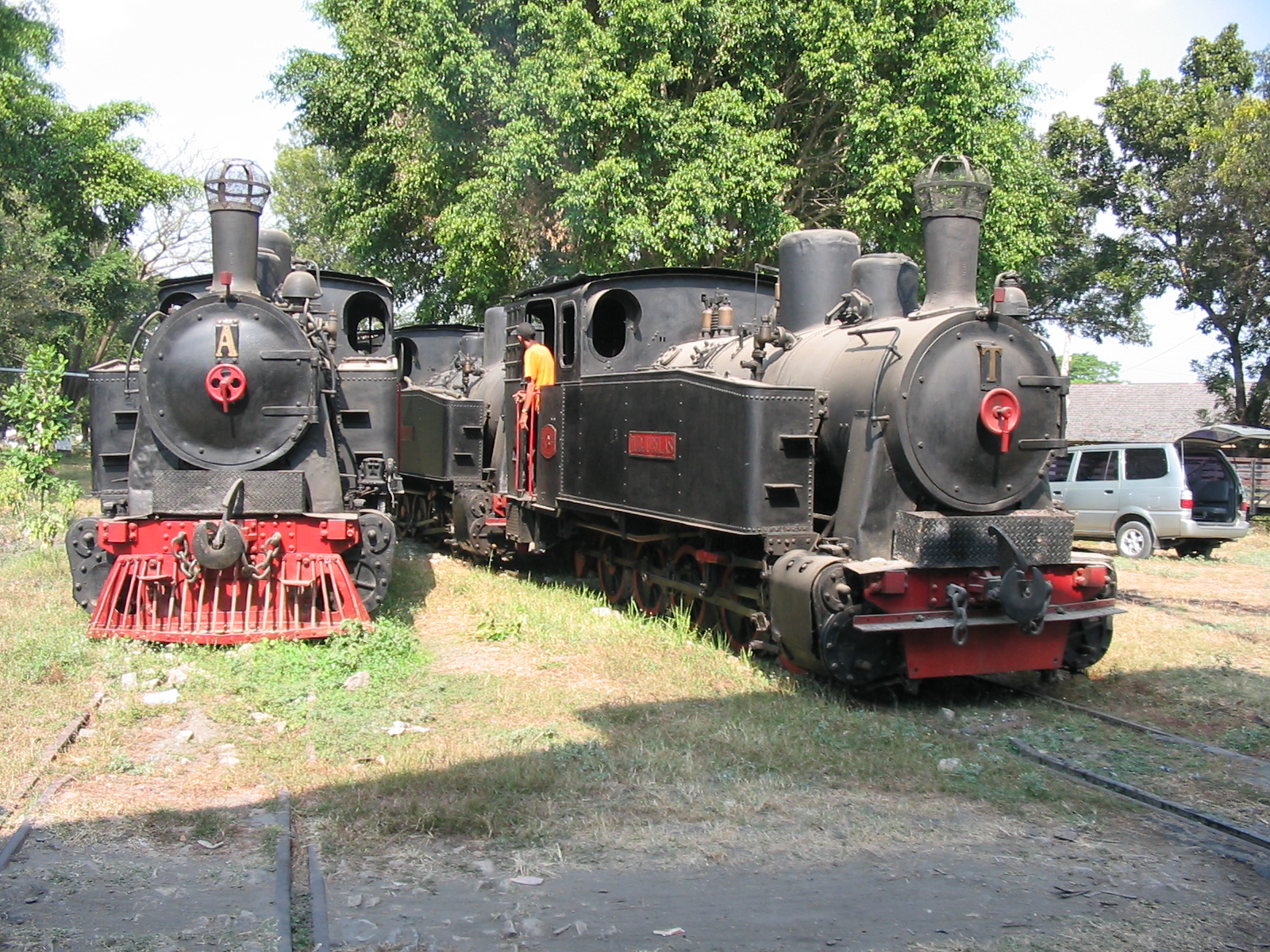
Four steam locomotives sit in a depot at the edge of the Javanese teak forests, breathing smoke into the humid air the way they have for more than a hundred years. The Cepu Forest Railway, officially branded as Loco Tour Cepu, is not a museum exhibit behind velvet ropes. It is a working narrow-gauge line where German-built engines from the colonial era still pull carriages through plantations of teak trees that were already old when the rails were first spiked down around 1915. In a world where steam traction has been relegated to heritage parks and tourist novelties, Cepu holds something rarer: an active, complete logging railway still powered by steam.
Iron Through the Teak
The railway was built circa 1915, when Java was still part of the Dutch East Indies and teak was among the colony's most valued exports. At its peak, over 300 kilometers of narrow-gauge track threaded through the Perhutani forests northwest of the town of Cepu, on the boundary between Central and East Java provinces. Trains hauled felled timber out of the forest year-round, feeding a trade that had shaped this landscape for centuries. The teak plantations were not wild forest but managed groves, and the railway was their circulatory system, connecting isolated cutting sites to the mills and markets beyond. By the late 1990s, the network had contracted sharply. Much of the track was lifted after 1998, though occasional logging trains continued to operate until 2002.
The Machines That Refused to Die
What makes Cepu extraordinary is not nostalgia but machinery. The depot houses four operable steam locomotives, the largest concentration of active preserved steam engines in Indonesia. Three were built by Berliner Maschinenbau, two by Du Croo & Brauns, both firms that supplied rolling stock across the colonial world. These are not replicas or restored showpieces, but the same engines that once dragged timber out of the forest under Dutch overseers. They represent one of only four main centers of steam railway heritage remaining on Java, alongside the Olean Sugar Mill in Situbondo, the Tasik Madu sugar mill, and the rack railway at Ambarawa. The Cepu line's status as a globally significant, active steam-powered logging railway has led some to argue it deserves consideration as a World Heritage Site.
From Logging Line to Loco Tour
Since 2002, when routine logging operations ceased, the railway has survived by reinventing itself. Chartered logging trains and a tourist service called Loko Tour now use the remaining 30 kilometers of track, carrying visitors from the depot to an arboretum deep in the forest where 150-year-old teak trees tower overhead. At the arboretum's visitor center, passengers are welcomed with local cultural performances. The railway draws foreign tourists from Europe, the United States, and Japan, many of them dedicated rail enthusiasts who travel vast distances to ride behind live steam. In 2006, flooding damaged a bridge just outside Cepu, cutting the line to the arboretum. Repairs took over a year, but by December 2007 the tourist trains were running again. The railway even returned briefly to its original purpose in early 2010, when steam trains hauled storm-felled trees that were otherwise inaccessible.
A Forest Built on Centuries
The teak forests surrounding the railway are themselves a story of deep time and colonial ambition. Teak thrives in Java's tropical monsoon climate, and the Dutch colonial administration managed these forests as a long-cycle crop, planting trees that would not be harvested for generations. The 150-year-old specimens at the arboretum are living artifacts of that planning, their massive trunks rising from soil that the Javanese word delemak describes as watery and swamp-like. Perhutani, the state-owned forestry company that still owns the railway, inherited these managed forests after independence. The company's subsidiary, PT Palawi, now markets the Loco Tour from its offices in Jakarta, bridging the gap between a 19th-century forest economy and 21st-century heritage tourism.
Smoke Signals from the Past
Riding the Cepu Forest Railway is an exercise in sensory time travel. The narrow-gauge track rattles beneath the carriage as the locomotive labors through corridors of teak, its whistle splitting the green stillness. The smell of coal smoke mingles with the wet-earth scent of the forest floor. At the iconic bridge between Cepu and Gubug Payung, a structure documented in photographs dating back to 1937, the train crosses above a river gorge that has drawn photographers and railway enthusiasts for decades. These are not grand vistas but intimate ones, the kind of beauty that reveals itself at walking pace. For a line that once existed purely to move timber, the Cepu Forest Railway has become something its builders never intended: a living argument for why some machines deserve to keep running.
From the Air
Located at 7.15S, 111.59E on Java's north coast, near the Central/East Java provincial boundary. The town of Cepu sits in lowland terrain surrounded by teak forest. Nearest major airport is Adisumarmo International (ICAO: WARQ) in Solo, approximately 150 km to the west. Ahmad Yani International Airport (ICAO: WARS) in Semarang is roughly 170 km northwest. From cruising altitude, the teak plantation grid patterns and the railway clearing may be visible in clear conditions. Recommended viewing at 3,000-5,000 feet for forest detail.