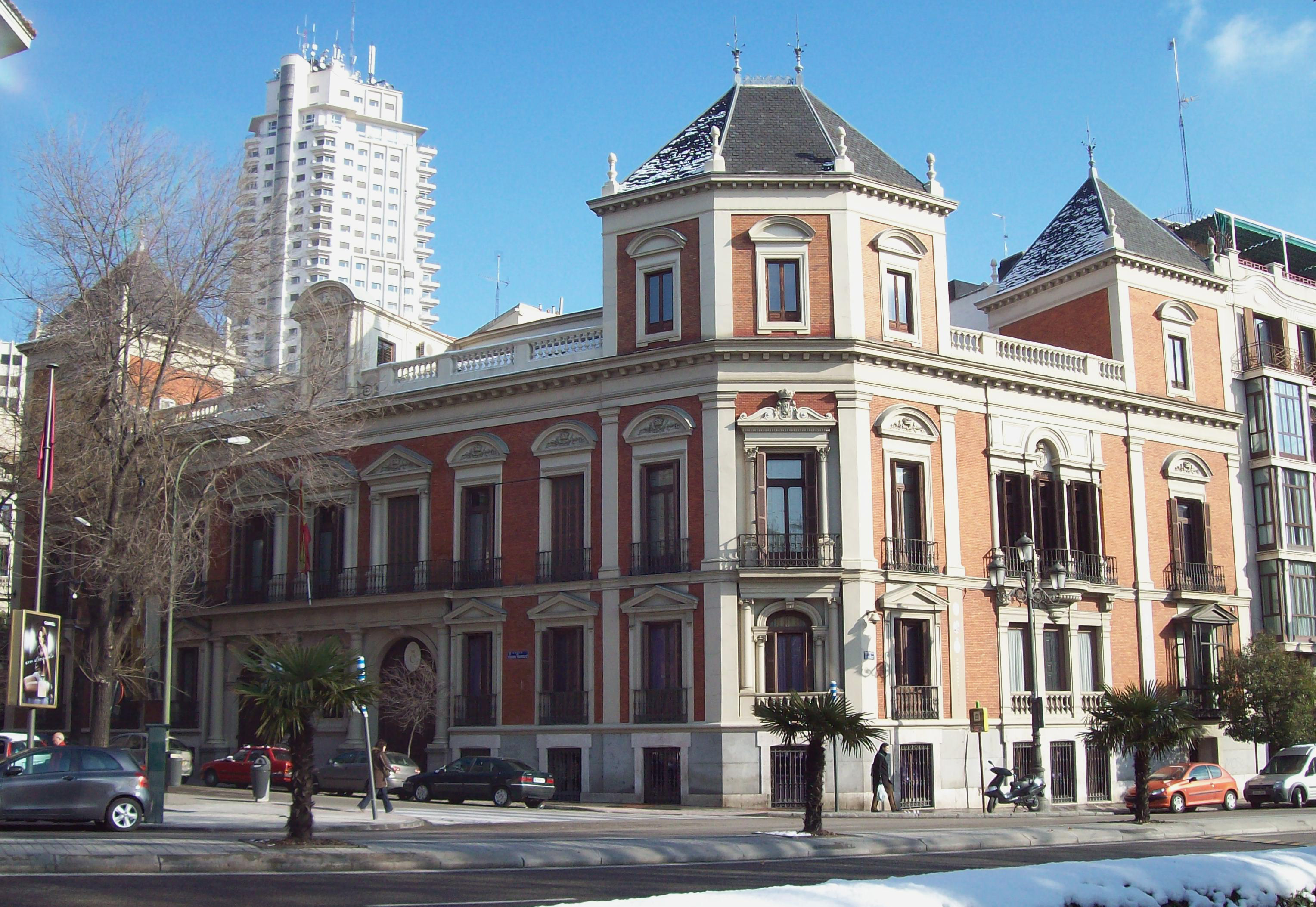
Cerralbo Museum
In 1893, Enrique de Aguilera y Gamboa, the 17th Marquis of Cerralbo, opened his Madrid mansion as a private gallery. He was an archaeologist, politician, art collector, and aristocrat of extravagant taste who had spent decades filling his Italianate townhouse with paintings, coins, pottery, tapestries, and clocks. When he died in 1922, he left everything to the Spanish state with one condition: the collection had to stay together, in the house where he had arranged it, exactly as he left it. That wish has been largely honored ever since.
An Aristocrat's Cabinet of Wonders
The Marquis collected with the appetite of a man who believed that quantity and quality were not mutually exclusive. His collection eventually exceeded 24,900 pieces. There are paintings by Jacopo Tintoretto, El Greco, Francisco de Zurbaran, and Ludovico Carracci. There are Greek, Roman, Etruscan, and Egyptian antiquities of the kind that 19th-century aristocrats accumulated as proof of sophistication. There are Iberian artifacts from the Neolithic through the Almohad period, two stone masks from Puerto Rico, and a substantial collection of Chinese and Japanese art. The numismatics collection alone, comprising thousands of coins and medals, would fill a small museum on its own.
A House That Remembers
What makes the Cerralbo different from Madrid's larger museums is that it remains, fundamentally, a house. Visitors walk through rooms that function as rooms: a dining hall with its table set, a billiard room with its table intact, salons with baroque furniture and wall paintings and crystal chandeliers that the Marquis himself selected and positioned. The building was constructed in the 19th century in an Italian style, and its decorative scheme has been preserved through multiple restorations, most recently after the museum reopened in 2010 following a four-year renovation. In 1962, both the building and its contents were designated a historical-artistic monument, a protection that ensures the house will continue to look as the Marquis intended.
The Ticking Collection
Among the more unexpected treasures at the Cerralbo are its clocks. The Marquis amassed a collection of 18th- and 19th-century timepieces, primarily French and English, that are displayed throughout the house. Ornate mantelpiece clocks sit in the salons alongside paintings and porcelain, their mechanisms still ticking, their gilded cases catching the light from chandeliers overhead. The decorative arts collection extends to tapestries, carpets, porcelain, pottery, lamps, and jewelry, all arranged not in museum vitrines but in the domestic context for which they were originally intended. The effect is less 'museum visit' than 'stepping into someone's impossibly opulent home while they happen to be out.'
Hidden in Plain Sight
The Cerralbo sits on Calle de Ventura Rodriguez in the Arguelles neighborhood, a short walk from the Royal Palace and the Temple of Debod but well off the tourist trail that funnels visitors toward the Prado and the Reina Sofia. Most guidebooks mention it only in passing, if at all. This anonymity is part of its charm. On a quiet weekday afternoon, it is possible to stand alone in the Marquis's ballroom, surrounded by paintings and porcelain, with no crowds and no audio guides, just the ticking of French clocks and the sense that a 19th-century collector might walk back through the door at any moment.
From the Air
Located at 40.4237N, 3.7146W in the Arguelles neighborhood of Madrid, near the Royal Palace and the Temple of Debod. The building is a standard 19th-century townhouse and not distinctly identifiable from altitude; navigate by the nearby landmarks of the Royal Palace and Plaza de Espana. Nearest airport: Madrid-Barajas Adolfo Suarez (LEMD), approximately 14 km northeast. Recommended viewing altitude: 1,500-2,500 feet AGL.