Cerrejon
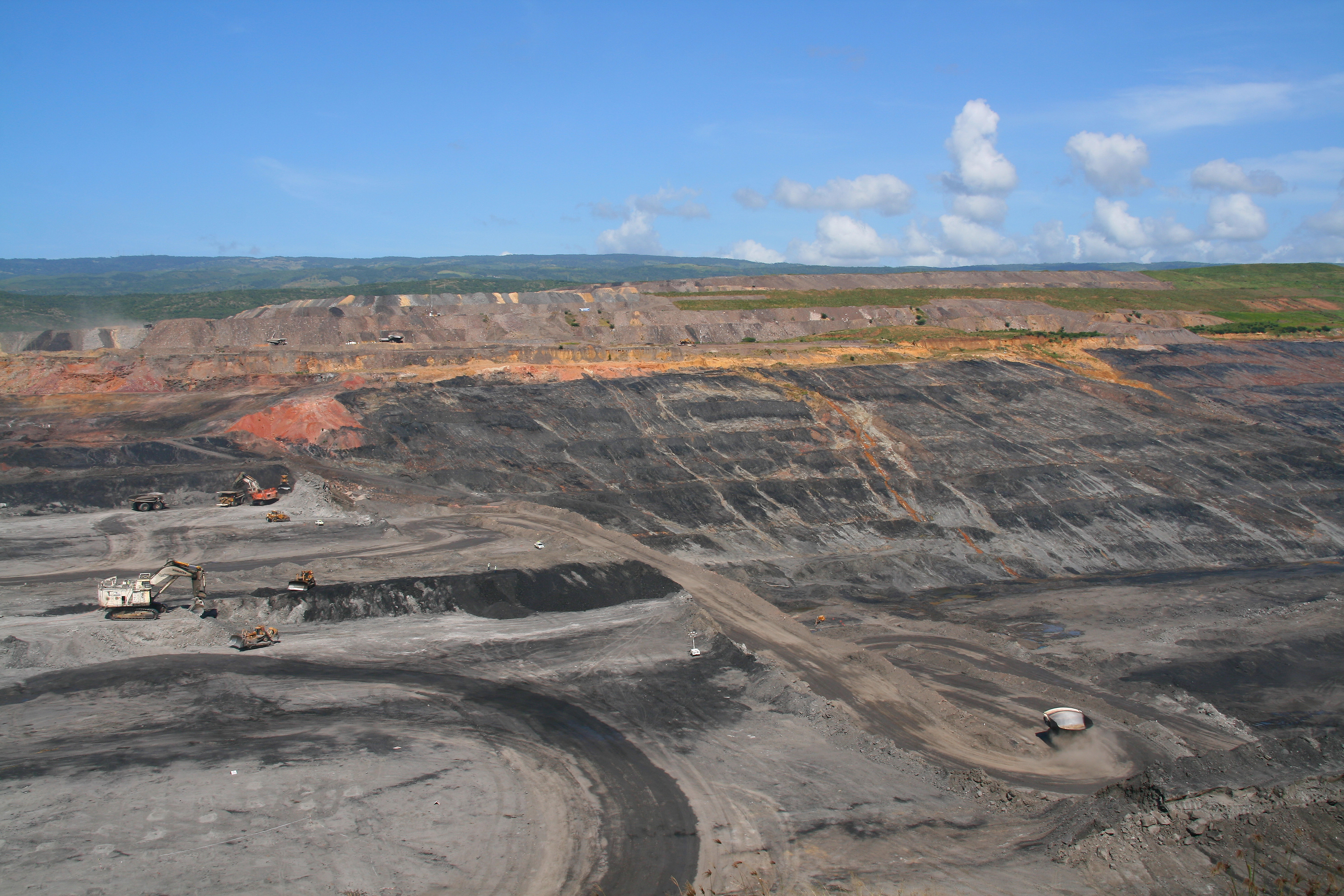
Sixty million years ago, the land that is now Cerrejon was a tropical swamp ruled by Titanoboa cerrejonensis, the largest snake ever to have lived, a creature that stretched over 12 meters long and weighed more than a ton. Today the same ground has been carved into one of the largest open-pit coal mines on the planet, a terraced moonscape stretching over 690 square kilometers across the arid plains of La Guajira in northern Colombia, near the Venezuelan border. The Rancheria River basin that once nourished ancient reptiles now feeds an industrial operation that has produced over 500 million tonnes of coal since 1985. From the air, Cerrejon looks like a wound in the earth. What it means depends on whom you ask.
When Snakes Were Kings
Paleontologists working in the Cerrejon Formation have unearthed a lost world. Titanoboa cerrejonensis, described from fossils found in these coal seams, lived approximately 60 million years ago in a tropical ecosystem far warmer and wetter than today's arid landscape. It dwarfed the modern anaconda and preyed on the giant crocodiles and fish that shared its habitat. The coal that mining companies extract from this formation is itself a remnant of that ancient swamp, compressed layers of Paleocene-era vegetation buried and transformed over tens of millions of years. In a sense, every trainload of coal that leaves Cerrejon carries a fragment of the world Titanoboa inhabited.
A Mine the Size of a City
Cerrejon sits in the northeastern part of the Cesar-Rancheria Basin, hemmed between the Sierra Nevada de Santa Marta to the west and the Serrania del Perija to the southeast. The mine is divided into three zones: North, Central, and South. Its fleet of 258 trucks, with load capacities reaching 320 tonnes each, and 50 hydraulic shovels move earth on an almost geological scale. A single P&H 2800XPC shovel lifts approximately 63.5 tonnes per scoop, equivalent to the weight of 40 automobiles. A dedicated 150-kilometer railway carries 109-car trains loaded with coal to Puerto Bolivar, Latin America's largest coal-export port, where bulk carriers of up to 180,000 tonnes are loaded for markets in Europe, Asia, and the Americas. Total proven reserves stand at approximately 503 megatonnes.
Concessions and Corporate Shifts
Coal was first identified in the region in 1864 by the American civil engineer John May, though small-scale mining had already begun in the 19th century. The modern operation dates to December 1976, when the Colombian state firm Carbocol partnered with Intercor, then an Exxon subsidiary, to develop the North Zone through a contract covering exploration, construction, and production. In 2000, the Colombian government sold its 50 percent stake to a consortium of BHP Billiton, Anglo American, and Glencore. By February 2002, that consortium had bought out ExxonMobil's remaining share, becoming sole operators. In 2013, Glencore merged with Xstrata, consolidating the ownership structure further. The mine produced over 32.6 million tonnes in 2016 alone, and its output has represented roughly 40 percent of Colombia's total coal exports. In January 2022, Glencore acquired the remaining shares from BHP and Anglo American, becoming sole owner of the mine with 100 percent ownership and operating control.
The Wayuu and the Dust
The Wayuu people, an indigenous community with deep roots in La Guajira, have borne disproportionate consequences of the mine's expansion. Coal dust settles on their communities. Water sources have been polluted or diverted. In June 2020, Wayuu lawyers petitioned the United Nations special rapporteur for human rights and the environment to halt operations immediately. By September 2020, several UN independent human rights experts called for a temporary suspension, citing serious damage to the environment and negative effects on the health and rights of indigenous peoples in the area. A 2022 Human Rights Council report connected the Cerrejon project to patterns of environmental racism, noting that the forced displacement of Afro-Colombian and Wayuu communities reflected systemic priorities of economic extraction over the protection of marginalized populations. The mine employs over 5,300 workers directly and nearly 4,500 more through contractors, many from La Guajira itself, creating an economic dependency that complicates resistance.
Coal and Consequence
From 1985 to 2011, Cerrejon generated over two billion dollars in royalties for Colombia. Its coal heats homes and powers industry across Europe, the Mediterranean, Asia, and the Americas. Puerto Bolivar's ships carry Colombian energy to the world. But the same operation has displaced communities, poisoned water, and drawn the scrutiny of international human rights bodies. The Wayuu did not choose to live on top of one of the world's largest coal deposits, and the Titanoboa did not choose to be buried beneath one. Cerrejon is a place where deep time, deep money, and deep injustice converge, and where the question of who benefits from what the earth holds has no comfortable answer.
From the Air
Coordinates: 11.09N, 72.68W, in the southeastern part of La Guajira department, northern Colombia, near the Venezuelan border. The mine's 690 square kilometers are clearly visible from cruising altitude as massive terraced open pits in otherwise arid terrain. The 150-km railway to Puerto Bolivar on the coast is a prominent linear feature. Puerto Bolivar Airport (SKPB) serves the mine area with a 3,500-meter runway. Nearest commercial airports include Almirante Padilla Airport (SKRH/RCH) in Riohacha and Simon Bolivar International Airport (SKSM/SMR) in Santa Marta. Terrain is generally flat and arid with the Sierra Nevada de Santa Marta visible to the west.